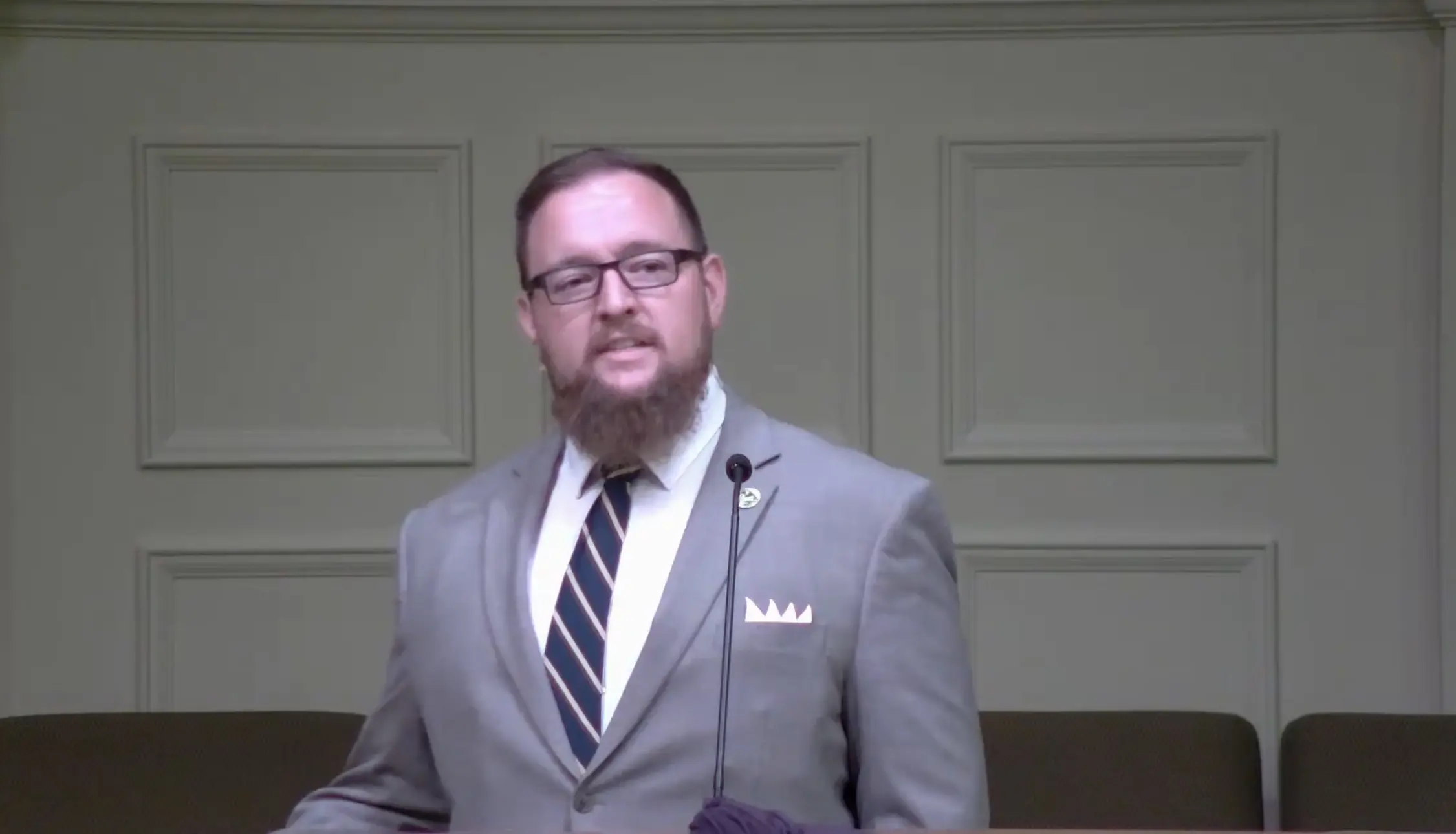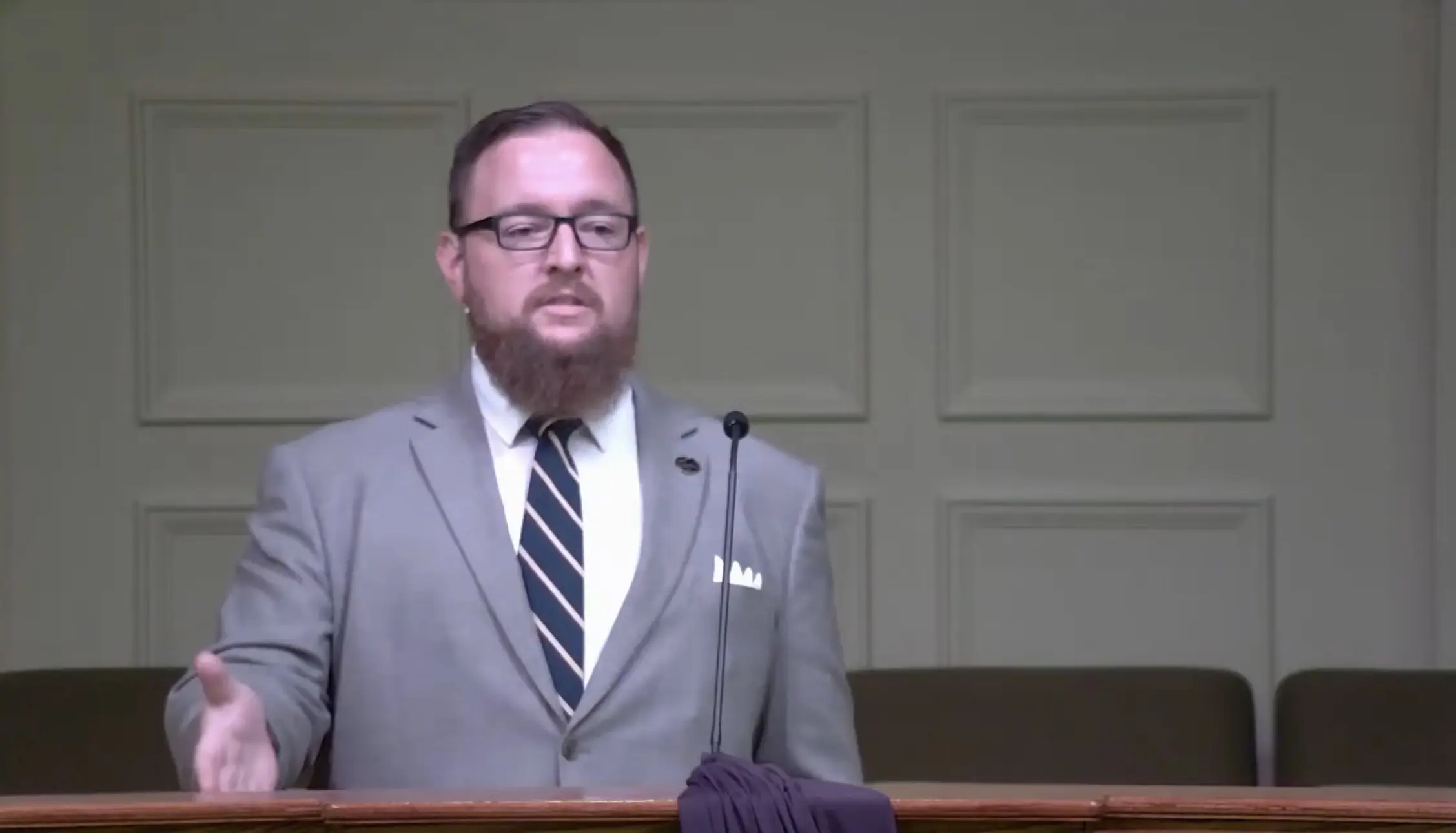

Video
“The Will of My Father”
John 6:38-40
Pastor Ryan J. McKeen
02/15/2026
Audio
Transcript
Amen. Turn with me in your Bibles to John chapter six. John chapter six. I appreciate Pastor Pyatt’s words earlier on the importance of prayer. And I think it’s true that we have been reminded of and presented with the reality of the importance of prayer in the recent weeks and months. And as we come to our sermon today, our focus will be on the assurance of salvation. And as we think of that in relation to prayer, as I read the high priestly prayer of Jesus earlier, I am convinced that one of the most powerful assurances and evidences of salvation to ourselves is our prayer life. I can think back over my own life, especially since feeling God call me to pastoral ministry and looking at the evidence of answered prayer in my own life as I was called away from the life that Chelsea and I had built. We had a very successful and established life on our family’s farm, our successful family business.
And God said, no, that’s not for you. And he called us to step out and leave the farm and pursue pastoral education, theological education, with absolutely no guarantees. We didn’t have jobs. We didn’t have a place to live. We didn’t even know how things were gonna go when we got to school.
But we prayed about it. And a lot of people prayed for us through that time. And every single step of the way, God provided, and provided in ways we had absolutely no way of knowing were going to happen, provided things that we didn’t even ask for. And over and over again, throughout our lives, God continues to show himself to us in our answered prayers.
We talk about the assurance of faith. Faith is hope in things we cannot see. It is belief in a God that we cannot see with our own eyes. And one of the greatest testimonies that this is real, that my faith is vindicated, is when that God I believe in does something I can see.
And he answers a prayer in a way that I couldn’t fathom. And in the last several weeks and months, we’ve continually seen that. God answer prayers in ways that he didn’t have to. In ways that that’s not how it should be going. That’s not what was supposed to happen. But God in his goodness and grace allowed it to happen that way. He made it happen that way. And he shows us himself by answering prayer.
And so as we think about the assurance of our faith, and if you as a Christian have ever struggled with the assurance of salvation or the assurance of your faith, and I know you have, because we all have. One of the biggest encouragements I can give you is to pray and to be involved in the life of the church in prayer. We gather as God’s people. to pour out our hearts and to lift our requests and our needs to God and we do it in front of all of us so that we can see the evidence of God play out before our own eyes when he answers our prayers. So I would encourage you not only to be praying but to be part of our Wednesday night prayer services where we do this very thing.
It is a resource of assurance for us that God has given us. As I said, we’re going to be talking about assurance of salvation, and we are once again in the heart of Jesus’ sermon recorded in the sixth chapter of John. And last time, last Sunday morning, we saw Jesus reveal to these crowds why.
Why it is that some people come and believe and some don’t. Why it is that some people had become his followers, his disciples, and who truly believed him and who he said he was, and others were simply following him around to see the signs or to fill their stomachs with more of the bread that he provided. Why is it What’s the difference? Why is it that some are believing and some are not?
And Jesus answered that in verse 37 by saying, all that the Father gives to me will come to me. Every single one that the Father gives to me will come to me. And so the implication is, from here and from other places in scripture, That those who don’t come weren’t given. That’s why they didn’t come. Because all of the ones who do come are the ones who were given. All that the Father gives me will come to me.
This is one of the great statements in the Bible revealing the doctrine of what we call effectual calling. or the calling that’s effective in the heart of a believer. It’s the calling of a sinner by God to salvation. And it happens every single time somebody gets saved. Every single believer has heard the call, the effectual call of salvation. Now, there are two types of calling in salvation, and sometimes they do get confused. For example, there is what we call the general call, the general call of salvation to everyone. Every single person is called to be saved.
We see this in Acts chapter 17, verse 30. Therefore, having overlooked the times of ignorance, God is now commanding men that everyone everywhere should repent. God is commanding everyone everywhere. That leaves out no one. Everyone everywhere should repent. And that call is for everybody.
That’s why we call it the general call. In general, every single person in the world is called to repent and believe in Jesus Christ. But there’s another call, a call that is always heard, a call that is always listened to and responded to. That’s why we call it the effectual call. It has its effect. This is the call we see here in John 6,
- All that the Father gives me will come. If they belonged to the father, everyone that he gives to the son will come. You see this again in John 6, 44, a few verses down. No one can come unless the father who sent me draws him. So it’s the other side of the equation here. First, all the father gives me will come. The other side is, but no one can come unless the father draws him.
We see it again in a few chapters in John chapter 10, where Jesus says in verses 26 and 27, again, covering the same topic, addressing the crowds as to why they don’t believe. John 10 verse 26, but you do not believe because you are not of my sheep. In verse 27, he explains, because my sheep hear my voice. and I know them, and they follow me. No such thing as a sheep who never follows him. His sheep follow him, and they follow him because they hear his voice.
That is this effectual call that always has its intended effect. This is the call, for example, that Lydia heard in the book of Acts. Acts chapter 16, verse 14. And a woman named Lydia from the city of Thyatira, a seller of purple fabrics, a worshiper of God, was listening.
Whose heart the Lord opened to pay attention to the things spoken by Paul. Why is it that she believed? Is it because she figured it out? Is it that finally she put the pieces together and it finally made sense to her? because the Lord opened her heart to pay attention to the things spoken by Paul. God did it. That’s why she believed. This is the effectual call, the call that effectively brings all who hear it to saving belief in Jesus Christ. We also call this idea irresistible grace. that to those whom God intends to save, his grace is irresistible. They will come.
All whom the Father has given will come to me. This means that God’s grace will never be frustrated. God is not in heaven thinking, oh, I really wish that one would be saved. I really wanted them to become a Christian, but I just can’t do anything about it. All the Father gives to me will come to me.
And it also means that because of this, because of the gift of those who were the fathers to the Son, it guarantees that Jesus Christ could not have died in vain. Because you know the inverse leaves that possibility open. If Jesus Christ went to the cross not knowing if or who would believe in Him or not, then it’s entirely possible that nobody could have believed. that his death would have been for nothing. If it was totally up to man to figure it out and believe in him for salvation, without God’s hand upon them, bringing them to himself, bringing the ones whom he had in mind to himself, then it’s entirely possible that Jesus Christ dies on the cross and nobody believes. But that’s not how it happened.
God chose, foreordained, foreknew, before the foundation of the world, a people, a people for himself, a people who would be the bride of Christ. And that’s who he went to the cross for. Jesus Christ came to die for certain people, as Ben mentioned earlier with the idea of the particular Baptist. There’s a particular people God has for himself.
And this cannot be explained away by God’s foreknowledge, that he in his all-knowing omniscience foresaw the ones who would figure it out and believe, and therefore sent Jesus to die for those people. But that doesn’t help. It doesn’t help alleviate the problem here because you’re still leaving not only salvation up to the will of man, but even the death of Christ is dependent upon the choices of sinful people. So instead of thinking through the process of salvation, in a self-focused, man-centered way, we should look at what the Bible says about how God worked this out.
And this is what we see in John chapter six. And when we look at what the Bible says, we see that God in Christ is the author of salvation. Hebrews chapter 12 speaks of this. Hebrews chapter 12 verse 2, fixing our eyes on Jesus, the author and perfecter of our faith, who for the joy set before him endured the cross, despising the shame, and has sat down at the right hand of the throne of God. What do you think it means that he’s the author of salvation? It means that he caused it to be.
And he perfects it. Not only is he the author of salvation by being the one from whom the plan comes, but he’s also the author in the sense that just like any good author, he finishes the story. He finishes the story of our salvation. He keeps us. God brings the plan of salvation to its perfect conclusion. first by irresistibly drawing men, women, and children to himself. He will have a people.
This is exactly what verse 37 of John 6 is teaching. And it’s upon these basic truths of our salvation that the next verses depend, which reveal the assurance of our salvation. Because God is the author and perfecter of our salvation, we know our salvation is sure. If we try to make our salvation dependent upon us and our choices, then there is absolutely no certainty to your salvation. And it makes a statement like, all the Father gives me will come to me, impossible. But with the truth of God’s sovereignty and effectual work in our salvation, we can find full assurance that we are truly His and we can never be lost. As the last phrase of verse 37 says, and the one who comes to me I will never cast out. This is the basis. For our assurance.
And it sets the stage for our text this morning as we focusing on the next three verses in Jesus sermon here in John 6. And it’s in these three verses that we find three reasons. Why our salvation is secure? Three reasons why we can have assurance of salvation. And you’re not in these verses because it’s not up to you. The three reasons why our salvation is secure is number one, the obedience of Christ. Number two, the ability of Christ. And number three, the promise of Christ. Those are the three reasons why we can know that our salvation is sure. So allow me to read these verses for us this morning. John chapter six, verses 38 through 40. John six, verses 38 through 40. This is the word of the Lord.
For I have come down from heaven, not to do my own will, but the will of him who sent me. Now this is the will of Him who sent me, that of all that He has given me, I lose nothing, but raise it up on the last day. For this is the will of my Father, that everyone who sees the Son and believes in Him will have eternal life. And I myself will raise Him up on the last day.
Now the ultimate answer for the assurance of our salvation is simply the will of God. The will of God is repeated in each of these verses. If it is the will of God that we come to Christ and believe, it will certainly be His will that we remain in Christ. The death of Christ and His atoning work cannot be undone. If His atonement has been applied to you, That can’t be taken back. Those sins have been paid for. That wrath has been appeased.
It was determined along with our salvation long before the foundation of the world that Jesus would be the one to come and save this people. 1 Peter 1, verse 20, he was foreknown before the foundation of the world. but He appeared in these last days for the sake of you. And then in Ephesians, not only was He foreknown, Ephesians 1, verses 4 and 5, just as He chose us in Him before the foundation of the world, that we would be holy and blameless before Him in love by predestining us to adoption as sons through Jesus Christ to Himself according to the good pleasure of God. It is ultimately the will of God that any believer come to Christ. And because it was determined before the foundation of the world, they will remain in Christ. God’s not going to change His mind after all of this time. And I know the mental battles that we face with our assurance of salvation. Oh, but you don’t know how rotten of a sinner I am. I fell into that sin again. How can God save someone like me if I keep sinning? You have no idea how bad I am. No, I truly don’t.
But he does. And still, he foreknew you, and he predestined you, and he chose, and called, and redeemed, and justified, and one day will glorify you if you are in Christ. So ultimately, it all rests on God’s unchanging will as we see repeated in these verses. But the three reasons why we can trust in our assurance according to his will, that we will be kept in God’s saving grace, is number one, the obedience of Christ.
Verse 38, for I have come down from heaven not to do my own will, but the will of him who sent me. The four that starts this verse, introduces the reason why Jesus can say, in all that he gives to me, I will never cast out. This is why. For, number one, I’ve come down to do the will of my Father. The entire purpose of the incarnation of his coming down from heaven in human flesh was not to do the will of his human flesh. It was to do the will of the father who sent him. Just like Jesus said in chapter five, as we covered in verse 30, I can do nothing for myself as I hear I judge. And my judgment is righteous because I do not seek my own will, but the will of him who sent me.
This again is another place in scripture here in John 6 where we see the two wills of Christ appear. Unlike you and I, Jesus had two wills because he was truly God and truly man. We are just truly man and we have our one human will. Jesus is truly God and truly man. And on the one hand, he shares the divine will with the Father. There is one will of God. That is his divine will.
But on the other hand, he is truly human. And like any human, he has a human will, human desires. And what he’s saying here is that his keeping all of those who’ve been given to him, is not because His human flesh and will are what desire it. It’s not the humanity that wills this to happen. It’s God’s will that drives this to happen. Jesus, as the perfect man, completely and perfectly submits to the will of God. There are times where we see Jesus’ human will have to be submitted to the will of God.
Not because he was sinning or going against God’s will, but because his flesh didn’t desire in the flesh to do that thing. For example, Matthew 26 verse 39, Jesus in the garden praying about the crucifixion that he knows is going to happen. Matthew chapter 26 verse 39, he went a little beyond them and fell on his face and prayed, saying, my father, if it is possible, let this cup pass from me.
Yet not as I will, but as you will. Not as my human will wants, but I choose to obey what the divine will requires. My humanity and my flesh really doesn’t want to be crucified and die. That will be painful. I don’t want to go through with it in my human flesh. But I’m willing to go against my human fleshly desires so that the divine will will be accomplished.
Not only does he perfectly obey in his death and redeem all those that God has given him, all those the Father gave to him, he perfectly obeys the will of God so that none of them will be lost. It’s not as though he’s saying he doesn’t want to keep them.
He’s simply saying that the want to starts with God. His human will submits to God’s will, the divine will, and therefore, in his obedience, he will keep us. Jesus submits himself to be in perfect harmony with the Father’s will, as he always does and always will do. So as you see here, the first ground of our assurance is what we’ve already seen Jesus do, perfectly obey. It’s His perfect obedience. If He was willing to endure the cross in perfect obedience, you can be sure that if it’s God’s will we remain saved, He will make sure it happens.
For I have come down from heaven not to do my own will, but the will of Him who sent me. The next reason why we can trust that we will be kept in God’s saving grace is not only is He obedient, but He’s able. The ability of Christ is our second ground of assurance. Now this is the will of Him who sent me. So this is what He will obey, that of all He has given me, I lose nothing, but raise it up on the last day. It is the will of God that Christ loses nothing that He’s been given.
Otherwise, He wouldn’t have given it. He wouldn’t give this gift to the Son if He thought He was going to lose it. Remember, God is in control of the whole process of salvation as we’ve seen. He would not go to all the trouble of redeeming a people just to have an incapable redeemer who couldn’t keep them.
I read from John 17 earlier in the service, in verse 12. of Jesus’ high priestly prayer in John 17 verse 12. He says, while I was with them, I was keeping them in your name which you have given me. And I guarded them. And not one of them perished, but the son of perdition, so that the scripture would be fulfilled. This is an interesting verse. I guarded them and not one of them perished, but the son of perdition, so that the Scripture would be fulfilled.
Jesus is so capable of keeping those whom He’s been given that the one that He did lose, He was supposed to lose. Not that He was saved and lost His salvation. This is Judas we’re talking about. But Jesus is explaining that although it looked like Judas was his, although it looked like Judas was one of his true followers and disciples, ultimately God had determined, as revealed in scripture, that he actually was not his. So even though he appeared to be one that Jesus lost, Jesus says, don’t worry.
Scripture had to be fulfilled, and he wasn’t lost. He was supposed to be lost. Because in the very next chapter, Jesus clarifies and firmly states in John chapter 18, verse 9, in order that the word which he spoke would be fulfilled, of those whom you have given me, I lost not one. Not one. Although it appeared as though Judas was His, apparently He was not one that the Father had given Him. Because of those ones, Jesus has lost not one. God knew what He was doing in determining who the Redeemer would be. He is the one who is able to not lose any of the ones He’s been given. Again, in John chapter 10, that great verse in verse 27, but continuing to verse 30, my sheep hear my voice and I know them and they follow me. But not only do they hear my voice and they follow me. It keeps going, and I give eternal life to them, and they will never perish ever, and no one will snatch them out of my hand. My Father who has given them to me is greater than all, and no one is able to snatch them out of the Father’s hand.
I and the Father are one. This is our assurance. He again is highlighting the unity of his will with the Father and his ability to keep those who were saved. No one is able to snatch them out of my hand. Why? Because I and the Father are one. My hand and the Father’s hand are one in the same. And if you’re in his hand, you’re in my hand, and no one is taking them out of our hand. He can keep them because He’s God. I and the Father are one.
That is why He is able to keep us in salvation, in the saving grace of God. So the second ground of our assurance of salvation is the ability of Christ. And lastly, Verse 40, we see the promise of Christ. The promise of Christ. For this is the will of my Father, that everyone who sees the Son and believes in Him will have eternal life, and I myself will raise Him up on the last day. Now notice this blessing of assurance This blessing of promise that you will be raised on the last day is never separated from repentance and faith. Jesus says this promise belongs to everyone who sees the Son and believes in Him. They’re the ones who will have eternal life. All who are united with Christ in His death return with Him in glory.
Turn with me to 1 Peter 1. The introduction to Peter’s letter is such a comfort to us, and it speaks of this very thing we’re talking about this morning. Not only the assurance of our salvation, but the assurance of our salvation because of God’s saving work. 1 Peter 1, starting in verse 1. an apostle of Jesus Christ, to those who reside as exiles, scattered throughout Pontus and Galatia and Cappadocia and Asia and Bithynia, who are chosen according to the foreknowledge of God the Father, by the sanctifying work of the Spirit, to the obedience of Jesus Christ. There’s the Trinity for you. And the sprinkling of his blood. May grace and peace be multiplied to you.
Blessed be the God and Father of our Lord Jesus Christ, who, according to his great mercy, has caused us to be born again. Why are we born again? Why is it that we are born again? Because the evangelist was convincing enough Because I was smart enough to figure it out. According to His great mercy, He caused us. He caused us to be born again. To a living hope through the resurrection of Jesus Christ from the dead.
To obtain an inheritance incorruptible and undefiled. and unfading, having been kept in heaven for you. You see, not only are you saved, you have an inheritance, an inheritance that cannot be touched. It is incorruptible. It is more stainless than stainless steel.
Being kept in heaven for you, for who? kept in heaven for you who are protected by the power of God through faith for a salvation ready to be revealed in the last time. Faith is in there in the middle, but the ones who have faith are the ones who are protected by the power of God. That’s faith. That’s true faith. Protected by the power of God through faith for a salvation ready to be revealed in the last time. This is the promise of the assurance of our salvation. We are being kept and protected by him.
And not only that, Jesus says here in verse 40 of John chapter six. Go back to John chapter six. Jesus says, I myself will raise him up on the last day. I myself. This is intentionally emphatic. You’re supposed to take note of that. He could just say, I will raise him up on the last day like he said before, but no, he says, I myself will raise him up on the last day.
If you believe that Jesus is a good enough savior for you to die on the cross and take your sins, you ought to believe he’s a good enough savior for you to protect you and keep you in salvation. until the day he returns. He himself will raise us up. He won’t forget you. He died for you. He’s going to bring you with him. He’s not delegating this responsibility to anybody.
He’s not saying, Peter, don’t forget those people over there in that graveyard. I myself will raise him up. The one who is perfectly able to keep us is the one who will raise us up himself when he returns. The same one, the author and perfecter of our faith, he will raise us up.
This is why Paul wrote in Philippians 1, verse 6, for I am confident of this very thing. that he who began a good work in you will perfect it until the day of Christ. Paul was confident. He was confident of this. Why? Because this is a promise of Jesus, his savior. I myself will raise him up on the last day. Take that to the bank. That’s a promise by the one who keeps his promises. He’s coming back one day and he’s bringing me with him. Write it down, mark it. He is coming back and he’s bringing me too. That’s the promise to each and every person who sees the son and believes in him. So do you? Do you see Him? Do you see the Son of God as He’s revealed here in His Word? Do you see that He’s the only Redeemer you’ve got? He’s the only one offering to take the punishment for your sin. If you don’t come to Him and trust Him for salvation, you still face that debt.
The wrath of God is piling up for the day of His wrath when He returns and pours that out on unbelievers. That’s what the Bible tells us. And the only people who’ve had that punishment taken for them are those who believe in Him, those who see and believe in the Son, that He is the Savior, that He did take my sin on the cross, he’s coming again, and he will raise every single person from the grave. As Jesus told us again in John chapter five, do not marvel at this. Don’t be surprised, for an hour is coming in which all who are in the tombs will hear his voice, And will come forth every single person who’s ever died will come stand before Jesus Christ.
Those who did the good deeds will be raised to a resurrection of life. But those who committed the evil deeds to a resurrection of judgment. And this is not saying if you do good enough, you will get life. The good deeds he’s talking about are believing in him. This is the work of God, that you believe in him whom he sent.
So which resurrection will you see? You’re gonna see one. Which resurrection will you see? The only way to see the resurrection of life and to avoid the resurrection of judgment is to come to Him and believe. If you do not yet know Him, you need to come to Him today. Please stay and talk to someone here about your need for salvation and how you can come to know Him and believe in Him for salvation.
And if you do, He Himself will raise you up on the last day. That’s our hope. He Himself is our hope. That’s our assurance. He will hold us fast. Let’s stand and close in a word of prayer this morning. Our God in heaven, we are so thankful to you for providing a way of salvation, but not only that, for providing yourself a people. For gathering your people to yourself, the ones who were yours, and giving them to the Son. We thank you for your perfect plan of salvation. We thank you for such a redeemer who will never lose one that you give him.
We thank you for the promise that Jesus himself will raise us when he returns. God, we are so humbled. Why would you choose a people like us? Why would you do this? But we are so thankful for your grace and your mercy and your goodness and your power to make this happen. God, we praise you, we worship you, and we glorify you this morning. In Jesus’ precious name, amen.