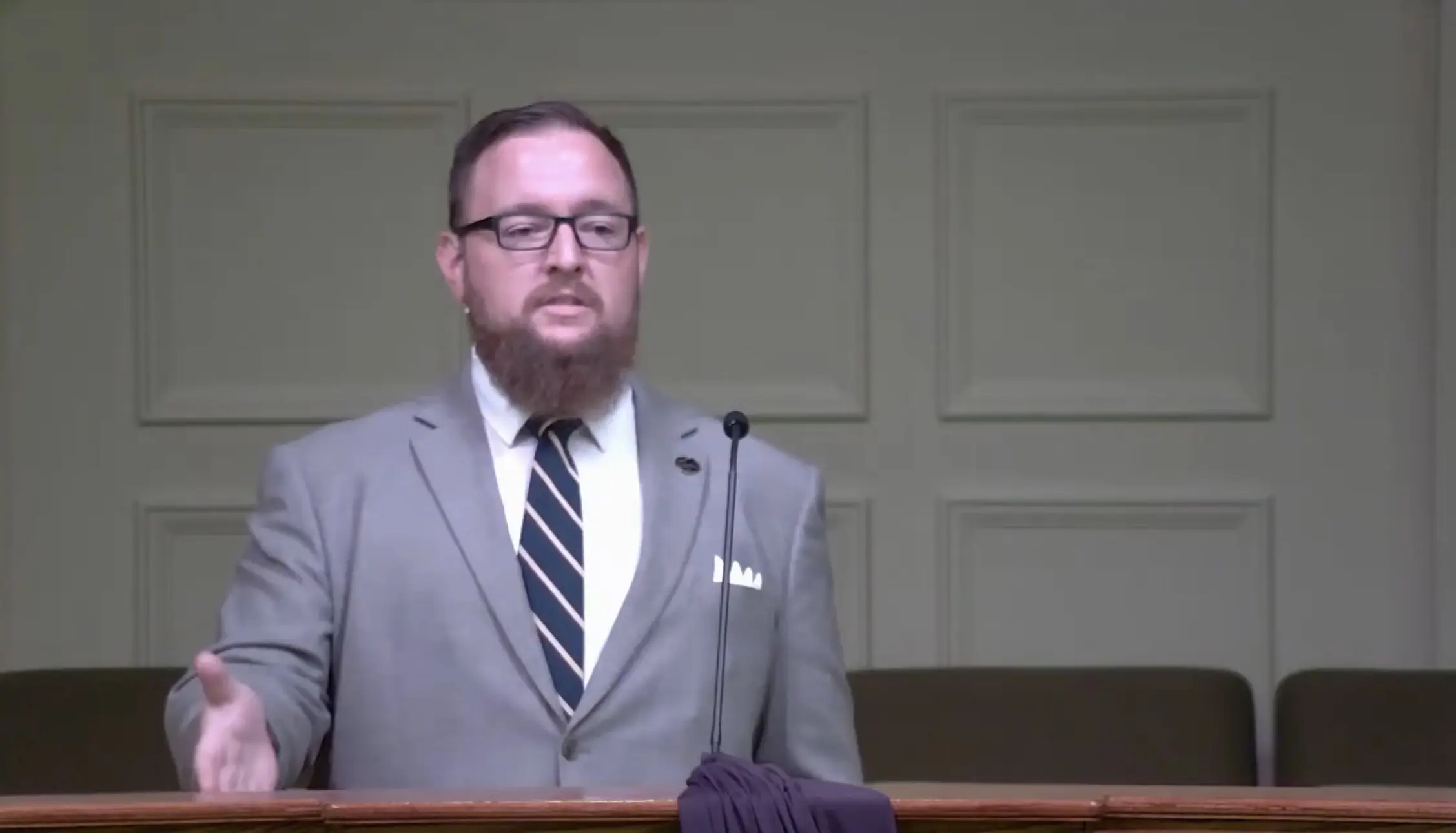

Video
“The Object of Worship Pt. 2”
Pastor Ryan J. McKeen
02/15/2026
Audio
Transcript
Glorify your name through me. That’s exactly what we’ll be looking at this evening. If you could turn with me in your Bibles, we’ll begin in Isaiah 42. If you could turn to Isaiah 42. Isaiah chapter 42, and we’ll be reading verses five through nine to begin with this morning, or this evening, I should say. This is what Isaiah has to say, reflecting the words of Yahweh as he has recorded them for God’s people. This is the word of the Lord. Isaiah chapter 42, starting in verse five.
Thus says the God, Yahweh, who created the heavens and stretched them out, who spread out the earth and its offspring, who gives breath to the people on it and spirit to those who walk in it. I am Yahweh. I have called you in righteousness. I will also take hold of you by the hand and guard you. And I will give you as a covenant to the people, as a light to the nations, to open blind eyes, to bring out prisoners from the dungeon and those who inhabit darkness from the prison. I am Yahweh. That is my name. I will not give my glory to another, nor my praise to graven images. Behold, the former things have come to pass. Now I declare new things. Before they spring forth, I cause you to hear them. Last Sunday, we began looking at the object of worship.
That is, what or who do we worship? And we started with the examples of the wrong object of worship, or what the Bible calls idolatry. And we looked at several different examples of that and how God, even in this section of scripture we just read from, Isaiah 40 through really verse chapter 45, is confronting idolatry, showing the foolishness of worshiping something other than him. And that’s really what idolatry is, worshiping someone or something that isn’t Yahweh, the God of the Bible. And again, we looked at several types of that.
And then we began looking at, at least, the right object of worship. And we know that that’s God, that God is the one to worship. And we saw that from John chapter 4, as Jesus explains to the woman at the well, that they worship, the Samaritans worship, what they do not know. but Jesus and his followers worship what they do know, and true worshipers will worship the Father, will worship God. I mean, this is very basic to being God’s people, very basic to being a Christian, or in these days, to be a member of Israel, the Israel who are the children of God, those who are called out his people.
I mean, it’s the very first commandment Exodus chapter 20, verse 3, where the 10 commandments are found, the very first commandment is, you shall have no other gods before me. Number one, don’t have any other gods. Don’t worship anyone else. There’s one God, you shall have no other gods before me. Pretty simple. But if you didn’t get that one, if that one didn’t make sense to you, the second commandment You shall not make for yourself an idol or any likeness of what is in heaven above or on earth beneath or in the water under the earth. You shall not worship them or serve them.
For I, Yahweh your God, am a jealous God, visiting the iniquity of the fathers on the children, on the third and fourth generations of those who hate me, but showing loving kindness to thousands, to those who love me and keep my commandments. He is a jealous God. and He alone is to be worshiped. He is jealous for our worship and our affection, for those who love Him. That is what He wants from us.
And that is because not only is it the highest good for everyone and everything in the world when people worship Him, but it’s because worship is due Him. He is owed worship for who He is. That is what the word worship means, that the one being worshiped is worthy of the honor being given. That is what it is to worship.
And we started looking at this last time, but that’s what we’ll focus on tonight is why is he worthy of our worship? Why is it that we ought to worship him and nothing else? And last time we began a little bit near the end of looking at this and we saw, first of all, that he’s worthy of worship because he’s the creator of everything. Everything that is owes its being to him. So right off the bat, everything ought to worship the one that created them. And so we’ll come back to that in a moment. when we come to the reasons why he ought to be worshiped.
But first, what I want to start with is looking at the very name of God, the very name that God gives us, gives God’s people, yet he gave it through Moses, to call him. And there are many names that we look at in scripture, but really those are titles, titles that are given to God because of who he is and what he does and the benefits that he is to his people. Titles like, we talk about Elohim, which is just the Hebrew word for God, that he is given the title God, or the Almighty, or the Most High, or Lord, or Master, King, Father.
Many other titles that he’s given, but there’s one personal name that he claims. One name that he gives for his people to call him. And this is unlike any other false god. Any of the gods of the nations or the idols or false gods that were worshiped, they were thought up by somebody and given a name by somebody. This God speaks and gives his own name to his worshipers, which alone makes him unique.
But Psalm 115. As we read before, we read last week, it talks about these idols. They have mouths but they do not speak. They can’t tell you what to call them because they don’t speak. Anything that is directed as worship to false gods is a making of your own imagination. It’s not real. But the true God does speak. And he gave his name to his people.
Turn with me to Exodus chapter three. Exodus chapter three is where God gives his name to Moses. You know the story of Moses and the burning bush. He sees this bush that’s burning but not being consumed and he comes over and the voice speaks from the bush and says, take your sandals off, you’re standing on holy ground. Then he tells Moses that he needs to go and confront Pharaoh and tell him to let his people go. You get down to verse 13.
Moses says to God, behold, I’m about to come to the sons of Israel and I will say to them, the God of your fathers has sent me to you. And they will say to me, what is his name? And what shall I say to them? So Moses asks him, I’m going to tell them that God wants me to let them go.
I’m telling Pharaoh, the leader of the Egyptians, you have many gods. Which God shall I tell them is saying to let these people go? Because if I just say God’s telling you to let them go, they’re gonna say which one? We have a lot of gods. Which God is telling you this? So whose name should I give? What name should I give them as to the God who’s telling them this?
In verse 14, God said to Moses, I am who I am. And he said, thus you shall say to the sons of Israel, I am has sent me to you. And God furthermore said to Moses, thus you shall say to the sons of Israel, Yahweh. The God of your fathers, the God of Abraham, the God of Isaac, the God of Jacob has sent me to you.
This is my name forever. And this is my memorial name from generation to generation. that name, Yahweh, comes from that phrase, I am. It’s the way that the Hebrew spells the phrasing, I am who I am. That’s Yahweh. That’s how that name comes across. And so, God tells Moses, yeah, the one God is the one sending you, the God of Abraham, the God of Isaac, and the God of Jacob, but my name, since you asked, is Yahweh. Yahweh, the God of your fathers. And then he says, this is my name forever. And this is my memorial name given from generation to generation. I think that’s important for us. I think that’s something we need to think about.
What name do you think we should use of God? In most English translations, the personal name of God is rendered as all caps, Lord, L-O-R-D, all capital. But why? Because the word Lord comes from the Hebrew word Adonai, which means Lord or Master. But that’s not what’s here. God didn’t tell Moses, tell them that Adonai sent you. He said, no, tell them that Yahweh sent you. And this is my name forever, from generation to generation. And that’s partly because There’s a lot of history as to why our Bibles, most of our English Bibles, say what they do in those cases where it’s capitalized as Lord instead of Yahweh.
And I’ll explain a little bit of that just to help us understand the name of God and how we ought to think about that. And it’s partly because the Ten Commandments prohibit saying the name of God in vain or using the name of God in vain. And by the time the Greek translation of the Old Testament, the Septuagint, was being translated, which is in the third century BC, so 300 years before Christ, which is after they’re released from exile, but before Jesus came, so in that intertestamental period. But by then, the Jews had developed such a fear of mispronouncing God’s name or using it wrongly. that they just stop saying it out loud. They just, well, we don’t wanna take the Lord’s name in vain, so we’re just not gonna use it at all. We’re gonna avoid using it.
But is this what God said to do? Is this what Yahweh said in Exodus 3? This is my name forever, and this is my memorial name from generation to generation. They were supposed to remember, this is my memorial name, this is my name for you to remember. They were to remember that specific name from generation to generation, not stop saying it altogether. So that most people today have never even heard Yahweh, even if they’ve grown up in church. Is that remembering the name from generation to generation?
Well, this was clearly superstition on behalf of the Jewish scribes as they came to translate the Hebrew scriptures and started just avoiding the name because they just wanted to avoid stepping into sin. Rather than think about what it actually means to take the Lord’s name in vain, we’re just gonna stop saying it all together.
Really, this is just an easy way out of obeying God’s commands. It’s like, think of it this way, it’s like when Catholic priests and nuns want to avoid sexual immorality, sexual sin, so they just go celibate. We’re just gonna avoid it all together. How’s that working? It’s the same idea. We want to avoid this sin so badly, we’re going to go and avoid the topic altogether. That’ll fix the problem. No, that’s not what God said.
But in an effort to avoid saying this name, as the Jews of that time and following, even when they would read the scriptures in their synagogues, as they came to the name Yahweh, They would substitute it with things like the name, in Hebrew is Hashem.
So they would come along and then you’d see Yahweh in the text and they would just say, and the name. Or sometimes they would go with Adonai, which is Lord. And from there, that’s how that came into our English versions. So they trained themselves to, as they were seeing one thing, to say another.
Now it just might be me, but I don’t think that’s what God had in mind when he said, my name is Yahweh. Remember it. Generation to generation. This is my name forever. Not this is my name until you come up with something you’d rather say. This is my name forever. I think it’s important that we remember the name of God and what it means.
But this practice of substituting the name explains why the translators of that Greek Old Testament, the Septuagint, used the word Lord. And again, this carries over into not only our English Bibles, but you even see it in the New Testament where people or authors and people speaking would quote the Old Testament and use the word Lord, because the Bible they were using in their culture that spoke Greek was the Septuagint. And there’s a lot of evidence that shows Actually, while I was, Pastor Stephen and I were at that conference a couple months ago, there was a whole session on the use and authority of the Septuagint, and they showed really good evidence that the Septuagint was the Bible of the New Testament writers. That was the Bible that they knew and quoted. There’s passages that they examine and show that this is clearly coming from this Greek translation of the Old Testament. So that’s how you see this name as it kind of comes down through the history of translation and ends up what we see today. But one clear piece of evidence that shows throughout the history of the time of the Old Testament that people were not afraid to pronounce the name of God. One piece of evidence of that is names of people in the Bible that include the name of God.
For example, Jeremiah, which means founded on Yahweh. That Yah at the end comes from God’s name. And so as people named their children, they weren’t afraid to pronounce the syllables of God’s name. And there’s others like Jehoshaphat, means Yahweh is judged. Yeshua, which is Joshua, which means Yahweh saves. That’s also where we get the name Jesus from.
So it’s very clear that throughout the time of the Old Testament, they weren’t afraid of this name. So, it was a later development, and during the Old Testament times, they did use it quite often. And one of the reasons, not the only reason, but one of the reasons why I do like the LSB translation that I preach from and have for a couple years now, is because they have sought to correct this common practice that has come about in replacing the name of God with this all caps Lord that we see so often. Now again, God is the Lord, Yahweh is the Lord, and there are many times in scripture that that word Adonai, which is the Lord, is used. And really, using the actual name of the Lord where it’s found makes a lot more sense of many scripture passages.
For example, Isaiah 42, I am Yahweh. That is my name. It’s a passage I just read. Isaiah 42, verse 8. I am Yahweh. That is my name. I will not give my glory to another. Again, the Lord is not his name. That’s his title. That’s what he is. Who he is is Yahweh. Yahweh is his name. That’s what Exodus 3 told us. So when we see a specific place where he says, this is my name, but yet we replace the name, That’s not what was originally said. That’s not what he was saying there in Isaiah 42.
Or in another favorite and well-known passage of ours, Psalm 8, verse 9, O Yahweh, our Lord, how majestic is your name in all the earth. Or as you probably know it, O Lord, our Lord. O Lord, our Lord, how majestic is. Your name in the first one would be capitalized, showing the difference there. But in Hebrew, it literally says Yahweh Adonai. They’re two different words. There’s the name and then the title.
Yahweh, who is our Lord, how majestic is your name in all the earth? So it doesn’t make a lot of sense in this verse to speak of the majesty of the name of God and then act like it’s off limits to say. It’s Yahweh, our Lord. Even in worshiping him, this psalm is extolling the very name that many scribes were afraid of as the translations came down.
But Yahweh is the name given directly by God to his people. Again, unlike the false gods, one of the things that sets him apart is his name, and that is who we are to worship. Who is the correct object of worship? Yahweh, the I Am, the God of the Bible, is the correct object of worship. So that is the name of God, but again, why ought Yahweh to be worshipped. Why is it that he should be worshipped?
Well, he tells us that too. The God of Israel was worthy of Israel’s worship as he explains it to them for many reasons. And we’ll mostly look at the Old Testament and the reasons given there because they’re the same reasons that we have. for worshiping God. And first of all, as we touched on last week, first of all, he is worthy of our worship. We ought to worship him because he is the creator of all things.
He alone deserves our worship simply for that. We saw last time the example of Melchizedek and Abram. As he worships the creator, the possessor of the earth, We saw throughout the Psalms in Isaiah, we’re told over and over that Yahweh is to be worshiped because he is creator.
We saw that in Isaiah 42 that I read earlier. But turn with me to Psalm 29. Psalm 29 is one of those Psalms that speaks of the worship of God and directs us to the reasons why we ought to worship him. Psalm 29, I’m going to read the whole thing. Starting in verse 1, the Psalm of David.
Ascribe to Yahweh, O sons of the mighty. Ascribe to Yahweh glory and strength. Ascribe to Yahweh the glory of His name. Worship Yahweh in the splendor of holiness. The voice of Yahweh is upon the waters. The glory of God thunders. Yahweh is over many waters. The voice of Yahweh is powerful. The voice of Yahweh is full of splendor.
The voice of Yahweh breaks the cedars. Indeed, Yahweh breaks in pieces the cedars of Lebanon. He makes Lebanon skip like a calf, and Sirion like a young wild ox. The voice of Yahweh hues out flames of fire. The voice of Yahweh causes the wilderness to tremble. Yahweh causes the wilderness of Kadesh to tremble. The voice of Yahweh makes the deer to calve and strips the forest bare.
And in his temple, everything says, glory. Yahweh sat enthroned over the flood. Indeed, Yahweh sits as king forever. Yahweh will give strength to his people. Yahweh will bless his people with peace. You think the name of the Lord is important to him? This is a worship song. A worship song of Israel in every verse reminds us of the name of God. Ascribe to Yahweh the glory of His name. I mean, what a line of scripture that is. But ascribe that glory of His name. Why ascribe that glory?
Because of His creation. Because of all that He has created and the way that He cares for His creation, as the rest of that psalm explains. It is Yahweh who does all of these things. Who has done all of these things? And that’s Psalm 29. And as we spoke of the wrong object of worship and idolatry last time, what is the heart of idolatry? What is idolatry at its core? Romans 1. Romans 1 verse 20, for since the creation of the world, his invisible attributes, both eternal power and divine nature have been clearly seen, being understood through what has been made, so that they are without excuse.
For even though they knew God, they did not glorify him as God or give thanks. But they became futile in their thoughts, and their foolish heart was darkened. Professing to be wise, they became fools, and exchanged the glory of the incorruptible God for an image in the likeness of corruptible man, and of birds, and of four-footed animals, and crawling creatures. Therefore, God gave them over in the lusts of their hearts to impurity, so that their bodies would be dishonored among them. Four, why did they do all this? What led to all of this? Four, they exchanged the truth of God for a lie. And they worshiped and served the creature rather than the creator.
Who is blessed forever, amen. That is the heart of idolatry. Getting the creator out of his place. Worshiping and serving the creature rather than the creator is the heart of idolatry Even though he is evident to every single person in creation Mankind has rejected him So creator is the first role that makes him worthy of our worship But Yahweh is also especially worthy of our worship because of the favor that He shows His people. This is the grace of God. Grace is unmerited favor. And God shows His people unmerited favor.
He always has. It’s who He is. He is the God of grace. So here are just five ways, because that’s all we’ll have time for, five ways that God has shown his people favor in the past, but that also reflect the favor he shows us. Number one, and what should be number one for all of us, he redeemed us. God redeemed his people. He redeemed His people from their own mess and called them out to Himself. And what’s the Old Testament example of our redemption? It’s the Exodus. It’s God redeeming his people from Egypt, from slavery in Egypt.
As my Old Testament professor told us over and over, this is the touchstone of the Old Testament. This is what they were to keep going back and touching and reminding themselves of. This is the God you worship, the one who did this for you. And God, through Moses, gives this as a specific reason why they are to worship him alone. One of the purposes of Moses in Deuteronomy is to show the people why.
Why you need to stay faithful to him. Why you need to worship this God. Why you must not forget as you go into the land. Turn to Deuteronomy 4. Deuteronomy 4, starting in verse 32. This again is Moses’ preaching, reminding them of who they are. Deuteronomy 4, starting in verse 32.
Indeed, ask now concerning the former days which were before you, since the day that God created man on the earth, and inquire from one end of the heavens to the other, has anything been done like this great thing? Or has anything been heard like it? Has any people heard the voice of God speaking from the midst of the fire as you have heard it and lived?
Has a God tried to go and take for himself a nation from within another nation with trials, with signs, and wonders, and with war, and with a mighty hand, and with an outstretched arm, and with great terrors, and as Yahweh your God did for you in Egypt before your eyes? To you it was shown. Why? First of all, have you ever heard of another God that did this? Tell me which God went and found a people and called them to himself and saved them by mighty works and wonders as Yahweh your God has done for you. What other God has done this? Tell me. And not only that, why did he do it? Why did he do this? To you it was shown that you might know that Yahweh, He is God. There is no other besides Him.
Out of the heavens, He caused you to hear His voice, to discipline you. And on earth, He caused you to see His great fire. And you heard His words from the midst of the fire, because He loved your fathers. Therefore, He chose their seed after them. And He personally brought you out from Egypt by His great power.
I love Deuteronomy. It is so good. This is what your God has done for you. He redeemed you. If you don’t have any other reason to worship Him, you don’t need one. He redeemed you. He saved you and made you His own. What other God has done that? Not one. God has redeemed His people, and that’s the first reason. the first way that he has shown his favor to his people. But not only did he redeem them, secondly, he protected his people, and he cared for them, and he provided them a home. Turn over to Deuteronomy chapter one, verse 30 and 31.
Yahweh your God who goes before you. That’s where we get that song from, by the way, the God who goes before us. But Yahweh your God who goes before you will himself fight on your behalf just as he did for you in Egypt before your eyes and in the wilderness where you saw how Yahweh your God carried you just as a man carries his son in all the way which you have walked until you came. To this way. which you have walked, sorry, in the way you’ve walked until you came to this place. Not only did he redeem his people, he protected and provided for them. Here Yahweh is reminding the people what he’s done, and Moses is reminding them of the ways God has worked in their life. Kind of like what we were talking about this morning. One of the ways we’re reminded that our faith is true and real is by looking at what God has done for us. Look at the way that he’s provided. Look at the way that he protects us.
That is God’s favor for his people. God’s grace, his undeserved favor. We don’t deserve for God to answer our prayers, but he does. And that’s why he ought to be worshiped. Thirdly, not only does he redeem them and protect and provide for them, he calls them into covenant relationship with himself. He makes them a covenant promise that will not be broken. He doesn’t have to do that, you know. God doesn’t have to make covenants with his people. He can just enjoy his creation until he’s sick of them and discard them. He could do that.
But he makes covenant promises that he will keep. Okay, we’ll go out of Deuteronomy. Let’s go to Exodus. Exodus 19, right before the Ten Commandments. The place where God lays out for his people what he expects of them. This is why they need to live like this. Exodus chapter 19, verse four. You yourselves have seen what I did to the Egyptians. Here’s Egypt again. The Exodus.
Don’t forget I redeemed you. And how I lifted you up on eagles’ wings and brought you to myself. So now then, if you will indeed listen to my voice, and keep my covenant, then you shall be my treasured possession among all the peoples. For all the earth is mine, and you shall be to me a kingdom of priests and a holy nation.
God makes covenants that he will keep. He makes promises to his people that he will keep. This is undeserved favor from God. Fourthly, he reveals his will to his people. He tells them what he wants. The nations around them, with all the false gods, they have to try to figure out what will appease the gods. Let’s keep trying different things until things start getting better, and then that must be the thing that God wants. And we’ll keep trying it until things finally turn around, and then I think we’ll figure it out. That’s not what this God does. This God tells them what he wants.
Go back to Deuteronomy. Deuteronomy chapter four again. Deuteronomy four, verse five. Here Moses reminds the people of what he’s already written down for them, but what they must not forget. Deuteronomy chapter 4, starting in verse 5. so that you should do this in the land where you are entering to possess it.
You shall keep and do them for that is your wisdom and your understanding in the sight of the peoples who will hear all these statutes and say, surely this great nation is a wise and understanding people. For what great nation is there that has a God so near to it as Yahweh our God whenever we call on Him? Or what great nation is there that has statutes and judgments as righteous as this whole law which I am setting before you today? You should count yourself fortunate that God gave you His law. Other nations will look at your law and be envious of it. What nation has such great laws as Israel?
Where did they get them from? They got them from Him, from Yahweh, the God who told them, this is what you must do. He gave them His will. He told them what He wanted. He communicated to His people. And then fifth, First of all, he threatened judgment for their unfaithfulness to his covenant, but he promises restoration. So the fifth way that God’s favor is shown is that he keeps his promises. Not only does he give promises and making covenants with his people, he keeps his promises.
Turn to Deuteronomy 30. Deuteronomy chapter 30, starting right in verse 1. In Deuteronomy 28 and 29, we see all of the curses laid out. First, we see the blessings in the beginning of 28, and then the curses go on for pages of what God will do to this people if they don’t keep his covenant.
Or as we read it, what God has done to his people and is doing to Israel because they didn’t keep his covenant. But chapter 30, starting in verse 1, so it will be when all of these things have come upon you, the blessing and the curse which I have set before you, and you cause these things to return to your heart in all the nations where Yahweh your God has banished you. and you return to Yahweh your God and listen to his voice with all your heart and all your soul according to all that I’m commanding you today, you and your sons, then Yahweh your God will return you from captivity and return his compassion on you. He will gather you again from all the peoples where Yahweh your God has scattered you. He keeps his promises and his promise keeping is seen not just in the great things that happened to Israel, but in the curses that came upon Israel. That’s how you know that God keeps his word. Read through all the terrible things that happened to Israel in chapters 28 and 29, and then read through the history of the nation of Israel from captivity to today. God keeps his promises, and he kept chapter 28, and he kept chapter 29, and he will keep chapter 30.
He will restore his people. They will come back to him. When these things take place, it says, not if, when these things take place, and when you do come back to me, you and your sons, then your blessings will be restored. So these are just a few of the reasons why we ought to worship this God. Through the reasons God gives his people as to why they must worship him.
He redeemed them. He protects and provides for them. He made a covenant with them. He gave his word to them so that they would know him and what he wants. He kept his word through curses and will keep it through restoration and blessings. Now how much of that is true for us? If any of that is true for you, that is why you owe him worship. Because he redeems us and he keeps us and he provides for us and protects us and he gave us his word and he made a covenant with us and he will keep his covenant. That’s why we worship him.
And as I mentioned last time, Yahweh did not call Israel to himself for Israel’s sake. He did not choose them and set them apart just so they would feel special. He redeemed the descendants of Abraham as he promised Abraham. and established his covenant with Abraham so that they would be his people and so that they would bring the glory of his name to the whole world, so that his seed would be a blessing to all the nations. Though we are not Israel, we are the people of God.
And we, too, bring the glory of God to everyone when we worship Him. This is why we must worship Him. Because when we worship Him, we declare His glory. Remember what glory means? It’s His importance. When we make a habit of setting aside time to worship this God, it shows the world around us. That’s important to them. That God is important to them. That’s the glory of God. That is glorifying God with your life. Doing things so that people see he’s important to me. That’s what it means to glorify God.
And as we think about how this understanding should shape how we worship, as we consider the object of our worship, What or who do we give most importance to on a daily basis? With the words we say and the choices we make and the things that we do, is God shown to be most important to me so that other people can see that? Do other people know that you’re a Christian?
We may not fall into the idolatry categories of the Old Testament peoples. We may not believe in many different gods that govern different regions of the earth. We don’t sing songs to Baal or to whoever else. But that doesn’t mean we’re immune to idolatry.
In the book of 1 Corinthians, Paul talks about idolatry and true worship. This is what he says in 1 Corinthians chapter eight, starting in verse four. Therefore, concerning the eating of things sacrificed to idols, we know that an idol is nothing in the world and that there is no God but one.
For even if there are so-called gods, whether in heaven or on earth, as indeed there are many gods and many lords, yet for us, there is one God. the Father, from whom are all things, and we exist for him. And one Lord, Jesus Christ, by whom are all things, and we exist through him. We exist for him and through him. What do you exist for? What would people say that you exist for? Who do I serve as most important in my life? Do I choose to do things that serve myself instead of serving God sometimes? Because that’s really what idolatry comes down to at its core. Serving the creature rather than the creator.
What do I choose over God sometimes? Do I choose what is comfortable over what God wants me to do? Do I prioritize things in life over the things of God? Think about your daily life. Do you tend to say no to other things in favor of Something to serve God? Or to spend time worshiping God? Do you say no to other things instead of the things of God? Or is it the things of God that you say no to in order to do something else? What is influencing our decisions on a daily basis? Is it the glory of God? Do I think about the glory of God when I go to do something? If not, it might be the glory of something else. It might be false worship or idolatry. I want to close again with Psalm 29, which I read earlier. Starting in verse 1. Ascribe to Yahweh, O sons of the mighty. Ascribe to Yahweh glory and strength. Ascribe to Yahweh the glory of His name. Worship Yahweh in the splendor of holiness. Give God the importance that His name deserves.
Let’s stand and close in a word of prayer tonight. God, we thank you for this time we have together tonight. This time where we can show that you are important to us, that we would give a Sunday evening to be here with God’s people, to worship you, to hear your word, to be reminded of the reasons that you give us, that you are worthy of all of our worship. I pray that as we go from here, that your glory would be a consideration in our minds, As we choose the things we do, in the way that we do the things that we do, I pray that we would reflect that you are most important to us. God, we thank you and we love you and we praise you and glorify you for the undeserved grace that you give us. We pray all of this in Jesus’ precious name, amen.