
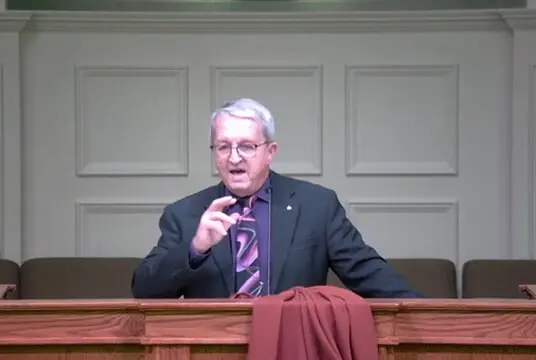
Video
“God is Summum Bonum”
Pastor Richard C. Piatt II
10/26/2025
Audio
Transcript
I love those last two songs. I trust that minister to your soul as it does to mine, that you can rust in God alone because God is good.
Very seldomly can you hear a sermon that you can remember over 50 years. or 45 years or so, but the message and the topic of tonight is one of those. Now, I remember who preached it. It was a fellow seminary student. He was further than I was. He was a fellow G-A-R-B-C Baptist student at Grace Theological Seminary, which is the Grace Brethren Seminary. But he was such a good and kindly man, very smart. His name was David Coleman. I don’t know if anybody would, I don’t know what ever happened to him after he graduated, but he, I would think, would have had a very bright future.
But he one time preached a message. I don’t remember the outline of it. Working on this message, I can figure out this almost defies outlining. unless you’re a Puritan and you’ve got over 100 pages that you want to talk about it. But all I remember about that sermon, and so I am right up front going to tell you, if you leave tonight and don’t remember a single thing that I say except for this, the Lord is good. He is good. You can hang your hat on it. You can always trust it. Peace be still. Why? Because the Lord is good. Though my life looks like it is falling apart, the Lord is good. I’m turning ragged because of temptation and sin in my life, but the Lord, he is good.
This is one of those kinds of messages and a very statement concerning one of the attributes of God that will ultimately help you to help you keep your sanity in a lost and broken world. People would get a lot less rattled at politics when their candidate is not in office or whether there’s a king there or not, and I say that with tongue in cheek, because the Lord is good and it, and hold on to your God, peace, be still. Why? Because the Lord, is good.
A book that I picked up again in preparation of tonight’s message as we continue to look at some of the attributes of God brought me back to the very, very first book that I ever read that was a Christian book. There were animal books, of course, but the first Christian book that I ever read was The Attributes of God by Arthur W. Pink. It’s made up of a bunch of series of short chapters highly recommend this. I think probably the best book he wrote, another good one, is he wrote on the sovereignty of God. But in this book, he devotes a chapter on the goodness of God.
I also read all of, or not all, but many, many, many of the theological books and groups of some Puritans and some others of which I’m gonna quote here in a moment. But just the opening paragraph on the chapter on the goodness of God by Arthur Pink, It kind of sums it up in so many ways that I thought it would just be good rather than to ad lib and kind of give you bits and pieces. Hear what Arthur Pink says.
Quote, he starts off with Psalm 52 verse one. The goodness of God endureth continually. The goodness of God respects the perfection of his nature. God is light and in him is no darkness at all, 1 John 1 5. There is such an absolute perfection in God’s nature and being that nothing is wanting to it or defective in it and nothing can be added to it only makes it better. He is originally good. good of himself, which nothing else is. For all creatures are good only by participation and communication from God. He is essentially good. And not only good, but goodness itself. The creature’s good is a super added quality. However, in God, it is his essence. He is infinitely good. The creature good is but a drop, but in God there is an infinite ocean or gathering together of good. He is eternally and immutably good, for he cannot be less than good than he already is. And as there can be no addition to him, so no subtraction from him. Thomas Manton wrote, God is the sumum bonum, the highest good.
So tonight I wanted to entitle the message that God is sumum bonum. God is the highest of good. Now, he put it together as he basically manufactured and was synthesizing his knowledge of the scriptures. There is so much revelation concerning the goodness of God, and we can only barely scratch the surface of it all.
But let me give you a couple of verses, and then we’ve got one particular location we’re gonna spend a little bit of time at. But in Psalm 119, verse 68, we read. You are good and you do good. Teach me your statutes. And that’s really about the way we’re going to kind of look at it today, because when we talk about the goodness of God, how it includes a couple of specifics.
Love, or I’m sorry, goodness is in a sense like when we talk about that God is love. And love is a noun, but love is also a verb. And it means kind of different things, but God is. And so you got to kind of divide it up that way. And in the scriptures, we’re going to do that a little bit tonight.
You are good. And that’s what Arthur Pink was talking about. God is essentially good. The goodness of God as an attribute or something to describe God. Obviously he has other things as well, but the goodness of God comes over into a realm that the theologians, and we’ll read more in a moment, but the theologians refer to his moral attributes. It goes from where we have been, where we have been looking at some of the incommunicable attributes of God, that God is spirit. And those that worship him must worship him in spirit. That’s revelation given to us by our Savior in a historical context. But then we can then look at it throughout scripture that God is spirit. And what does that mean? And it’s hard to wrap our minds around that. Or that God is eternal. Or that God is holy. And those are massive things, but goodness is part of a moral response, that what God does is morally always good. It’s a goodness that doesn’t change. It affects all, in a sense, and all of the attributes do interchange, but all of his attributes are good.
God is sovereign. And therefore, since sovereignty refers God, you know, does all things after the counsel of his own will. Well, whatever God chooses to do is good. No matter what it is, no matter what we think about it. And he doesn’t change his mind on that. It’s not good in the year 2025, but wasn’t good at the beginning. It is always good because God is sovereign. And those things that work out as whatever it does in our particular lives, that we tend to see things perceived by things that are good and things that are bad. But God’s sovereignty is always good. So it deals with his essence, but it also deals with what he has done.
And so let me read the verse again. It says, you are good and you do good. Everything that God does. is good. And we know that all things work together for good to them that love God and to those who are the called according to his purpose. But we live in a broken, bad world. And you see, that’s what is going to help us hold together our sanity of how this is because God is good.
Psalm 107 verse eight says this, listen to the heart of the psalmist. Oh, that men would give thanks to the Lord for his goodness and for his wonderful works to the children of men. You see the twofold thing, oh, give thanks to the Lord for his goodness, that praise God still, my soul be still, that I can throw myself upon the mercy of God, that I can ask for his calmness in the times of the storms of life, because he is good. But the second stanza of that is, and for his wonderful works to the children of men, to be able to praise God and give thanks for that. You remember the book of Romans chapter one, and one of the things as Paul is writing to them and setting up the whole thing about how everyone’s a sinner in that, and he talks about how that this world refuses to give thanks to the creator God. So this comes with respect to our praise, our worship, and to praise God for his goodness, his wonderful works to the children of men.
Psalm 34, eight says this, O taste and see that the Lord is good. Remember, you can forget everything I say, but the Lord, Yahweh, is good. He’s good. He’s the epitome of goodness. He is good. Blessed is the man who trusts in him. We don’t take a leap of faith. We don’t just try God out because I’ve tried everything else and nothing seems to work. You trust in a good God. Not a fair God, not a ho-hum God, but in a good God.
Psalm 25, verse eight says, good and upright is the Lord. Therefore, he teaches sinners in the way. That brings us over to the concept that there are concepts under goodness, that of mercy. You see, God is good. And if he sent us all to hell, Would he still be good? If he sends some to hell, is he still good? Well, that’s reality. If he saved everyone, would that be good? Yes, you know why? Because God can only do good. That’s why when people say, well, if there is a God in heaven, how come some people go to hell? Because God is good. And justice and righteousness is part of the goodness of God. And God is not less than good and right and righteous. You can see how these things come together. Good and upright is the Lord. Therefore, he teaches sinners in the way he loves righteousness and justice. The earth is full of his goodness.
Then Psalm 145 goes into several things concerning what goodness is. The Lord is good to all. and his tender mercies are over all his works. All your works shall praise you, O Lord, and your saints shall bless you. They shall speak of your glory, of your kingdom, and talk of your power to make known the sons of men in his mighty acts. The glorious majesty of his kingdom, your kingdom is an everlasting kingdom, Your dominion endures throughout all generations. The Lord upholds all who fall and raises up all who are bowed down. The eyes of all look expectantly to him and you give them their food in due season. You open your hand and satisfy the desire of every living thing. You see, because in the goodness of God, what we have is God’s goodness in common grace. To all the works, Genesis chapter one and verse 31, as God completed what we believe to be, and I think accurately so, in six literal 24 hour days, his hand of creation, ex nihilo, from nothing came everything. And he says in chapter one, verse 31, after each day, he said, and behold, it was good. But on day, on verse 31, and as he looked over the week, he said, behold, everything is very good.
For the works of God’s hands are good. I, on my Instagram, it’s funny, you know, those logarithms, I don’t know if that’s a person or a thing. and artificial intelligence, but it seems to be not too artificial because it seems to know an awful lot. But anyways, from your searches in that, and because of some of the wild things with some of the animals and stuff that I look at that are involved in science, I’ve tied into this one that I know Wayne Sutton would love. It’s a physicist that is talking about the galaxies. And he talks about the suns and the number of planets. And this guy, who is not a Christian, but he is dumbfounded, and he talks about how this ought to scare you to death, but that also to realize you’re still alive and how precious life is.
And in a real sense, as we’ve considered our attributes so far, we’ve considered some pretty grand concepts and so forth. The greatness of our God will cause us to fear. I look at the planets, and he kept talking about it. And he says, and these are just the ones we know. And he goes into some of the scientific research and the physics and the math that’s involved in that, that if he You can’t go the speed of light, but you could go almost the speed of light. But if you could go the speed of light to go out to a planet and how long it would take, four and a half years to get there. But if you turned around. and by you come back, and when you kind of speed up, but then when you come back, and because of what time is, that it would, you would come back, and you couldn’t, the world would be totally different, like hundreds at least, or even thousands of years older, because of, you know, the speed of light and the distance and everything.
And he’s just talking about this, and he said, we will never know how many planets there are. We will never know. the sons and all this involved, and is there an end or there isn’t an end? Why is that awe-inspiring? because God is good, and the works of his hands, when he did that at the end of the first week, and he looked at it, because God is bigger than that, and he looked at the works of his hands, and the heavens declared the glory of God, and he said, of all of creation, by the way, that would have included animals, the dinosaurs and everything’s walking in the Garden of Eden and other places on the earth, he looked at all of it and said, This is good. It’s good. It’s good because our God has created it all.
The goodness of God encouraged us to come to him because if we only considered his sovereignty or his bigness and his eternality and his immutability, we would live probably in fear, but the goodness of God encourages us to come. The goodness of God tempers all of the attributes and it has applications to all of life. One theologian put it this way, to fear God and not to be afraid of God is the paradox of faith. The God who speaks and The universe is. It is good. Still, my soul be still. And I come with all the trials of life. And I know you care for me.
Well, tonight I want us to consider the goodness of God. And I want to do it, first of all, to basically, we’ve seen some scriptures that declare it. I want us to see what’s some of the history of it all. I mean, if you go all the way back, even to Plato, he equated the idea of the good primarily with deity. The pagans conceived the goodness of God. Socrates said the idea of good was only useful if it has another one to receive it. And then the early theologians and early church fathers talked about how was God good before creation? Well, that’s another part of what it would be in the eternality of past from our perspective, for whatever that all means, but that God was good within himself because there was God the Father, God the Son, and God the Holy Spirit.
Among God’s ethical attributes, the first place is due to God’s goodness, Bavinck said. Charles, or I don’t know, is it Charles Karlnock? Karlnock and the Attributes of God. He gave a 10 point, if I’m not mistaken, yeah, 10 points that we need to be reminded of when we talk about God’s goodness. Let me just quickly enumerate them.
Number one, God is underrived good. He doesn’t get his goodness by declaration. He doesn’t get his goodness from someone else because I am the Lord, I change not. Or when he would say, there are no other gods, I know not of any. God’s goodness is underrived. God is originally good, good of himself, depends upon no one else for his goodness. God only is infinitely good. His goodness is boundless good, no limit to his goodness, infinite essence, supreme, inconceivable goodness. Thirdly, God is only perfectly good. So God is underrived good, God is infinitely good, God is perfectly good. His goodness is the measure and rule of goodness in everything else. God is good in his total essence.
Fourthly, God is only immutably good. That is, his goodness does not change. Something that is good today is good tomorrow and has always been good. God is so good, he cannot be bad. It was kind of interesting to read that of an old-timer who just said, God is so good, he can’t be bad. Well, that’s kind of a no-brainer, but it’s true. God is so good, he cannot be bad.
The goodness of God endures forever, Psalm 52, verse one. The goodness of God comprehends all of his attributes. I’ve already mentioned that. The goodness of God is the bounty of God. That several different theologians throughout centuries have quoted Karnak on that. The goodness of God is the bounty of God. That God is good by his own essence. God is prime and chief goodness.
Nine, God’s goodness is communicative, meaning he bestows good upon others in common grace, in creation, and he declares it good. And then finally, God’s goodness is necessarily good and free. God is good to all as we would read in the scriptures. Burkhoff wrote it this way, the absolute moral perfection of God shines and is most glorious with a splendor of all their own. God’s goodness, holiness, righteousness are all tempered by goodness. That God is the fountain of all good. You see, for in me dwelleth not one good thing. except for that which God gives to me. And the only good or righteousness that he accepts is that of his son that comes from him. And as God, this would go to another attribute, but it’s a good attribute, God is free and he doesn’t give it to all or all would receive it and be saved. God is the fountain of all good.
The goodness of God towards his creation and towards his creatures, towards even animals as he feeds them as seen in the Psalms. And this affects his love. God’s love is a good love, a holy love. God’s grace is a good grace. His mercy is good. His long suffering is good. MacArthur wrote in his doctrinal, or doctrine booklet, this one I’ll close with, or finish up with in the theologian statements, that God is the perfect sum, source, and standard for himself and his creatures of all that is wholesome, conducive to well-being, virtuousness, beneficial, and beautiful. No one but God is good. All creatures are called to praise his goodness. Many verses on that. People are encouraged to trust his goodness because God is the absolute, perfect, highest good. The Lord is good. The Lord is good.
Take your Bible and turn with me to the gospel according to Mark. The gospel according to Mark. Mark chapter 10 and verse 14 is the verse that we’re gonna wanna look at, but this has a context. In the gospel of Mark chapter 10, we have a verse 17, it says, now as he was going out on the road came one running, knelt before him and asked him, good teacher, What shall I do that I may inherit eternal life? Now, on the surface and by itself, that doesn’t appear to be, maybe it’s maybe complimentary and so forth. But Jesus obviously can look into this man’s heart and knows. And so Jesus responds and says to him, why do you call me good? No one is good. And he’s thinking in that ultimate sense of what we’re looking at tonight in the goodness of God. In essence, no one is good, but one, that is God.
Now God is good in his commandments and that’s where he goes in his revelation of righteousness and of truth and his relationship with man and everything. This doctrine is basically the fact of God’s goodness. No one is good but one. He’s essentially good. He is all good. He is perfectly good. There’s nothing not good about him. There’s no other side of that coin. is good, the goodness of God. He’s good in himself and he’s good in his works. So it’s the fact of his goodness. God is good and upright, Psalm 25, verse eight. God’s earth is filled with his goodness, Psalm 33 and verse five. And again, Psalm 52, one. His goodness endures continually. God is the sumum bonum, the highest good. all of the benevolent heart of the work of God is good. The justice of God is good. I keep skipping one, but it’s coming. The wrath of God is good because his justice is right and good.
The description of God’s goodness. Secondly, it’s the fact of it. The description of God’s goodness goes like this. It is a moral attribute closely related to the love of God, grace of God, mercy of God, grace of God, goodness to those who need and deserve punishment, the mercy of God, goodness to those in distress, the long suffering of God, the goodness of God to those who have been in sin and living in sin and God extending them to mercy. The goodness of God is his bounty. He’s full of it. He is the epitome of it. It touches his attributes, his standard, will of good, the originator of all good. It communicates to his creation so that they do not fear to come to him. It’s seen in creation, Psalm 36, Psalm 45, 145, to the animal kingdom, in providence, and throughout all of our lives. Now, that’s all good, and there’s so much more you could say when it talks about God is good, God does good, He’s the epitome of good.
But what about all the stuff that’s not good? Well, the Bible addresses that. The Bible tells us several things. What are some of the practical aspects of how can we respond to this? Well, some of this is to seek the remedy of every evil in the goodness of God. God heals all diseases, does he not? Ultimately, if it isn’t on this earth, it is in death. Psalm 103, verse three, in sickness.
This morning, Pastor didn’t linger there, but we always find that to be a little bit odd. When he finally reveals to the disciples, and he tells them, okay, well, he’s sleeping. Well, if he sleeps, he’s doing good. Well, okay, I need to tell you that he died. And you remember what it goes on to say? And I am glad that I wasn’t there. Now that doesn’t sound very good. Why? Why was Jesus glad that Lazarus, his friend, died? Death is a terrible thing. How is that good? That the glory of God may be made manifest.
One of those verses that is just so sometimes hard to understand And this is why this is so practical. Psalm 119 and verse 71. It is good that I was afflicted, that I might learn your statutes. We experience loss, pain, sickness, and death, death of loved ones. And those are hard, hard things. But even in the death of one of our elders this week, and his loving widow is with us tonight, and just your presence preaches to us faithfulness and our love, your love for Christ, your love for us, and we express our love to you. But David Marsteller, died. But what do we say? Well, he went home to be with the Lord. Is that good? Praise God.
The man physically was just running out of steam. We all are. All have sinned and come short of the glory of God and the wages of sin is death. We’re all going to die. Is our death good? Is the death of a loved one good? Yes, who orders the timing of our death? Who orders this morning pastor’s opening introduction on talking about how we’re all gonna die, how we can fear it, we don’t know how it’s gonna hurt, when, how long. But you see, if you dwell on that, you’ll go nuts. And for some of us, it’s not very, that’s not a long trip. It’ll just really bother you.
But if you get a bit of a grasp of the reality that God is good, whether he kills me, takes me home, in an accident, or with cancer, with a heart attack, or a beating, a murder from some terrible circumstance, of a martyrdom. My God is too wise to make a mistake and too good to be unkind. And God gives the grace. He teaches us his statutes. But the one thing I know that his sovereignty and he works all things after the counsel of his own will. His timing is always right and good.
We tend to think, well, if God were really good, then I would own and you can put something in there. Well, maybe if you owned it, you would turn and become even more materialistic. So maybe that’s why God denies you that, because it was a good thing, you don’t have it. You see, we get so narrow. in life at what we look at and we need those big principles to always remind us that as a child of God. These things are good.
The goodness of God stirs us up to love him. The goodness of God causes us to seek every good in God. The goodness of God helps us to interpret the bad things of this world because we do know that all things work together for good. The goodness of God causes us to acknowledge the wickedness of sin as we compare it to his goodness. and our obligation to be ye holy for I am holy. It gives us a sense something to imitate, to reflect, to do good, to seek blessedness in God’s justice as part of his goodness.
You see, justice, God’s justice is good. Man’s justice is at best incomplete. I mean, we have laws. and we get frustrated even when our man-made laws are not followed through. But if a person kills a person, if man shed man’s blood, by man his blood shall be shed, for in the image of God created he man. So capital punishment is a good thing. To kill a killer is a good thing. Do we get all the murderers? Are they caught? Do we have some that are out there running around Well, if God’s justice is a good justice, how do we rectify that? Because they’re going to die, and they will stand before the God of the universe, and they will be judged by perfect righteousness with perfect justice.
And the justice of the soul that sinneth, it shall die, is a good thing. Even Paul talked about the death of a believer. For me, it’s far, you know, it’s needful for me to stay. But absent from the body and present with the Lord, I was thinking as we were singing the songs tonight and I thought, wow, David is singing before the throne of God. That’s a good thing. That’s a good thing. Now that doesn’t deny that we still hurt and pain, but then we learn his statutes and then we come to God and learn of his mercy, of his strength, of his encouragement. Because we need that. It causes us to be dependent upon a good God. We rely upon his goodness. This is epitomized by this. We are not good, our goodness is derived and we need righteousness and even that is derived and God gives that to us.
But. A holy God. Has to be a God of wrath when holiness is violated. And we’ve all violated for all have sinned and come short of the glory of God. That’s why we all will die. A true God, a truly and holy God, must be a God of wrath when truth is violated. And the biggest violation on this earth, when we may say there’s no good, was at the death of our Savior upon a cross. Was the sweat good that Jesus that dripped off his brow? What about the blood drops that came from the nails in the hands and the feet? What about the piercing of his side? And we look at that and say, that is disgusting. That is not good.
Some would say we’re more in the know of the final result. That wasn’t fair. That’s the epitome of violation of the goodness of God in his works. And why would God do that? Well, you see, when you understand the Lord is good and the Lord had a plan of salvation, we call it the gospel. It is not only a good plan. It’s the only plan. And we say, oh, that’s so unfair. Really? Do you wish then that Jesus wouldn’t have died? Oh, that wouldn’t be good. We’d be all left in a lurch.
You see, God, who is good, he is good intrinsically in himself, but he’s also good in all of his works. And it is epitomized in his greatest work as Jesus died on the cross at the most ugly and looking like it was the most ungood thing, a bad thing. It was the epitome of the eternal salvation of sinners who all come to Christ by faith. It is a good plan. It is a plan of which we need to go and tell.
Our God is a good God, and we need to tell him, because in those opening verses, oh, that we would speak of that. Would you stand with me tonight as we close? And I, this is dangerous, because I’m not gonna have any music. but I want us to, I’m gonna sing, we’ll sing it twice, but some of you know the song. If you know it, maybe you’ve been thinking about it the whole time. It’s an old chorus. It’s a children’s chorus. It’s one of those things that just has simple truth.
The Lord is good. Tell it wherever you go. Let’s sing it together if you know it, and then if not, we’ll go through twice, and the second time, the rest of you will know it, and it’ll sound a whole lot better. The Lord is good. Tell it wherever you go. The Lord is good. Tell it that others may know.
Tell of his blessings and tell of his love.
Tell how he’s coming from heaven above. The Lord is good. Tell it wherever you go.
Let’s do it again.
The Lord is good. Tell it wherever you go. The Lord is good. Tell it that others may know. Tell of his blessings and tell of his love. Tell how he’s coming from heaven above. The Lord is good. Tell it wherever you go.
Our Father, it’s such a simple phrase, yet it is comprehensive in your essence and in your work. You are good. Father, may we trust in your goodness. Your promises are good. Your love is good. The gospel is good. It gives us something to hunger and thirst for as we seek to please you. Dismiss us with your grace resting upon us and encourage us This week, as no doubt, we will need to be reminded of your goodness as we praise you in Jesus name, amen.