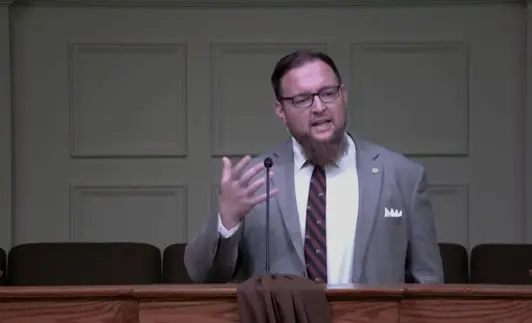
Video
“There is Nothing Better”
Ecclesiastes 2:1-26
Pastor Ryan J. McKeen
10/04/2026
Audio
Transcript
Wonderful singing this evening. Thank you, Andrew, for leading us in singing. It’s been a treat to have multiple different ones helping out with leading music and playing music this year with all of the things going on in the Sutton’s life. It was great to have Wayne and Eileen back together again this morning leading us in worship. That was a great service this morning, a great time in John chapter 10. Really enjoyed that study. And that was a tremendous time of worship this morning. This evening, turn with me if you are able to, in your Bibles, to Ecclesiastes. Ecclesiastes chapter two this evening.
We finished up chapter one last week, last Sunday evening, and tonight we come to chapter two. As we saw last time, Solomon has set out on his search. His search to find satisfaction in life, and life under the sun as he calls it. We started last time with, at the end of chapter one, this search of wisdom. And he’ll pick that up again later here at the end of chapter two. But we saw in chapter one that he concluded in verses 17 and 18, he says, I came to know that this also is striving after wind because in much wisdom, there is much vexation. And whoever increases knowledge, increases pain. Tonight we are in chapter two of Solomon’s search, and he searches everything that he can find to find a sense of satisfaction in life, a sense of meaning in life.
And he will come to the conclusion, along with the rolling stones, that I can’t get no satisfaction. At least not in the things that he’s searching out. And if the Rolling Stones reference offends your sensibilities, just wait till you see where we go with Solomon in his search for satisfaction.
He tries everything. He tries this and that and then the next thing. He has chosen a disciplined pursuit, a concerted effort to find this meaning in life under the sun. As we’ll see at the end, apart from The blessing of God’s gift. He starts with his own. Facilities his own ability to find some sort of meaning in life. He uses his intelligence and his wisdom and he sought to plumb the depths of madness and folly, he says. And his wisdom sought out various devices.
And vices. We’re actually going to cover all of the 26 verses in Chapter 2 tonight. And he’ll search for meaning in all sorts of things like laughter and wine and great works and treasures or wealth, entertainment and women and wisdom again. But then we’ll come to his conclusion where Solomon’s wisdom gives way to God’s wisdom. And it’s at the end of his search for satisfaction that he actually discovers how he can have it.
We again are in Ecclesiastes chapter two. I typically read our whole text to begin, but that’s the whole chapter. So we’ll go through it verse by verse as we go this evening. But again, the preacher has started his quest. He started with wisdom and next he turns to seeking satisfaction in the pleasures of the world. This is what he says in verse one of Ecclesiastes chapter two. If you’re there, we’re in verse one.
He says, I said in my heart, come now, I will test you with gladness so that you shall see good things. And behold, it too was vanity. Solomon here is challenging himself. to indulge in any experience or possessions that might make him feel some enjoyment, some meaning, some satisfaction in life. He says, in my heart, I said in my heart, he’s testing himself to see if he can see good things, see if there’s true enjoyment found there. And he first tries comedy or laughter. Verse two, he says, I said of laughter, it is madness. And of gladness, what does it do?
The idea here is seeing the world through rose-colored glasses. Laughing at everything to see if that makes you feel better. Not taking anything seriously. Laughter is a good gift from God. God laughs in scripture. But like all gifts, it needs to be enjoyed appropriately. Not everything’s a joke. In the next chapter, chapter three, Solomon rightly says that there is a time to weep and a time to laugh, a time to mourn and a time to dance. There is a time to laugh, for sure, but not at everything.
And the outward expression of happiness or joy can be faked. For example, stand-up comedians can often be some of the most depressed people in the Just think of Robin Williams. And many people use laughter to distract others and even themselves from the real hurt or pain in life. But laughter itself doesn’t solve anything. Again, later in Ecclesiastes, Solomon says in chapter seven, verse three, better is vexation than laughter.
For when a face is sad, a heart may be merry. And that’s his point there, is outward expressions can be faked. You can fake happiness. You can make it look like everything’s great, and I’m in a great mood and laughing, and inside you’re torn apart. So don’t think laughing at everything is the place to find true joy. So not satisfied with laughter, the preacher continues.
Solomon continues his search. And next he tries wine and maybe some other intoxicants. Verse three, I explored with my heart how to stimulate my body with wine. while my heart was guiding me wisely. And how to seize simple-minded folly until I could see where this good, where is this good for the sons of men in what they do under the heaven, or under heaven in the few days of their lives. He sought fulfillment and satisfaction in things like wine, things that can take your focus, that can take your Sorrows away Maybe that’s the answer and this might seem hard to sympathize With as modern-day Christians, I mean we would never do such a thing We are Baptist after all And how could his heart be guiding him wisely in this but that’s what he says But this also reveals that sometimes we don’t see life the way the world does I And sometimes we take that for granted. And sometimes that causes us to have a hard time relating to those other people. But Solomon is showing us that when a man under the sun looks around at this world as it is, the world that he discussed in chapter one, the world with all of its cracks and faults and bent, It’s understandable why the man under the sun might enjoy seeing the bottom of a bottle.
There’s a reason why they call it drowning your sorrows. The trouble is, it doesn’t work. It almost sounds like Solomon’s writing a country song here. And when it’s all over, Solomon also sees that this doesn’t do any good. But as he shows us, it was an understandable thing to try.
If life is this way, maybe drowning your sorrows is the answer to happiness. And before you go throwing out Solomon’s logic, the same thing occurred to the apostle Paul. In 1 Corinthians 15 verse 32, Paul says, if the dead are not raised, let us eat and drink, for tomorrow we die. If Christ did not rise from the dead, If there is no more than this, then the most sensible thing to do is to eat and drink and have as good a time as you can in this meaningless body of flesh that you have. If the only thing being considered is what’s here under the sun, then it doesn’t make sense to live by traditional or biblical values. What’s the point?
But again, Solomon shows us that wine as a therapy is fruitless. It does not work. It does not take away the hardships in life. It does not take the hurt away. And the same thing goes for every other thing someone might use for that numbing purpose, to numb you to the hardness of reality. And this is why a wise man like Solomon didn’t find any satisfaction here. Like all sin, this comes up empty too. And so Solomon continues. Laughter didn’t work and wine didn’t work, so he keeps searching. And this time he searches in creativity. He tries designing and building houses and vineyards and gardens and parks and filling them with fruit trees and pools. Verses four to seven.
I made my works great. I built houses for myself. I planted vineyards for myself. I made for myself gardens and parks. I planted in them all kinds of fruit trees. I made for myself pools of water from which to water a forest of growing trees. I bought male and female slaves, and I had home-born slaves. I also possessed flocks and herds larger than all who preceded me in Jerusalem.
So maybe work and projects and getting things done. Maybe that’s the way to go. Maybe that’s the thing that gives you meaning in life. You know, the regular workaholic, if I work enough, then all the hard things will go away. Maybe that’s where happiness is found.
I won’t drown myself with a bottle. I’ll drown myself with work. discipline and goals and finance and building. He even tries his hand at farming. Let’s take on more responsibility and achieve great things. I might even get my name on a plaque at the hospital. Won’t that be great?
And then, as it usually does, after accomplishment, next comes power. and money, and he pursues these things, and of course, sex, as much as a wealthy king could have. Ecclesiastes 2 verses 7 and 8, I bought male and female slaves and I had home born slaves. I possessed flocks and herds larger than all who preceded me in Jerusalem. Also, I collected for myself silver and gold, the treasure of the kings and provinces. I provided for myself male and female singers and the pleasures of the sons of men, many concubines.
Okay, now he’s one of those influencers. Look at all those fancy cars and private jets. Oh, and look, he’s got a boat with lots of women on it. He’s got it all. He’s a celebrity and nobody really knows why. Next, he’ll be on the hot 100 list. Everything he wants, he gets it immediately. That’s the life he’s living. And he’s living it like no one’s lived it before.
You could probably think of people like this. You probably don’t know them, but you’ve seen them. They’re paraded in front of you on TV, on social media. This is the life. And they’ll teach you how to do it if you just buy their subscription. That’s the image Solomon is painting for us. He tried it all. The good life. That’s the life he chased. But there’s a difference here. There’s a difference between those people you see in Solomon. Most of those guys you see doing that online, that’s not real. They rented that car. That was a photo shoot. They don’t really live like that. But not Solomon.
Solomon actually accumulated great wealth. He says there in verse 8, I collected for myself silver and gold and the treasure of kings and provinces. Other countries came from around the world to give Solomon money. Most people daydream about what it would be like if you had unlimited wealth. I know I have. But Solomon didn’t have to daydream. He could do whatever he wanted.
1 Kings tells us a little bit of this. Solomon throws a party. 1 Kings 4, a one-day party. 1 Kings 4 verses 22 and 23, and Solomon’s provision for one day was 30 cores of fine flour, 60 cores of meal, 10 fat oxen, 20 pasture-fed oxen, 100 sheep, besides deer, gazelles, roebucks, and fattened owls. Or fattened fowl, sorry, fattened fowl. I don’t want you to eat an owl. But all of those things, several scholars have done the math on this. And they’ve concluded that’s enough to feed about 35,000 people at one party. 35,000 people in one day. Throw a party for 35,000 of your closest friends.
And Solomon didn’t have to go on a budget after that party. That was nothing. In chasing pleasure, he didn’t withhold anything from himself. That’s what verse 10 says. He says, all that my eyes asked for, I did not refuse them. I did not withhold my heart from any gladness, for my heart was glad because of all my labor, and this was my reward for all my labor. Well, why shouldn’t I? This is the reward for all my hard work. I should have anything and everything that I want.
So if anyone was in a position to know if eating, and drinking, and buying, and having, was the place where happiness is found. Solomon’s our guy. He tried it all. He has been there and done that, literally. And what is the reward for all of this hard work of pleasure-seeking?
Verse 11, thus, I turned to all my works which my hands had done, and the labor which I had labored to do, And behold, all was vanity and striving after the wind. And there was no advantage under the sun. After everything he’s tried and all that he’s pursued and all that he has had because nothing my eye wanted, I said no to. Nothing. There’s nothing there. So if you think that thing that you really must have is the thing that’s gonna make you happy, ask the guy who did it. No, there’s nothing there.
He chased all the pleasures of life under the sun and found that he’s just as empty as he was before. I like how one man put it. He said, a fool will always find various ways to dig his way down, but when he gets there, he’s always at the bottom of a hole. That’s the life Solomon’s chasing. And whatever the sin is, the more you dig, you think you’re accomplishing something, then you realize you’re just at the bottom of the hole you dug. Then the preacher moves on.
So after discovering the emptiness of these pleasures, he comes back around to wisdom again. I mean, he’s got plenty of it, so why not try that road again? And this time he tests if pursuing wisdom is actually better than folly. So he says in verse 12, so I turned to see wisdom, madness and simple-minded folly.
What will the man do who will come after the king except what has already been done? In other words, as the wisest man who ever lived according to God. His test will be the ultimate test. Nobody’s gonna have a better shot at finding out the end of wisdom than Solomon. Who can do more than this king has done at the end? And he determines that wisdom really is better than folly, at least as far as it goes.
Verse 13, and I saw that there is an advantage in wisdom over simple-minded folly. as light has an advantage over darkness. The wise man’s eyes are in his head, but the fool walks in darkness. And yet, I know that the fate of one becomes the fate of all of them. So he compares the difference between wisdom and foolishness to living in light and living in darkness.
The wise man has eyes in his head. The fool walks around in darkness. And yet, they both die in the end. And the vexation he feels is that the wise man sees it coming. At least the fool is blindsided by it. The wise man has the pain of knowing this is all coming to an end. The problem is that the advantage of wisdom over folly doesn’t last. Because in verses 15 and 16, he comes around again. He says, then I said in my heart, as is the fate of the fool, so will be my fate also. Why then have I been extremely wise? So I said in my heart, this too is vanity.
For there is no remembrance of the wise man along with the fool forever. In as much as in the coming days, all will be forgotten. and how the wise man dies with the fool. So once again, Solomon’s hopes are shattered by his death. The fact that he realizes he’s gonna die too. Death waits for both the wise and the fool. Whatever they do with their lives, and they will live differently, but eventually, They’ll both be dead. So what’s the point of striving to be wise if in the end you’re no better than the fool?
That’s the preacher’s question here. And as he thinks about these things, he gives us a glimpse of his mental state in all of this. In verse 17. So I hated life. For the work which had been done under the sun, it was grievous to me. Because everything is vanity and striving after the wind.
Remember those rough edges that I said that the preacher leaves in? Yeah, this is that part of the diary that you scribble over before you let somebody read it. But Solomon doesn’t do that. He shows us the point he made earlier in chapter one. Verse 18, because in much wisdom, there is much vexation. And whoever increases in knowledge increases in pain. And this is the pain that he faces. The preacher gets it. He’s been there and done that, too.
I hated my life. Oh, if only I had. If only I had more money. If only I had, name it. And Solomon had it. And he says, I hated my life. I hated my life. You’re not supposed to say that. You can’t say that, Solomon. You wrote a good portion of the Bible. That’s not very Christian of you.
But he did say it. because he gets what this is really like. He understands what life in this fallen world without God is like. And rather than sugarcoat it or ignore it, he looks at the vanity and the vexation straight on. And this life is without purpose, without meaning. without satisfaction before the gift of God makes it enjoyable. The word for hate here includes the idea of contempt and disdain. He could really care less about his life now.
Now that he’s done all these things and experienced everything and accumulated all this money and all these great things that he has, and he could care less about it all. And he turns to his wealth and accomplishments and he says the same thing, verse 18.
Thus, I hated all the fruit of my labor for which I had labored under the sun, for I must leave it to the man who will come after me, who will know whether he will be a wise man or a man of simple-minded folly. Yet he will have power over all the fruit of my labor for which I have labored and for which I have acted wisely under the sun. This too is vanity. Therefore, I turned my heart to despair. of all my labor for which I had labored under the sun. Solomon’s attitude towards wealth and work and accomplishment is based on what he realized about them.
When you die, someone else will get it all. And this is true for those who have nothing and those who have a lot. someone else will inherit the wealthy man’s wealth. Everything that he’s worked so hard for. And there’s no guarantee that your beneficiary will use his inheritance wisely.
So again, we’ve returned to that same frustration from chapter one. It’s the people that follow us who will have control over all that I’ve worked for. Maybe they’ll keep the ball rolling, maybe they won’t. Maybe they’ll destroy it. But either way, you’ll be dead and gone and quickly forgotten anyways. So what does that mean? What does that mean for all that we achieve? Why bother work for anything? In his commentary on Ecclesiastes, Pastor Tom Askewell shares this illustration.
This is what he says, he says, when Howard Hughes died in 1976, he left behind an estate valued at more than $2.5 billion. He had no direct descendants or immediate family. Though he had no written will, hundreds of people came forward making spurious claims about the rights to his wealth. It took more than 30 years to settle his estate, and when it was all said and done, 200 of his distant relatives received more than a million dollars each. After his death, Hughes could not do anything about where his money went or how it was spent.
And Asquill continues, that’s why, as a wise man once told me, you should do your giving while you’re living so you’re knowing where it’s going. And that’s not a bad conclusion. And it may not seem like bad advice, given the preacher’s conclusion here. Why bother? What am I working for? Now, on the other hand, some have tried to use this verse to justify not planning for the future or leaving an inheritance. I mean, they might turn out to be terrible, so why would I?
But again, remember, this is Solomon’s perspective without God. This is Solomon’s perspective on the next generation before he considers what God has to say. And without God, it doesn’t make sense to leave an inheritance to your children or their children, because they might waste it. except there’s one small problem with that.
That’s what God says to do. Proverbs 13, 22, a good man leaves an inheritance to his children’s children, and the wealth of the sinner is stored up for the righteous. That’s God’s wisdom. That’s how God says we should live. So the idea of not leaving an inheritance to your children because they might waste it, as Solomon points out, is a godless idea. And he continues, verse 21. When there is a man who has labored with wisdom and knowledge and skill, then he gives his portion to the one who has not labored with them.
This too is vanity and a great evil. And listen to this. For what does a man get in all his labor and the striving of his heart in which he labors under the sun? Because of all of his days, his endeavor is painful and vexing. Even at night, his heart does not lie down. This too is vanity.
Who’s in focus here? Who is it that Solomon is focusing on? Himself. What good does this do me? The man who works so hard. The striving in his heart, which he labors under the sun all his days and his endeavor is painful and vexing, and his heart does not lie down at night. Me, me, me, me. That’s Solomon’s perspective here. In his pursuit without God.
Solomon is just wise enough to know that yes, it’s better to be wise than foolish, but he can’t seem to tell you why. In his own wisdom, he can’t seem to tell you why it’s better to be wise. All the data that he’s gathered under the sun, it just shows that the wise man and the fool wind up in the same graveyard. Solomon expresses his preference for wisdom, but at the same time, he’s frustrated by that preference.
Look at these fools to come. The wise die and they must leave what they’ve done to others. And will they be wise? Who knows? Again, verse 18. I hated all the fruit of my labor for which I labored under the sun, for I must leave it to the man who will come after me. That thought, leaving what he’s done to the one that comes after him, made him hate it.
Who do you think Solomon’s thinking about? Have you ever thought about this when you read Ecclesiastes? When he’s talking about the one that comes after him, who will inherit all that he’s done, who will inherit his kingdom? Who was Solomon’s son? And Rehoboam, his son, was certainly no scholar. Remember his first act after Solomon died? In 1 Kings chapter 12. Now the kingdom is Rehoboam’s. What’s your first move, young king?
Well, the council of the elders gave him some advice. This is what you should do to win the people over. They’ll like you after that. Then you can have a good and successful kingdom. But then he had his young friends giving him advice too. In verse 8 of chapter 12 of 1 Kings, he forsook the counsel of the elders which they had counseled him and took counsel with the young men who grew up with him and stood before him. And instead of lightening the people’s load, he added to it. My little finger is bigger than my father’s thigh.
And immediately the kingdom split until the exile. He ruined it immediately. So maybe Solomon is looking at that genius as he is considering what will happen to all of his hard work. So maybe it’s a little more understandable that the result of Solomon’s looking toward the future is distress and despair and sorrow and burden and restlessness. And he turns his heart to this despair there in verse 20. He despairs of everything out there under the sun. And just as he had given himself to pleasure, just as he turned his heart, he gave himself to despair. He sought out despair, or depression as we call it.
But all of this, in all that Solomon is talking about, Solomon is preparing us for what’s to come. He’s preparing us for the truth he’s about to reveal. And as we’ll see, the gift of God he’s going to talk about, the gift of God does not make this vanity go away. It doesn’t make everything better in life. No, the gift of God makes this vain life enjoyable.
And throughout this whole section, back into chapter one, even through where we are now, he’s continually bursting bubbles. Bubbles that we think there might be something there. He burst the bubble of pleasure. Nothing there. He burst the bubble of profit and materialism and gaining possessions, and he even burst the bubble of laughter.
And he does that with the sharpness of death. The answer to all of those things under the sun is, well, you’re gonna die anyways. Death bursts all our illusions of happiness in this life. Because we will die, and none of that stuff will matter. But then the preacher does something surprising. Because if I left you here, you might go home and cry under your pillow at night. This is depressing. What are we doing here, Solomon? But he does something surprising next, and he bursts death’s bubble. Verses 24 to 26.
There is nothing better for a man than to eat and drink and have his soul see good in his labor. This also I have seen that it is from the hand of God. For who can eat and who can have enjoyment outside of him? For to a man who is good before him, he has given wisdom and knowledge and gladness, while to the sinner he has given the endeavor of gathering and collecting so that he may give it to the one who is good before God. This too is vanity and striving after wind. The preacher’s answer here for living the good life doesn’t seem like much. But his answer is there is nothing better than the very pursuit of life. To eat and to drink and to have his soul see good in his labor. Now, at first glance, this sounds like the cry of the hopeless, those that see no meaning in life. Eat, drink, and be merry because tomorrow we die. But that’s not what he’s saying here. There’s a difference.
You see, some say, eat, drink, and be merry because that’s all there is. Solomon is saying, eat, drink, and be merry because that’s what there is. That’s what God has given us. That’s exactly what God gave us to enjoy. So don’t overlook those things, looking for something more, looking to use those things to give me something more, when you can just enjoy the things that God has given. Enjoy the life that he has given. God has given good things to us in this world, and they are their own reward.
And when we accept the fact that we are going to die one day, that ought to help us see what gives us meaning in this life. We can learn to really enjoy the good things of life, rather than expecting to get too much out of them. We can learn to pursue them for what they are, themselves, rather than the thing that will make me finally happy. You see, death reorients us to our own limitations as creatures.
We are mortal and God made us that way. We are not God, he is. And that perspective helps us see God’s good gifts are right in front of us this whole time. Each and every day of our lives. And instead of using these gifts as a means to an end, we can take the time to enjoy those gifts. Enjoy the gifts themselves and see that they are from the hand of God.
And normally we eat and drink simply as fuel to go and pursue other endeavors. Or we work just to pay the bills, or to get ahead in life, or to find satisfaction and purpose in the work itself. But as David Gibson says, what if the pleasure of food is a daily joy that we ungratefully overlook? What if our work was never meant to make us successful, but to make us faithful and generous. And what if it’s death that shows us that this is how we’re meant to live? This is what there is. This is what God has given.
We saw in chapter one that we fight against the things the way they really are. We want lives that last in a world that’s always changing. And then we want change in a world that keeps on spinning and never changes, always stays the same. The world in which we live is fallen and cursed. We know that God has put a bend on the world and things are not the way that they should be. And we’re limited because we are creatures. And because we’re fallen creatures, we now have wrong ideas of what it means to live. We try to use the world to try to achieve our own goals. But the preacher’s whole point in this section is the world can’t be leveraged to suit me. Life is not meant to be mastered. It’s meant to be enjoyed.
And it’s important to notice something here in Solomon’s conclusion. All of the frustrations that he’s found in the first two chapters here, Really from verse 14 of chapter 1 all the way to chapter 2 verse 23, there is no mention of God. And God’s perspective is completely absent. This is Solomon pursuing meaning in the world as if there is no God. And what’s his conclusion? I hated my life.
But now in verses 24 to 26, God is mentioned three different times. And the emphasis is on what God gives. He is the one who gives enjoyment and satisfaction in life. That’s what he says in verse 24. This also I saw is from the hand of God. Not only the things themselves, to eat, to drink, the labor, but even the enjoyment of it. is from the hand of God. And then verse 25, for who can eat and who can have enjoyment outside of him? That’s his conclusion. There is no enjoyment of this life if there is no God. When Solomon hated his life, he changed his perspective. He thought about it from God’s point of view.
So when you are hating life, Stop and consider, well, what are you living it for? What are you living life for? Oh, I hate my job. Well, what are you working for? Oh, I don’t want to go to church today. Well, what are you going to church for? Are you going for yourself? For what you like about it? For what it can benefit you? Or are you going to glorify Him? And enjoyment isn’t guaranteed with anything we do. Enjoyment doesn’t come in the box with your new toys. If it did, why do you want that new upgrade already? Enjoyment is not automatically a part of the pleasures of life.
We can learn from Solomon because he knew what it was like to have tasted the very best life has to offer and still to be left wondering what’s next. And he tells us that God is the one that has to give us the enjoyment or the thing itself will leave us unsatisfied. When we pursue the things, those things make a very bad God. But when we enjoy the things because they came from God, and we recognize that God is the one, sovereign over it all, the giver of life himself, the giver of all good things, it changes our perspective on it.
And this is just the first time so far in the book of Ecclesiastes where this ray of light of God’s wisdom shines through and corrects Solomon’s perspective. It’ll continue to happen. But it is important to understand what Solomon is doing in this book. And that’s exactly what we’ve seen.
He is pulling the cover off a world without God and showing you that there’s nothing to be found. All the struggles that we have struggled too many times. All the things under the sun in life that we are too familiar with. He presents all of those things and then he pulls the rug out from under us and reveals that that struggle itself is the problem. Why are we fighting against the way that God made it?
In verse 26, the last verse of the chapter, the preacher concludes that it’s a right relationship with God, with a man who is good before him. Or to put it another way, the one who pleases him. That’s the one to whom real blessings from God come. The one who’s in the right relationship with him.
And what does it mean to please God? How do we please God? Hebrews 11 verse six, without faith it’s impossible to please him. For he who draws near to God must believe that he is and that he is the rewarder of those who seek him. That’s where Solomon is finding himself finally. God is the rewarder of the one who seeks Him, not the things. To please God is to trust Him, to come to Him by faith. You must come to Him in the one way that He has provided for you, in His Son, Jesus Christ.
So if you’re not trusting Jesus Christ as Lord and Savior, you will never be able to experience the fullness and the blessings in life that make it meaningful. Because under the sun, in a world without consideration of God, in a world without God, in a world without Jesus Christ, your life is meaningless.
You can have some temporary pleasures, you can have some temporary success in life, but one day you’re gonna die. And then what? And don’t miss what the preacher’s teaching us. Life in this fallen world will be vanity without that right relationship with God. And life under the sun without knowing God and pleasing God is vanity. And that is true.
No matter how smart and wise you are, no matter how much pleasure you pursue or how wealthy you may be, but in Christ, we can learn from Solomon and know how to live in this fallen world. We can live a meaningful life and experience real joy in this life under the sun. What is the mark of wisdom in this fallen world? What Solomon tells us in Proverbs, the fear of the Lord is the beginning of wisdom, to recognize that He is and that He is sovereign. Or as one man put it, I’ve mentioned this before, the true mark of wisdom in this fallen world is finding joy at the end of your tether.
Enjoying the life that God has given you as he’s given it to you. Not trying to strive for more, not trying to reach past the limits that he has set. Living at the end of your tether. Enjoy the life God has given you with all of its limitations. But sometimes, before we can enjoy life at the end of our tether, we have to keep pulling to find out how strong that tether really is.
And that’ll be chapter three. He is God and we are not. Stand with me as we close tonight. Our God, we thank you. We thank you for your wisdom. We thank you for Solomon and the way that he has bared his heart for us and all the things that he pursued, all the pleasures and purposes and all the various parts of life that he sought to find meaning and only found nothing, found meaningless. God, we thank you for the wisdom that he shares with us. I pray that we would learn from that and that we would learn that only through a right relationship with you Can we find meaning and enjoyment and satisfaction in this life?
We thank you for that gift, not only the gift of the things we see in life. But the gift of being able to enjoy it because we know that this life under the sun is not all there is. And yes, we know that we will die. But we also know that is not the end of us. Because of you. because of what you have done and what you have provided us in Jesus Christ. God, we thank you and we praise you and glorify you here tonight. In Jesus’ name, amen.