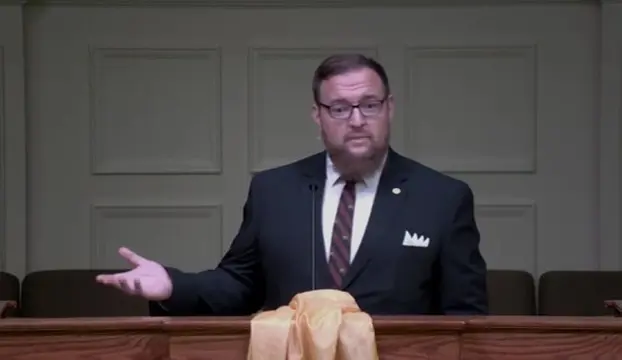
Video
“What Do You Know?
John 9:18-34
Pastor Ryan J. McKeen
09/06/2026
Audio
Transcript
Well, what do you know?
That is the title of this sermon and the focus of our text this morning. And as I was studying this text for us and that song kept coming to mind, it’s almost as if that blind man of John 9 could have written that whole song. Turn with me in your Bibles to John chapter 9. We continue here in this ninth chapter of John’s gospel. where we’ve been studying the account of the healing of this man born blind.
And we’ve seen the initial encounter of where the disciples question the cause of this man’s blindness, and then Jesus directs them to God’s purposes in this suffering. And then we saw the miracle itself where Jesus spits on the ground and makes mud and anoints his eyes and told him to go wash, and he did, and he came back seeing.
And then we saw the interrogation begins. Instead of rejoicing with this man, everybody wants to interrogate him and see what happened. First, the neighbors interrogated the man, and he tells the story of the man they call Jesus. But he doesn’t know much more than that. And then last time, we saw that they bring the man to the Pharisees, and there, The man begins to see through the Pharisee’s attempts to discredit Jesus. We start to see this man putting the pieces together and starting to understand what’s going on here. And so he doesn’t give them a lot of information. And when asked his opinion, he confessed that Jesus was a prophet. And that’s where we pick up our text today, but now the Pharisees aren’t so concerned with the man’s opinion.
Now they want to establish what they know. Now they want the facts. And we see that phrase of what you know. Recur throughout this passage. Which as Christians, we understand that what we know is important. It is part of our faith. Faith has been described by many in the past by having three elements.
Our knowledge, what we know, the facts of what is true. We have to know the facts. And secondly, we have to agree with the facts, agree that that’s true. But thirdly, we need to trust in it. We need to trust that that is true, and that’s what saving faith is. But it’s more than just knowledge, though knowledge is important.
We Christians claim that we know many important things that the Bible tells us. As we read earlier, we know whom we have believed. 2 Timothy 1, 12, for this reason I also suffer these things, but I’m not ashamed, for I know whom I have believed.” And not only that, Paul says, and I am convinced that he is able to guard what I have entrusted to him until that day. And we know that our Redeemer lives. That’s what makes us who we are.
As Job says in Job 19.25, as for me, I know my Redeemer lives. and at the last he will rise up over the dust of this world. Luke wrote his gospel account in Luke chapter 1 verse 4, so that you may know with certainty the things you’ve been taught. And John elsewhere in his first letter tells us that we know we have passed out of death and into life.
We know that all Things work together for good for those who love God. Romans 8, 28. We know that when the Lord Jesus Christ returns, we shall be like him, for we shall see him as he is. 1 John 3. And Peter tells us we are to be growing in what we know. We are to grow in the knowledge of our Lord, he says, but grow in the grace and knowledge of our Lord and Savior, Jesus Christ. So knowledge is important. What we know is important in the Christian life. It informs what we believe and it has eternal consequences, as we will see today.
Again, we pick up our text with the interrogation by these Pharisees, but now they shift their focus to interrogating this man’s parents. And we’ll see in this text, the focus is on the knowledge. of three different groups of people. First, the knowledge of his parents. And then secondly, the knowledge of these Pharisees. And thirdly, we’ll see the knowledge of the man born blind.
So allow me to read our text for us this morning. We’re going to read, starting in verse 18 of John chapter 9, all the way through verse 34, and that’s where we’ll focus. here this morning, John chapter 9 verses 18 through 34. This is the word of the Lord.
Then the Jews did not believe it of him that he was blind and had received sight until they called the parents of the very one who had received his sight. And they questioned them saying, is this your son who you say was born blind? Then how does he now see? So his parents answered and said, we know that this is our son and that he was born blind. But how he now sees, we do not know. Or who opened his eyes, we do not know. Ask him. He is of age, he will speak for himself.
His parents said this because they were afraid of the Jews. For the Jews had already agreed that if anyone confessed him to be Christ, he was to be put out of the synagogue. For this reason, his parents said, he is of age, ask him. Therefore, a second time, they called the man who had been born blind and said to him, give glory to God, we know that this man is a sinner.
And he answered, whether he is a sinner, I do not know. One thing I do know, that though I was blind, now I see. So they said to him, what did he do to you? How did he open your eyes? He answered them, I told you already and you do not listen. Why do you want to listen again? Do you want to become his disciples too? And they reviled him and said, you are his disciple, but we are disciples of Moses.
We know that God has spoken to Moses, but as for this man, we do not know where he is from. The man answered and said to them, well, here is a marvelous thing. that you do not know where he is from, and he opened my eyes. We know that God does not listen to sinners, but if anyone is God-fearing and does his will, he listens to him. Since the beginning of time, it has never been heard that anyone opened the eyes of a person born blind. If this man were not from God, he could do nothing. They answered and said to him, you were born entirely in sins and you’re teaching us.
So they put him out. We start here with the knowledge of the man’s parents, and right away we see that the Pharisees have already made up their mind. They’ve already come to a verdict. Now, if only they could prove it. Verse 18 there says, the Jews did not believe it of him that he was blind and had received sight until they called the parents of the very one who had received his sight. They don’t believe it. And they can’t get anything out of him, so they call the parents. And if they could prove that either this is a different man that’s not their son or that he wasn’t really born blind, then they would have the evidence they need. Then they could disprove what this miracle proves. And so verse 19, they question them saying, is this your son? who you say was born blind? Well, then how does he see? He’s obviously not blind anymore. How does he see then? And the Pharisees’ assumption is in their question. They assume that the parents are lying somewhere. And they’ve already decided not to believe. Now they just need to justify their unbelief. as is the case with every unbeliever.
You’ll hear people say, well, if there was evidence, if you could show me evidence of this, then I’d believe. And yet we have four well-attested eyewitness accounts of Jesus’ life, death, and resurrection in the four Gospels. Accounts that have not yet been disproven over centuries despite the efforts to do so. How about you show me evidence that it’s not true? But that’s never how the discussion goes because nobody has a good reason not to believe. They simply have motivations to deny, to deny what’s true.
And the Bible tells us this. The Bible tells us exactly what is going on in these Pharisees in John 9, in Romans chapter 1. We’ve looked at this before in comparison with these Pharisees, but they’re displaying it again. Romans chapter 1 verse 20, for since the creation of the world, his invisible attributes, both his eternal power and divine nature have been clearly seen. being understood through what has been made so that they are without excuse, for even though they knew God, they did not glorify him as God or give thanks.
But they became futile in their thoughts, and their foolish heart was darkened. The very thing that’s always been true of unbelievers since the beginning of time is what you see in these Pharisees. Even though he’s right before them, even though there’s no denying who he is. They do not glorify him as God or give thanks, but they become futile and their thoughts and their foolish hearts are darkened. They have the sin that they love and they don’t want to give it up, so they deny. That’s the heart of an unbeliever. And the same is true here. These Pharisees have already made up their mind to deny him. So what they’re really asking these parents for is evidence to support their denial.
Verse 20 continues, so his parents answered and said, we know that this is our son, and that he was born blind, but how he now sees, we do not know. Or who opened his eyes, we do not know. Ask him, he is of age, he will speak for himself. The parents know two things, at least they admit to knowing two things, that he was their son and that he was born blind. That’s part of what they know.
And they weren’t afraid to admit that much, because there’s no consequence in that. But on the other hand, they say there are two things they don’t know, or two things they deny knowing. They say they don’t know how He came to see, and they say they don’t know who did the miracle. Now, we don’t read that they were present at the time of the healing. They probably weren’t. But it’s clear even in their answer that they’re not being truthful.
It’s funny how when many people lie, they give away the truth in their answer, because If they truly had no idea how it was he was healed, how did they know that any person was involved? How did they know there was a who opened his eyes involved? The fact they spoke of a person knows they at least heard the story. They know how this went down, and they knew Jesus’ role in it, and John makes that clear in his next comments.
Because verse 22 continues, his parents said this because. This is why they answered the way they did. Not because that’s all they knew. His parents said this because they were afraid of the Jews. For the Jews had already agreed that if anyone confessed him to be Christ, he was to be put out of the synagogue. For this reason, his parents said, he is of age, ask him. John didn’t say his parents said this because they really didn’t know. They did know. They said this because they knew if they said it was Jesus, they’re out. They did know and they lied. His parents said this out of fear. They were afraid of the Jews. They were afraid to be put out of the synagogue because in a Jewish city, when you’re put out of the synagogue, you’re seen as unclean.
You become an outsider. You lose access, not just to the synagogue, but to a lot of other things in life. That will make their life a lot harder. You’re shunned by the community. So they don’t want to be involved in this. and they lie, and they throw their son to the wolves. Don’t involve us. We don’t want to be thrown out of the synagogue. Ask Him.
And again, as I was studying this passage, this reminded me of Jesus’ words in Matthew 10. Matthew 10, starting in verse 32. Therefore, everyone who confesses me before men, I will confess him before my father who is in heaven. But whoever denies me before men. I will also deny him before my father who is in heaven. And it’s the same passage that continues by saying.
Do not think that I came to bring peace on the earth. I did not come to bring peace, but a sword, for I came to set a man against his father, and a daughter against her mother, and a daughter-in-law against her mother-in-law, and a man’s enemies will be the members of his household.
He who loves father or mother more than me is not worthy of me. He who loves son or daughter more than me is not worthy of me. He who does not take his cross and follow after me is not worthy of me. He who has found his life will lose it and he who has lost his life for my sake will find it.
He came to set a man against his father and parents against their son. He came to do what we see here in John 9. And whoever denies me before men, I will deny before my Father in heaven.” They denied him for fear of the Jews. They denied him because of the consequences from the Jews. And in so doing, they will face the consequences of the king of the Jews. Unless they repented and follow him later in life, and for that we can only hope. because this is the last we hear of these people.
But here we see, first of all, the knowledge of these parents. They know more than they admit and they lie and point the finger back at their son. And so next we see, number two, the knowledge of the Pharisees. They also say, we know and we don’t know. Just like with all three of these. There are things they know and things they don’t know.
And since they’d been unable to gather any evidence to support their denial from the parents, they call the man back in. They call him in again. They’ve already had one turn with him. Now they bring him back in. And apparently he wasn’t present for the interrogation with the parents because now the Pharisees act like his parents spilled the real story. And now they have the dirt on him. It’s almost like one of those greasy detectives in one of those crime shows you watch.
Now we got him. Let’s go back in the interrogation room with this guy. Verse 24, therefore a second time they called the man who had been born blind and they said to him, give glory to God, we know that this man is a sinner. Okay, fess up. Now we know, now we know this man’s a sinner. It’s only gonna go well for you if you confess to what we tell you we already know. We’ve got you now. They’re trying to pressure him into a confession.
And then down in verse 29, we see more of what the Pharisees claim to know. Verse 29, we know that God has spoken to Moses, but as for this man, we do not know where he’s from. So again, just like the parents, there’s things they claim to know and things they claim not to know. They claim to know Jesus is a sinner. And they claim to know that God has spoken through Moses.
But then they claim they don’t know where Jesus is from. And the fact that they don’t know where he’s from was truer than they realized. As we saw back in chapter eight, Verse 14 of chapter 8, Jesus answers and says to them, even if I bear witness about myself, my witness is not true, for I know where I came from and where I’m going, but you do not know where I came from or where I’m going. But they should have known.
Jesus grants them that they don’t know where it is he comes from, meaning they don’t know God and they don’t know anything of heaven. Jesus gives them that much, but they should know, because Jesus has told them over and over where he came from. He told them over and over that he had come from the Father. The most recent example was in John 8, verse 42, where Jesus says to them, if God were your Father, you would love me. For I proceeded forth and have come from God, for I have not even come from myself, but he sent me.
But here they claim, we don’t know. We don’t know where he comes from. We have no idea where this man comes from, which again is undermining their own testimony and showing their inconsistency. Because if you remember back in chapter seven, this back and forth has been going on the whole gospel. And back in chapter seven, verse 27, back then their evidence against him was we know where he comes from. In John 7, 27, they say, however, we know where this man is from, but whenever the Christ comes, no one knows where he’s from. But now that it’s obvious that he must be from God, otherwise he couldn’t do these things. Now they all say, well, actually, you know what? Actually, we don’t know where he is from. How convenient. But they do know. They know, and they deny it.
Even though they knew God, they did not glorify him as God or give thanks. But they became futile in their thoughts, and their foolish hearts were darkened. Professing to be wise, they became fools, and exchanged the glory of the incorruptible God for an image in the likeness of corruptible man. Romans 1.
They do know. But they exchange the truth they don’t like for the lie that they do like. That’s the knowledge of the Pharisees. And so lastly, we come to this man. The knowledge of the man born blind. We pick back up in verse 25. He then answered. Whether he is a sinner, I do not know. One thing I do know, that though I was blinded, now I see. And here you see a completely different disposition from this man than what we’ve seen already.
There’s no fear like his parents. There’s no pride like the Pharisees. This man has a humble disposition in regard to what he knows. He doesn’t claim to know everything. He doesn’t know if Jesus is a sinner or not. How could he? He barely met him. He hasn’t even seen him yet. So he’s humble in what he does know. But that doesn’t mean he’s weak. That doesn’t mean he’s timid. He is bold in what he does know. and he stands for it.
One thing I do know, that though I was blind, now I see. I may not know much, but I know that he healed me. I don’t know what you guys want me to say. I’ve spent my entire life blind and begging on the street, but now I’m different. He changed me. I was blind and now I see. And you can’t convince me otherwise. And here is a mark of a true believer.
Not that he has some vast amount of theological knowledge. He doesn’t start quoting the Westminster Confession or the Canons of Dort to them. He’s no theological scholar, but what he does know, he believes with all his heart. He couldn’t tell them everything about Jesus. He couldn’t debate the issue with them.
But one thing he does know, that Jesus changed him. Jesus changed him. And because he knew that, no one was going to shake him from his position. And don’t forget, this man is an illustration. He’s an illustration of every believer. Every person that Jesus brings to himself, he was lost and completely blind. Jesus opened his eyes. This man may not be able to tell you how it happened, but one thing he does know is that he is not like he was before. Isn’t this true of all of us who have come to Jesus Christ?
And you may think, well, I can’t be an evangelist. I can’t share the gospel with people. I just don’t know enough. I can’t quote verses back to people enough. I would never know what to say. Do you know what he knows? Has Jesus changed you? Can you tell him that much? You may not know how it happened. You may not be able to explain the ordo salutis to them. Can you tell them that he changed me? We may know more now than we did before. But when we first believed, we didn’t know hardly anything of Christ. But one thing I do know. is I’m not what I was before I met him. And nobody’s gonna convince me otherwise, as much as they continue to try to with this man.
In verse 26, they said to him, well, what did he do to you? How did he open your eyes? Come on, if that really happened, tell us how. And he answered them, I told you already. and you didn’t listen. Why do you want to listen again? Do you want to become his disciples too? Now he’s getting snarky. I told you already, check your notes. Remember when you had me carefully explain it to you before? Check your notes. Oh, you want to receive sight too? Is that what you want to know? You’re going to become his disciples and start following him? Verse 28, they reviled him and said, you are his disciple. But we are disciples of Moses. We know that God has spoken to Moses, but as for this man, we don’t know where he comes from.
And here’s where this man really gets galvanized. Because he realizes that there’s really nothing to fear from these men. They are the ignorant fools. Not him. They are the ignorant fools trying to deny what is obviously true. Professing to be wise, they’re becoming fools. So this blind man, who’s never read a book in his life, proceeds to give these doctors and lawyers a lesson in logic.
Verse 30, the man answered and said to them, well, here is a marvelous thing. that you don’t know where he is from, and he opened my eyes. We know that God does not listen to sinners, but if anyone is God-fearing and does his will, he listens to him. Since the beginning of time, it has never been heard that anyone opened the eyes of a person born blind. If this man were not from God, he could do nothing.” Okay, guys, you don’t know where he’s from. despite the fact that he healed a man born blind. Let me break it down for you. Write this down. Pay attention, follow the logic.
If A, we know that God doesn’t listen to sinners, but he does listen to those who do his will and are God-fearing. And if B, it’s unheard of that anyone’s ever been healed having been born blind. Those two things are true. then C, if this man were not from God, he could do nothing. A plus B equals C. He’s laying it out for them. Guys, if he wasn’t from God, then he couldn’t do this. He did it. Therefore, he’s from God. Pretty plain and simple. This is what Martin Lloyd-Jones would call logic on fire. It is bulletproof.
And this all goes to show you something, that our salvation and knowledge of God cannot be dependent on human knowledge or ability. It’s not due to our human knowledge. No one can know God by means of our own intellectual capabilities. If you polled these people, the Pharisees are gonna come out way higher on the IQ scale. than a blind beggar who’s not educated and never read a book in his life. But it’s not about how smart we are. It’s not about how well we understand things in our human intellect.
This is what the book of Job reveals to us in Job 11. Listen to this description. Challenging human knowledge versus God’s sovereignty. Job 11 starting in verse 5, but would that God might speak and opened his lips to you and tell you the secrets of wisdom, for sound wisdom has two sides. Know then that God forgets a part of your iniquity. Can you find the depths of God? Can you find the limits of the Almighty? They’re as high as the heavens, what can you do? Deeper than Sheol, what can you know? Its measure is longer than the earth and broader than the sea.
If he sweeps up or shuts up or calls an assembly, who can turn him around? For he knows worthless men and he sees wickedness. So will he not carefully consider it? Yet, an empty-headed man will obtain a heart of wisdom. And the foal of a wild donkey is born a man. It’s not about what you know in your human abilities. We can know nothing of God without him intervening in our lives. And revealing himself to us. Without his sovereign hand.
We are men born blind. Like the Pharisees. professing to be wise, and yet becoming fools. Because like Paul tells us in 1 Corinthians 2, a natural man does not accept the depths of the Spirit of God, for they are foolishness to him, and he cannot understand them because they’re spiritually examined. That’s the Pharisees, natural men, men not enlightened by God.
And just like them, we begin in ignorance of Him. We begin in our sin. But by the gracious hand of God, we begin our life with Him, first by acknowledging that we can’t save ourselves. We are incapable of saving ourselves. And we acknowledge that unless God chooses to do so, We couldn’t know Him. And He reveals Himself to us in His Word and in Jesus Christ. And unless He had done that, we would know nothing. And it’s pride and self-righteousness that blinds people to the simple truth before their eyes, the simple truth of the gospel. It was so obvious for these Pharisees.
He can’t be from God. Well then who healed the man? Who healed the man then? Where did he get his sight from? Stop trying to make excuses and believe what you see. That’s what the signs were for. This was a sign pointing them to who he is. But we know this man’s a sinner. And we know that he’s not from God. Oh, do you? Is that right?
Well, he just performed a miracle never seen before, again. And all of this makes sense of what we’ll see at the end of the chapter, what we’ll cover next time. Mentioned many times already, verse 39, where Jesus says, for I came into this world so that those who do not see may see, And those who see may become blind. But then verse 40, some of the Pharisees who were with him heard these things and said to him, are we blind too? Yeah. You must be. You must be blind. Look at what just happened. And that’s the point. Yes, you are blind too. You can’t see what’s right in front of you.
But as for this man born blind, who hadn’t even seen the man they call Jesus yet, he only knew that that man healed him. And he believed what he knew. And believing what had already been revealed to him led him to know Jesus more and more. And eventually, Jesus becomes the man’s savior because of who he reveals himself to be. And because he was already believing, he believed it. That is how it is for all Christians as we grow in knowledge. We don’t know everything at first. We don’t know much at first. But we believe what we know.
We believe that Jesus, the word of God, became flesh. John 1 14, the word became flesh and dwelt among us and we beheld his glory. Glory is of the only begotten from the father full of grace and truth. We believe that. We believe that he came. We also believe that God so loved the world that he gave his only begotten son. So that whoever believes in him. Shall not perish, but have eternal life. We believe that.
And we believe that he who believes in the Son has eternal life, but he who does not obey the Son will not see life, but the wrath of God abides on him. And we believe there’s salvation in no one else. For there is no other name under heaven that has been given among men by which we must be saved.
Acts 4.12. And we believe that if you confess with your mouth, that Jesus is Lord, and you believe in your heart that God raised Him from the dead, you will be saved.
And when we believe that, we continue to grow in our knowledge and understanding of Him. We grow in the knowledge and grace of our Lord. And there’s no end to that growth in knowledge of Him. Once you know Him, you want to know Him more and more. That’s the Christian life. Seeking to know him more and more, and guess what? That’s gonna be your life for eternity. Because John 17, three, this is eternal life that we may know you, the only true God, and Jesus Christ whom you have sent. What is eternal life like? It’s knowing Jesus more and more every day for the rest of eternity. Eternal life is knowing Him. And it begins when you first come to know Him. So if you don’t know Him, you need to come to know Him today.
Humble yourself. Repent of your sin and trust in Jesus Christ as your Savior. Throw aside all your reasons and excuses for not believing, for denying that this is true. They’re all just denials of the truth. And just trust Him. Trust that He is the Savior from your sins. And if you do know Him, this is just the beginning. This is just the beginning of eternity. Keep seeking to know Him more and more. Read His word. He spoke to us. Read it. Read His Word.
Talk to Him in prayer and spend time with His people. The ordinary means of grace, as we call them. That’s how you know Him more. You take advantage of the things He’s given us by His grace. His Word, prayer, communion with the saints. And what we’re about to do here in a few moments, the Lord’s Supper. That’s one of the ordinary means of grace. He gave it to us to keep doing it, because we need it to keep growing in our knowledge of Him. So this morning, use this gift of grace to draw nearer to Him, to know Him more.
Confess your sins, repent of them, and partake of the grace of your Savior. Stand with me as we close in a word of prayer. Our God and Father in heaven, we are humbled by the displays of knowledge in your word. The limited knowledge of those who fear the consequences, the ignorant knowledge of the proud, and the true humble knowledge one of your own who you sought and found and saved.
We are so thankful for this illustration of our own spiritual condition before you and the process of how you brought us to yourself. You found us when we were blind. You gave us sight and called us to yourself and you changed us. You made us new, and we can’t deny that. Lord, help us to have the strength and the confidence and the boldness to admit what we do know, to believe what we do know, that You are our Savior, that You have made us new and changed us and called us to Yourself.
God, we thank you. We thank you for your word, how you have revealed yourself to us so that we may know you and that we may continue to know you for eternity. We pray all of this in Jesus’ awesome name. Amen.