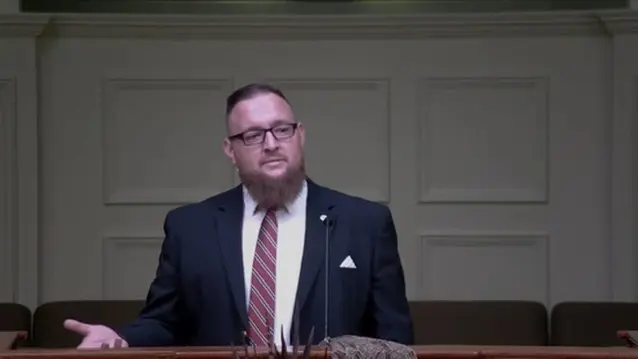
Video
“Music as Worship Pt. 1”
Pastor Ryan J. McKeen
06/21/2026
Audio
Transcript
That is one of the earliest recorded worship songs in the Bible. We’re continuing our series on worship here this evening. We began this series the beginning of the year, the beginning of January, and now here we are six full months later. We’re just now this evening getting to what most people think of when you talk about worship. And most often when worship is discussed, it is the music or the style of music that people are talking about. And I did that intentionally in this series, left this till last, because I wanted to show you that there is much more to think about when it comes to worship than simply music. But music is no doubt an important aspect of worship.
In fact, as I put together this sermon this evening, for this evening. There is so much you could cover when you talk about music in the Bible. I had to be somewhat selective in the passages that I chose to focus on here this evening. Tonight, we’ll cover the music in our worship for the next few weeks, and this is the first part of that.
I’d like to start with a bit of a biblical theology of music. We’re going to look at a lot of what the Bible has to say, mostly in the Old Testament. as it regards the music and the worship of God. And so tonight, we’ll do that biblical theology of music and look at how God’s people have always incorporated music into worship. And then next week, I want to begin to look at why we sing some of the songs that we sing, and in the order that we sing them and those sorts of things, and then also why we don’t sing some of the songs that we don’t sing. Some songs that you’ll often hear in other churches or worship services. And so we’ll talk about that in the time to come. But tonight, I want to look at what the Bible says about the use of music in worship. And again, we, of course, are going to start in the Old Testament. And we just did that a moment ago in Exodus. And we’ve seen in previous weeks, As we’ve looked at the topic of worship in the Old Testament with God’s people, how they were instructed to worship him, that the law itself has a lot to say about how they were to worship.
But worship is more than just the rituals and ceremonies that were commanded in the law. Worship is more than just the requirements. And we see that in people like David. David was a key figure in the worship of Israel in the Old Testament. He was one who really prepared the way for many of the generations that followed in their worship. Not only, as we’ll see, by organizing the musicians and the groups that were to lead worship, but by writing a lot of the worship songs of Israel himself.
And so we’ll look at those things as we go this evening. We started in Exodus 15 with the song of the sea as it came to be known. And there you see Moses and Miriam as they used music and poetic verses in that song to lead the people in a worship of God for what he had just done. And even they had musical instruments, if you noticed. As Miriam joined in and responded in her part of the worship there, they had tambourines and dancing as part of the worship of God there.
There’s a certain flavor of Reformed circles. that will assert that we shouldn’t use instruments in our worship, but that our worship should be all a cappella, because we don’t really have any apparent instruction for worship, I guess, with instruments. But I really don’t understand where that comes from, because the Bible is filled with instruments involved in worship. So really, the only way that you can describe that perspective on worship, as far as not using any instruments or modern instruments, is it’s just not biblical. Instruments are used throughout the Bible in worship, and we’ll see that tonight.
And even again, the very first song in Exodus chapter 15, verse 20, Miriam the prophetess, Aaron’s sister, took the tambourine in her hand, and all the women went out after her with tambourines and with dancing. That was instruments in the very first worship song that we have. But we’ll get there as we come to the different aspects of worship. We’ll get to instruments and which instruments were used in the Bible.
But as we look at different songs that are explained to us or presented to us in scripture, we see one in Deuteronomy chapter 32 that records the song of Moses. As Moses was going off the scene right before it records where Moses died, Moses left Israel with a song. And if that wasn’t 52 verses long, you know that I would have started with the passage from Deuteronomy. But that is a long song. It’s a very long song of Moses, and that was what he left Israel to worship the Lord with. And it’s, we don’t know how that was set to music or how it was used, but it is the song of Moses.
And Moses, as he gave it, gave it first of all as a sermon. He spoke these things. And then it became a song following that. You see in Deuteronomy 31 verse 30, the very end of that chapter, it says, Moses spoke in the hearing of all the assembly of Israel, the words of this song. So first he spoke it. but it was a song that they would have sung.
And it’s very poetic in form, and it would have been easy for Israel to learn and sing that as a song. There are other songs that we see throughout the Old Testament. You have the Song of Deborah after the victory over the Canaanites in Judges 5. There’s an entire book of the Old Testament called the Song of Songs.
And then, interestingly, the very first song of praise that we see delivered at the sanctuary was from Hannah in 1 Samuel 2. Originally, it was Hannah’s prayer, but it came to be known as Hannah’s song. She prayed and said this, and again, it turns into a song, but this was said in the sanctuary.
I’m going to read that for a second, 1 Samuel 2, if you’d like to turn there. 1 Samuel 2, and it’s just 10 verses. This is how Hannah responds to God’s provision for her. In 1 Samuel chapter 2, starting in verse 1, it says this, There is no one holy like Yahweh. Indeed, there is no one besides you, nor is there any rock like our God. Do not multiply speaking so very proudly. Let arrogance not come out of your mouth, for Yahweh is a God of knowledge, and with him actions are weighed. The bows of the mighty are shattered, but those who stumble gird on strength. Those who are full hire themselves out for bread, but those who are hungry cease to hunger.
Even the barren gives birth to seven, but she who has many children languishes. Yahweh puts to death and makes alive. He brings down to Sheol and raises up. Yahweh makes poor and rich. He brings low and he also exalts. He raises the poor from the dust. He exalts the needy from the ashy to make them sit with nobles. and inherit the seat of glory.
For the pillars of the earth are Yahweh’s, and he set the world on them. He keeps the feet of his holy ones, but the wicked ones are silenced in darkness. For not by power shall man prevail. Those who contend with Yahweh will be dismayed. Against them he will thunder in the heavens. Yahweh will render justice to the ends of the earth, and he will give strength to his king.
He will exalt the horn of his anointed. Now that’s a song. It’s a little different than the sappy, romantic, modern, contemporary worship songs that you hear on the radio, isn’t it? Very deep and rich theologically. Talking about how Yahweh puts to death and makes alive. He gives strength and He exalts the humble. And when these songs began to be sung as worship, we’re not quite sure. And we don’t really know when the first musical instruments were used in worship. But we do read about when musical instruments came to be.
In Genesis chapter 4, verse 21, right at the very beginning of civilization. It talks about the making of musical instruments. Genesis chapter 4, 20 and 21. It says, Ada gave birth to Jabal, and he was the father of those who live in tents and have livestock, and his brother’s name was Jubal, and he was the father of all those who play the lyre and the pipe. The very first musicians are listed in the beginning of civilization as the generations of the earth went out.
And we see different uses of music throughout the life of an Old Testament person. We see it first in the different aspects of their daily life. And the implication then is they also bring this into their worship. You see it in various aspects of daily life. Sometimes music was used in battle. We see that in scripture, both to hearten their own troops, but also to terrorize their enemies. This included blasting trumpets and making noise with other instruments.
You see in 1 Kings 1, starting in verse 39, it says, Zadok the priest then took a horn of oil from the tent and anointed Solomon, and then they blew the trumpet. And all the people said, long live King Solomon. And all the people went up after him, and they were playing on flutes and were glad with great gladness, so that the earth shook with their sound. They’re going out to battle and the earth is shaking because of all the music that they’re making in their joy.
You see other places where songs were sung at weddings and during their harvest celebrations, and then even at special events like we see in Numbers 21 at the digging of a well. And the congregation comes together in Numbers 21 verse 17, it says, then Israel sang this song.
Spring up, O well, sing to it. And that’s where we get that classic song that we sing often in Sunday schools and in children’s ministries, the Spring Up Old Well song. I learned that growing up. But that’s where it comes from. Very early Old Testament song that was sung in worship to God, but as part of their gatherings as a community. Songs were even used to mock and to ridicule.
You see this in various places. You see it in Job. You see it in Isaiah 14. Listen to this list of different ways that music was used in the life of a person in the Old Testament, the community of the Old Testament. Again, songs are sung at family functions, like you see in Genesis 31.
Songs are sung in the workplace. Songs were sung to praise heroes. There’s court music for the king. There was music at banquets and feasts. There was even music for funerals and laments. Israel was a very musical culture. They had a lot of different uses for music in their life, even in David’s time. Women came out singing and dancing with tambourines and musical instruments to celebrate the king.
You see in 1 Samuel 18. Starting in verse six, it says, it happened as they were coming, David returned from striking down the Philistines, that the women came out of all the cities in Israel, singing and dancing to meet King Saul with tambourines, with gladness and with musical instruments. And the women sang and were merry and said, Saul has struck his thousands and David his ten thousands. And we know the story and that became a popular song and a song that caused a lot of strife between Saul and David.
But you see, music was a part of life for them. And we know David himself was a great musician. He could play the harp and he even soothed King Saul with his harp playing. Because of his musical abilities, he became known as a musician. in 2 Samuel, he’s called the sweet psalmist of Israel. 2 Samuel 23, it’s talking about the end of David’s life and giving him a bunch of titles by how he would be remembered. Listen to how it talks of David.
2 Samuel 23.1, now these are the last words of David. David, the son of Jesse declares, the man who was raised on high declares, the anointed of the God of Jacob and the sweet psalmist of Israel. That was David. He was a man of music.
So then, you see all of this music as part of the life and community of Israel, it makes sense that they would incorporate that in their worship. and really their worship is what spurred this on in the rest of their life. As one scholar explains the use of music in the Old Testament worship setting, he says this, he said, music elevates the singer above their mundane experiences. It heightens the tone and expression of their speech and thereby increases their celebration. It also intensifies the pathos of prayers and laments, serving as a powerfully therapeutic way of dealing with the dark riddles of life.
And so as we think about our worship and how worship is heightened by music, if you need any more evidence of the importance, not only of music, but of instruments in worship, turn to Psalm 150, the very last Psalm in our worship hymn book of the Old Testament. These were the songs of Israel, 150 of them recorded for us. And the very last one, listen to how important music is in the worship of Israel. Psalm 150.
Praise Yah. Praise God in His sanctuary. Praise Him in His mighty expanse. Praise Him for His mighty deeds. Praise Him according to the abundance of His greatness. Then listen to this. Praise him with trumpet blast. Praise him with harp and lyre. Praise him with tambourine and dancing. Praise him with stringed instruments and pipe. Praise him with resounding cymbals. Praise him with clashing cymbals.
Let everything that has breath praise Yah. Praise Yah. That’s that hallelujah that we know well. That’s all music. That’s listing the different instruments. That’s all the instruments that they had listing there. Use them all in your worship. Worship the Lord with everything you have musically.
And so you see the impact that music has on our worship. Now, of course, without the Holy Spirit inspired words of these songs, the music wouldn’t have the meaning that it does. But at the same time, without the music set to these words, these words would be less effective, less memorable as the nation of Israel would sing their worship songs. And we know this is true. I can read good theology to you, and it’ll probably put you to sleep. But if we sing it, if we sing songs like, I Sing the Mighty Power of God, or Immortal, Invisible, God Only Wise, and you think about the theology that you’re singing there, if you’re just reading that, that doesn’t have nearly the impact that singing it does, and remembering it because of the words set to music. When you hear theology like that, it really makes it come alive to us.
As we consider the use of music and instruments in Israel’s worship, turn with me now to 1 Chronicles 15. Not a place you’re probably thinking I would turn to speak of the music in the worship of Israel, but 1 Chronicles 15 is an important passage as it comes to not only the worship of Israel, but the setting up of the leaders of Israel’s musical worship. I won’t read all of 1 Chronicles 15, but you can follow along in the verses that I mentioned there. David’s contribution to worship begins with his moving the ark of the covenant to where the temple was to be built. You know the story.
As they’re returning the ark in chapter 13 from the Philistines. The ark begins to tip over and Uzzah sees it and he reaches out to grab and save the ark of the covenant from hitting the ground and he’s killed for his troubles. Because that’s not what you’re supposed to do. They were not moving the ark the way that God told them to. And so there was consequences to pay for that.
And so out of fear, David leaves the ark with Obed-Edom. That’s the house that they were near. So they said, well, let’s ditch the ark here and it’ll stay there. Well, it turns out everything starts coming up roses for this guy, Obed-Edom, and David notices and says, hey, wait a minute.
Let’s get that ark back to where it belongs in the city, in the place of worship for Israel. So they decide to finish bringing it home where it’s supposed to go. And he gathers the Levites to go and carry the ark back home. And he figures out, hey, we need to do this the way God told us to do it. The Levites are the ones to move it, and we need to move it in a certain way.
And so that’s all in the context there leading up here to 1 Chronicles 15. And after listing who would be carrying the ark, they list all the names there, you’ll notice as I read this passage starting in verse 11, but at the end there, the last ones that David assembles or the worship team. In 1 Chronicles 15, starting in verse 11, it says, then David called for Zadok and Abiathar, the priests, and for the Levites, and for Uriel, and Esaiah, and Joel, and Shemaiah, and Eliel, and Amminadab, and said to them, you are the heads of the father’s households of the Levites. Set yourselves apart as holy, both you and your relatives, so that you may bring up the ark of Yahweh, the God of Israel, to the place that I have prepared for it.
Because you did not carry it at first, Yahweh, our God, broke out against us, for we did not seek him according to the legal judgment. So the priests and the Levites set themselves apart as holy to bring up the ark of Yahweh, the God of Israel.” So David figures out, hey, maybe we should do this the way God said to do it. We kind of messed up that first time, and now we don’t have Uzzah anymore. Maybe we should actually listen to God and do things the way that he wants. And it continues, and the sons of the Levites carried the ark of God on their shoulders with the poles thereon, as Moses had commanded according to the word of Yahweh.
And then here, David sets up the first worship team in Israel. at least of his time, the first worship team we read of. It says, then David said to the chiefs of the Levites to appoint their relatives, the singers, with instruments of music, harps, lyres, loud sounding cymbals, to raise a sound of gladness. And it continues on, and we see that for the procession that he appointed certain men to be the leaders of worship in Israel, and they’re names that you should recognize.
You see in verse 19, Asaph, Heman, and Ethan are listed along with others, but those are names that you ought to recognize because these would be men who would contribute to your Bible. These would be men that would write Psalms. Asaph wrote Psalm 50 and Psalms 73 through 83. Heman wrote Psalm 88. Ethan wrote Psalm 89.
This is part of the band here, this worship team that the Levites assemble at David’s command. And it continues on, and as they went, the Levites used cymbals and stringed instruments, and others were to blow trumpets there in verse 24. It says the leader of this group was Canania, a skillful instructor of music there in verse 22. And he and all the singers and musicians were clothed in fine linen for this procession, this parade of bringing the Ark back to God. the house of the Lord. In 1 Chronicles 15 verses 27 and 28, it says this, now David was clothed with a robe of fine linen. And with all the Levites who were carrying the ark, as well as the singers and Cananiah, the leader of the singing with the singers, David also wore a linen ephod. Thus, all Israel was bringing up the ark of the covenant with shouting and with the sound of horn and trumpets and loud sounding cymbals with harps and with lyres.
So this is the worship procession. And I’m reading all this to set the context for what we’ll see here in chapter 16. But this is the assembling of the worship leaders, the assembling of the musicians. And you know how the story goes on from here. David’s wife, Michael, gets all bent out of shape at his dancing before the people. And she’s cursed for that. But we aren’t focused on that part of the story this evening.
But this is the organization of the singers, those who would be then kept for the temple worship. David appointed these Levites as the ministers of music or the worship leaders. So now look in 1 Chronicles 16, turn over a page here. This is where I’d like to spend a little time this evening. 1 Chronicles 16 verse four, because this verse tells us the purpose of these first worship leaders appointed by David. 1 Chronicles 16 verse 4 says this, and he made some of the Levites ministers before the ark of Yahweh, even to bring remembrance and to thank and praise Yahweh, the God of Israel. So he lists there three different functions, three different purposes for these music leaders in Israel.
The first purpose there is to bring to remembrance. Part of the purpose of their worship with music is to bring to remembrance all that God had done. And this is evident in a number of the worship songs, the Psalms that we see. Often they are recounting history, talking about the deliverance of God that he provided for the nation of Israel. We even saw that in that first song of Moses that I read, as he brought to remembrance how God saved Israel at the Red Sea, how he drowned the pursuers of Egypt and delivered the nation of Israel across on dry land. This too also fits many of the Psalms that are laments.
In the lament Psalms, not only are they calling for God to remember them, but often the solution for the despair that they find themselves in, in all of these laments, is to remember what God has done. Remember the God they’re calling out to in all the ways that he has provided in the past. Psalm 132 is a good example of that, where it lays out the complaint that the psalmist has as he’s calling out for God to remember him, and don’t forget your people. And then the last half of the psalm is all remembering that God doesn’t forget his people. And that’s the cure for these laments, as they remember who God is and what he’s done. So the first purpose of these music leaders is to bring to remembrance for these people who God is.
The second word used there is to thank, to thank God with thanksgiving. The purpose of worship music is seen in the thanksgiving Psalms. These are Psalms in which the worshiper, again, declares what God has done and thanks him for that. Psalm 118 verse one says, give thanks to Yahweh for he is good, for his loving kindness endures forever. That’s a popular verse in a lot of the psalms where they’re instructed to give thanks to God for who he is, because his mercy, his loving kindness never ends.
And again, these psalms are also used for rejoicing and even dancing. As we see in Psalm 30, Psalm 30 verses 11 and 12 say this, you have turned for me my mourning into dancing. You have loosed my sackcloth and girded me with gladness, that my glory may sing in praise to you and not be silent. Oh, Yahweh my God, I will give thanks to you forever. That is the disposition of the Thanksgiving Psalm, turning our mourning into thanksgiving, into dancing. And this refers to the Thanksgiving Psalms given as worship music to Israel.
The third word used there in 1 Chronicles 16.4 is to praise.
They’re simply to praise God, to bring to remembrance, to thank and to praise God. Now there are many of the Psalms that are simply praise Psalms. They just extol God for who He is. They praise God and tell of His goodness and His greatness. Many of the songs we sing function this way. the worship congregation and all the people to tell of God’s goodness and praise Him for it.
Psalm 33 verse 1, sing for joy in Yahweh, O righteous ones. Praise is becoming of the upright. Think of that last line, praise is becoming of the upright. This is what we ought to be doing. It’s fitting for us to praise Him. It’s fitting for the upright, for God’s people, to praise Him. This makes sense for us to do this.
And these were the expressed purposes of the leaders of Israel’s worship. To bring to remembrance, to thank, and to praise God. The singers and musicians were assigned this ministry of leading and accompanying the worship of Israel. And they were to help Israel express their faith in God.
And that’s a large focus in many of the worship songs of Israel, but it’s really a main purpose for our worship in music. It’s to express our faith in God. Many of the words we sing and the things we sing about God We sing them because we believe them. And it helps us to express what we truly believe. So those are the purposes we see there of the worship of God in music.
We also see in several places, as I mentioned earlier, that worship used instruments. The worship of Israel used various instruments in their music. In this passage, there are many instruments mentioned, but in a variety of the psalms, it’s mentioned the instruments that are to be used in music, but even in some of the psalms at the beginning, the heading of the psalm mentions how this should be played, the instrument it should be played on. There’s many instruments listed in the Psalms, but listen to the different types of instruments. You had percussion instruments, and cymbals, and timbrels, and different things they were to play as percussion instruments. Yes, they used percussion instruments in their worship. And then there were wind instruments like the trumpet or the ram’s horn or shofar, the flute and the pipe as we’ve read about already. There were stringed instruments like the lyre and the harp and the strings and ten strings and the lute, all different variations of a stringed instrument that they would use in playing this music.
In fact, in 1 Chronicles 23, as it’s listing out the different divisions of the Levites and their different responsibilities, it says in 1 Chronicles 23 5 that there were 4,000 who were assigned to praise with instruments. 4,000 musicians in the worship of Israel. 4,000 men assigned, and that’s your job, is to play the music of God in the worship services. And later on in verses 30 and 31, it tells us in 1 Chronicles 23, that when these different Levites were on duty, when these different priests of music were on duty, it says, every morning and every evening, they were to thank and praise the Lord with their instruments.
So in the temple of God, these Levites, when they were on duty, they were playing music all the time. The worship of God, the sounds and the voices of the worshipers, the leaders of worship, were always going in the house of Yahweh. Every day, morning and evening.
So that was the instruments that were used there in worship. And interestingly, as often as we, as modern day Christians, like to think about the instruments that aren’t allowed in worship. The things we’re not allowed to use in the church. The Bible never mentions any instruments that you’re not allowed to use in worship. Now there is a proper and fitting way to worship with instruments, that’s true. But there’s no list of prohibited instruments or styles.
So we’ll talk about that more next week. Just to say, there’s a lot of instruments you can use, and really the list looks like everything you have, worship the Lord with it, but there’s no list of prohibited instruments. But that gets us next to the singing. And the singing in this worship was very obviously congregational singing, the singing of the congregation together. And that was the purpose, the purpose of a lot of the Psalms. And you even look at the language used, the pronouns used are plural.
They’re singing together. We are worshiping the Lord. We are thanking him for what he has done for us. So it’s a congregational setting that they are to be singing these songs in. For example, you see in Ezra, the book of Ezra, as they come back from captivity and they are setting up worship again, Ezra, one of the priests, in chapter three, verse 11 of Ezra, tells us that they sang, praising and giving thanks to Yahweh, saying, for he is good, for his loving kindness endures forever upon Israel. And the people shouted a great shout, and when they praised Yahweh, because the foundation of the house of Yahweh was laid. He’s talking about the worship of Israel and the people together are worshiping. They all are singing praises. Again, the Psalms themselves, they call other worshipers to sing to Yahweh. As the Psalms are addressed to God, they’re calling other worshipers to sing with us to our God. Psalm 9, verse 11, sing praises to Yahweh who abides in Zion.
Declare his acts among the peoples. So it’s not only singing to God, but in the meantime, it’s calling others to join in, to sing to God together. And so also with this, very frequently throughout the Psalms, you see that command, sing praises to God. And again, that’s a command.
It’s not an optional part of worship, it’s a necessary requirement of worship. Singing to God is commanded in the Bible. Sing praises to our God. You ever think about that? We are commanded to sing to God. In his worship book, he tells us, sing to God.
And by singing and lifting up our voices and using the biblical and accurate words and the music that helps us remember these things and express our worship, we appropriately exalt the beauty and glory of God. Psalm 33 verse 1 says, sing for joy in Yahweh, O righteous ones. Again, praise is becoming of the upright. This is what we ought to be doing. singing songs of praise was and is the appropriate and enthusiastic way for the people of God to worship Him and tell of the glorious and gracious ways of our God, the things He has done. Another great one is Psalm 40, Psalm 40 verse 3. It says, He put a new song in my mouth, a song of praise to our God. Many will see and fear and will trust in Yahweh.
When you think about just the context of these songs they were singing, they were singing these to each other. Yes, they’re addressed to God and they’re singing to God. But you can tell in the words this is supposed to be sung together with the congregation. They’re reminding one another of who God is. And this is an important aspect of music as worship, of singing as our worship. Worship music ought to be conducive to congregational singing. That’s the purpose of it, is for the congregation to sing together and remind each other of who God is. And this is unfortunately not the type of music you find at a lot of more what they would call modern or contemporary worship services. And this isn’t to pick on any churches or anything like that. It’s more to think about our style of worship.
And we’ll get more into this next week, but many times worship turns into a performance before an audience. And you’re just there to observe the performance of the musicians and the singers. And worship leaders and musicians perform solos and instrumentals with light shows and this whole show that’s put on and told that it’s worship. But is that the biblical picture of what music as worship is? I don’t think so. Music as worship was never a performance.
It was supposed to call the people together to sing together. The worship leaders were to lead in a way that incorporated the people in the worship of God. And so the congregation should be involved in singing with and to each other. which means that we ought to be able to hear each other. And so if the music is so loud that you can’t even hear yourself, let alone the congregation that you’re singing with, you’re missing the purpose of what worship music ought to be. That’s not creating a worshipful environment. In fact, some of the Psalms, as you read the different Psalms, some of them have parts to them. where the worship leader was to sing one part and the people were to respond with their part.
So it shows this congregational involvement. Psalm 121 is a good example of that, where the first two verses are in the first person and verses three through eight are in the second person. So you have the worship leader has one part and the people have another part. Psalm 20 is another example of that.
But as you see in the Old Testament, worship included the congregation. The congregation were to be active participants in the worship of God through music. They knew that it was appropriate to praise God in every way through their singing. And when the people of God were faithful to give God the praise and adoration and thanks that He was due, the sanctuary was always full of music.
So much so that in Psalm 22, famous messianic Psalm, but in Psalm 22 verse 3, this is what David says. He says, speaking to God, he says, you are holy, you are enthroned upon the praises of Israel. Your throne is the praises that Israel offers up to you. So it would be difficult for an Israelite to think of worshiping God without music and without musical instruments and singing.
And these forms of praising God are not only instructed by God, But they’re what we see in the pictures of heaven that we’re given. They are our preparation for eternity with God. Because you see the pictures of heaven, the heavenly scenes. Think of Isaiah 6 and the seraphim praising God in their singing. Or in Revelation 4 and 5, as you see those around the throne of God singing praises to Him. Creation is celebrated by the angels who sing and shout for joy. And in glory there are always and always will be choirs of angels singing to him. This is the pictures we see of heaven.
Think of Revelation chapter 5. You can turn there, one of our last passages this evening. Revelation chapter 5 verses 9 and 10. This is a tremendous song of worship. Revelation chapter 5, you see the The scroll and the lamb and the things that lead up to that. It says in verse nine, a new song was sung. Verse nine it says, and they sang a new song saying, worthy are you to take the scroll and to open its seals because you were slain and purchased for God with your blood, people from every tribe and tongue and people and nation. And you made them to be a kingdom and priests to our God and they will reign upon the earth. This is worship music.
This is singing to God, singing to the Lamb, singing to Jesus Christ because of what He’s done. And we who are God’s new creation, as we wait for that day when we will be singing praises to the Lamb for eternity, we have to practice. And our worship services, our practice, for the ultimate worship we look forward to in heaven, in eternity, worshiping the Lamb face to face. And we picture that glory and honor that’s due Him and we anticipate that great day of worship when we are glorified with Him.
And now that’s the Old Testament. A little bit of the New Testament there in Revelation, but the New Testament doesn’t give us a lot of new information when it comes to the music and worship of God through music. But it doesn’t have to, because the precedence is set. The worship book of music, the Psalms, is complete. And the New Testament writers simply assume that the same sort of praise and glory will be going forth from God’s people.
That’s what Paul says in the two familiar passages where he instructs us as to how we are to be singing to the Lord in Ephesians 5.19. Paul instructs Christians to speak to one another in psalms and hymns and spiritual songs, singing and making melody in your heart to the Lord. That’s what they did in the Old Testament. We’re to still do that, sing psalms and hymns and spiritual songs, singing and making melody.
And in the parallel passage there in Colossians 3.16, Paul says, let the word of Christ dwell in you richly with all wisdom and teaching, admonishing one another with psalms and hymns and spiritual songs, singing with gratefulness in your hearts to God. Well, that was the purpose of singing in the Old Testament. to be grateful, to give thanks to God through music. We’ll come back to these passages again next week. But Paul again is referring to the very same thing that they have always done as the people of God, worshiping God through music. And the word psalm itself that he uses there, that we ought to be singing psalms and hymns and spiritual psalms, a psalm is by definition put to music and accompanied by a stringed instrument.
So through music and singing, God is exalted and glorified in ways that our speech cannot do on its own. It magnifies and exalts the praise of God in simple words. Music is another ultimate act of worship. And we see throughout scripture, through music, we show that God is most important and glorious to us in our praises of Him, in our singing. We obey the commands of scripture to sing and make a joyful noise to the Lord.
We will continue our study of music as worship next time. Stand with me as we close in a word of prayer this evening. Let’s pray. Our God, we thank you for all of the instruction that you do give us in your word. As it comes to our worship of you. When we think of the music that was incorporated into worship throughout the history of your people. We thank you for the gift of music, and as we worship you in our singing and in our playing and in the music of this church, we pray that you would be most glorified, that we’d remember the purpose and the ultimate aim of our worship in music, and that we would keep you first and exalted and glorified in our worship services. We thank you for who you are and for what you do for us and who you have made us to be. We pray this in Jesus’ precious name. Amen.