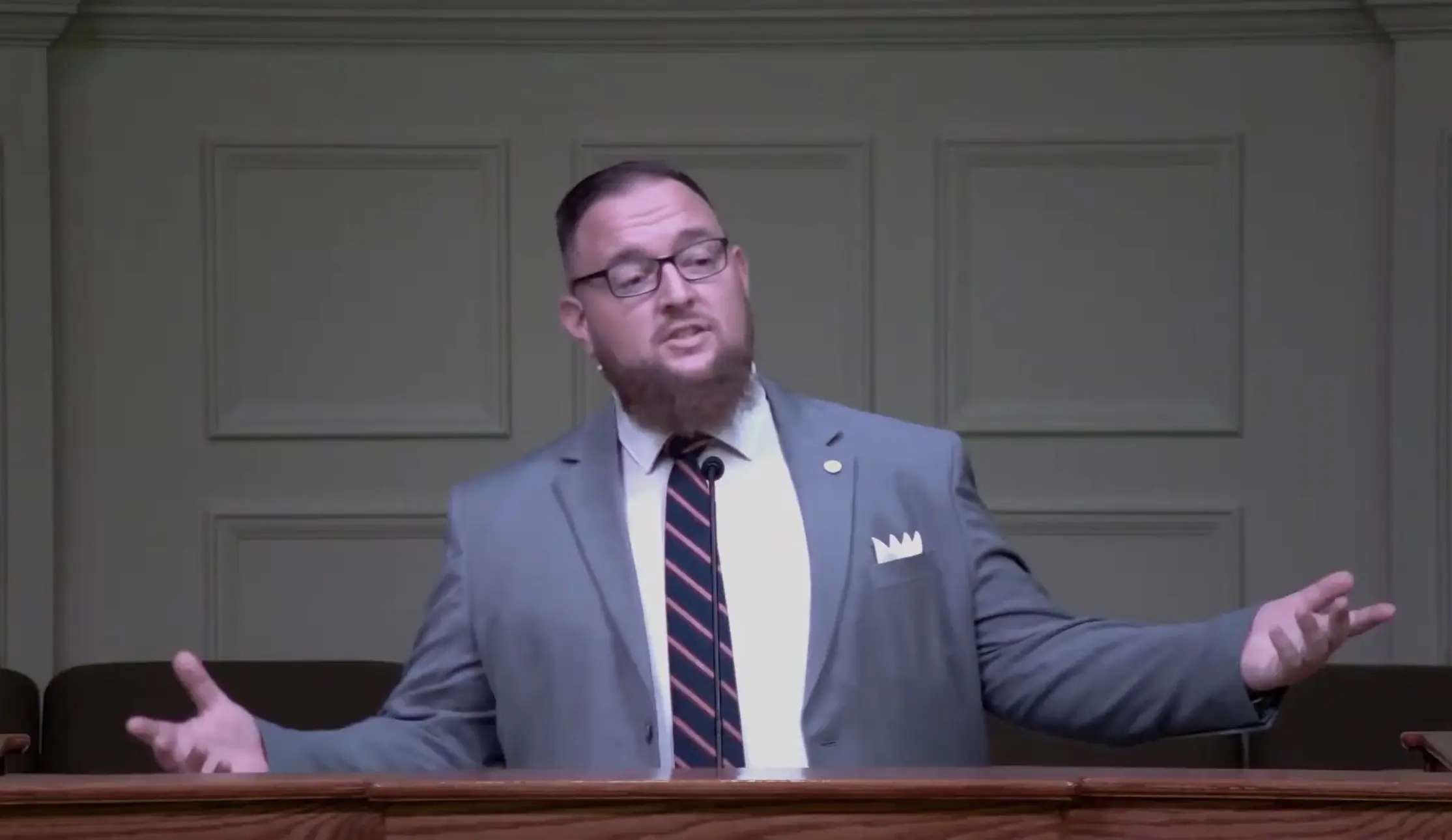
Video
“All Things Are Wearisome”
Ecclesiastes 1:3-11
Pastor Ryan J. McKeen
09/20/2026
Audio
Transcript
Turn with me in your Bibles to Ecclesiastes chapter 1. Ecclesiastes chapter 1.
“The horror of the same old thing is one of the most valuable passions we have produced in the human heart. It is an endless source of heresies and religion folly in counsel, infidelity in marriage, and inconstancy in friendship.”
Your affectionate uncle, Screwtape.
That is, of course, from C.S. Lewis’s fantastic book, The Screwtape Letters, a book where he depicts a series of letters between a demon named Screwtape and his nephew, Wormwood. And this demon’s goal is to get people to turn away from God. And so he provides him the best advice and strategies for which to do that.
And here in this letter, he speaks about the effectiveness of the horror of the same old thing. And that is the horror of the preacher Solomon in the verses we’ll focus on this evening here in Ecclesiastes chapter one. But as I mentioned last time, You have to know how to read the book of Ecclesiastes if you’re going to get the point.
The book is written by the preacher Solomon, and Solomon was given great wisdom by God. He was the wisest man who ever lived according to God. But even so, during the course of his life, Solomon was very foolish, which is one of the great enigmas and something that characterizes this book of Ecclesiastes that he wrote. During the time of Solomon’s foolishness, he brought a lot of wickedness into the nation of Israel. He introduced a lot of the idolatry of some of his foreign wives to the nation of Israel, things that held on in that nation for a long, long time. The book of Ecclesiastes is written in Solomon’s old age. And it’s best to see the book of Ecclesiastes as a repentant rejection of his foolish living. Solomon has lived it all. He’s done it. He has done everything and he’s made the mistakes that everyone is prone to make. And he’s learned something from them.
And that is where I think we see the great wisdom from God shining through here in the book of Ecclesiastes. Solomon’s foolishness led to great sin for him and the nation. And now we get to see that sin from the inside. And the repentance that follows in the pages here in Ecclesiastes. Ecclesiastes is not Solomon without his wisdom. It’s Solomon’s wisdom reflecting on the foolishness that plagues all men. Ecclesiastes really has four basic cycles that it goes through. It really divides into four sections. In Ecclesiastes 1 and 2, we see the first one. And we see here that satisfaction cannot come from anything within the natural man, within our own natural abilities and competence.
Then the second one starts in chapter three and goes through chapter five, and that shows us and highlights that God is sovereign over it all. And Solomon answers a lot of the objections that are perennially raised against the sovereignty of God. Then you get to chapter six, and the third cycle of Solomon’s folly and wisdom starts, and that goes halfway through chapter eight. And there Solomon shows us that the sovereign God gives us the power to enjoy this life.
We’ll cease that some tonight. There’s a lot of things that repeat themselves. But he also shows us that without an understanding of this God, without understanding who God is and his attributes and his nature and his character, all of the things that Solomon talks about concerning God, without knowing that, The whole world, all of life, is nothing but a never-ending cycle of exasperation and frustration. And then the last cycle, the fourth cycle of the book, closes with the conclusion that Solomon comes to in his wisdom, that the end of the matter, all has been heard, fear God and keep his commandments. And do that because there’s an end coming, that there is a judge over all the earth and God will bring all things into account. And it’s in these cycles that the book goes through that Solomon does express his frustration and the exasperation that man faces, as he calls it, under the sun.
And in those sections, sections like we see tonight, we read things that make us wonder, is this really supposed to be in the Bible? Is this really what the word of God is saying? But because the book is written in these cycles, we need to remember where Solomon is going. We need to remember the point he’s trying to make in all of this.
And at the end of this first cycle, at the end of chapter two, we see Solomon’s conclusion in his wisdom. And these parts are clearly marked when Solomon comes to his wisdom and reflects on God’s perspective on the matter when he starts talking about God again.
You’ll notice in the section we’ll mention tonight, he’s talking from man’s perspective without God. And then at the end of this cycle, he comes back to the perspective with God in mind. And that clues us into the fact that under the sun, this life is not all there is. So tonight, before we get into our text, we need to peek ahead and look at where the preacher is taking us. Look at what his conclusion is going to be at the end of this first set of cycles. And that’s found in Ecclesiastes chapter 2. If you want to turn over there, turn over a page, at the end of chapter 2, verses 24 through 26, this is the conclusion of the preacher.
This is what he says, there is nothing better for a man. than to eat and drink and have his soul see good in his labor. This also I have seen that it is from the hand of God. For who can eat and who can have enjoyment outside of him? For to a man who is good before him, he has given wisdom and knowledge and gladness. While to the sinner, he has given the endeavor of gathering and collecting so that he may give to the one who was good before God. This too is vanity and striving after the wind.
Solomon’s point here in his conclusion is twofold. First, God is the one who gives all these things. This is from the hand of God, he says. Things like eating and drinking and our labors, basically normal everyday things, the things we all do. Those things are from the hand of God, but not only that, God gives man the ability to enjoy those things.
Only the first of those two is given to the unbeliever, the one living under the sun. Everybody lives under the sun, but the believer is given both. Or you could say the believer is given the capacity to enjoy life because he understands the bigger picture. Verse 25 again, for who can eat and who can have enjoyment outside of him, outside of God? That is to say, life under the sun is what it is. It’s a vapor, it’s a mist, it’s a chasing after the wind. And everybody lives under the sun. But God has given his people the gift of being able to enjoy life under the sun.
If we remember that that’s the conclusion of this section in Solomon’s argument, it will help us understand what he lays out for us in our text tonight. But that doesn’t mean Solomon’s conclusion here, that these things are a gift from God and God has given us the ability to enjoy them, that doesn’t mean that the hardships of life under the sun go away for the believer.
Life is still this way. The preacher doesn’t sand over the rough edges of life. He presents them, rough and splinters and all. So allow me to read our text this evening, back to chapter one. It’s going to be verses three through 11. This is really a poem that begins Ecclesiastes, Solomon’s wisdom to us, to the congregation that is gathered to hear the preacher. So Ecclesiastes chapter one, verses three through 11. What advantage does man have in all his labor, in which he labors under the sun?
A generation goes and a generation comes, but the earth stands forever. Also, the sun rises and the sun sets, and hastening to its place, it rises again. Going toward the south and then circling toward the north, the wind goes circling along, and on its circular courses, the wind returns. All the rivers go to the sea, yet the sea is not full. To the place where the rivers go, there they continually go. All things are wearisome. Man is not able to speak of it. The eye is not satisfied with seeing, nor is the ear filled with hearing.
That which has been is that which will be, and that which has been done is that which will be done. So there is nothing new under the sun. Is there anything of which one might say, see, this is new? Already it has been for ages, which were before us. There is no remembrance of earlier things. And also the later things which will be, there will be for them no remembrance among those who will come later still. Ah yes, the horror of the same old thing.
We are starting to see what the preacher means by life is vanity. And we saw last time that it doesn’t just mean meaningless. but it does have an exasperating effect. It’s brief, it’s passing us by. It’s hard to grab onto. And here, in Solomon’s poem, to open this book, we see that it’s repetitive. Not only is it frustrating at times, but that frustration is repetitive. That which has been is that which will be.
You just washed the dishes last night. and here they are again. You just changed the oil in your car, and the light’s on again. You just mowed the lawn the other day. Would you notice that the lawn needs to be mowed? I just took the Christmas lights down. But have you looked at the calendar?
That’s the point that the preacher is getting to. Everything either goes around and around, or it comes and it goes. It rises and it sets. It’s what has been will be again. And what has been done will be done again. The present is only the present right now. Wisdom literature is like this.
It takes what we’re all too familiar with and surprises us. As one guy said, wisdom literature in scripture aims to wound from behind. It surprises us, it sneaks up on us. It’s like a punch in the kidneys. I didn’t see that coming, but man, that hurts a lot worse than I thought it did. That’s exactly how Solomon opens his book here. It makes you want to put it down, doesn’t it? I mean, this is depressing. Why should we keep reading this? But keep reading, we must. We’ll start at the beginning of this poem again, in verse three.
What advantage or what gain does man have in all his labor in which he labors under the sun? What advantage is there? What is the gain? What am I going to gain from this? What’s my profit in all of this work and life under the sun? We can work our whole life under the sun, but what are we really left with? At the end of my life, what will the surplus be? What will I leave behind that will count, that anyone will remember for more than five minutes? What do we really gain in this life? Did all my hard work add a single day to the time that God has allotted to me? Can I bring my profits with me in my casket? The implied answer to verse three is nothing. There is no advantage to all the labor which man labors under the sun. There’s no profit, there’s no gain. Once this short life is over, it’s over.
And that’s what he says next in verse four. A generation goes and a generation comes, but the earth stands forever. You only leave one thing behind when you leave. And that’s the earth that keeps on spinning without you. And it will keep on spinning at the same speed it did before like you were never here. Your life will come and it will go. And if you leave children in the world, guess what? They will come and go too.
And the world will keep spinning. Verse five continues, also, the sun rises and the sun sets. And hastening to its place, it rises there again. The sun will come out tomorrow. When the sun goes down, we know it’s gonna come up again. That’s how the world works. We expect to see the sun again in the morning. But the sun doesn’t necessarily expect to see you. The sun will be here, you may not be. He continues, verses six and seven.
Going toward the south, and then circling toward the north, the wind goes circling along. And on its circular courses, the wind returns. All the rivers go into the sea, yet the sea is not full. To the place where the rivers go, they continually go. Even the weather changes.
But it really just stays the same. Our world lives in a constant recency bias. Meaning we have no real concept of history. We function like this year is the first year of history. Like when the weatherman shows you a map of the temperatures outside, and the background is all red. As if this is the hottest it’s ever been. But if you pull up programs from a couple years ago, It’s the same numbers on the screen, but the map is green. And the hottest temperature on record doesn’t mean much when we just started keeping records not that long ago.
The sun comes up, and the sun goes down. The wind blows to the south, and it comes back around again to the north. These things keep on happening. Streams flow into the sea, and the water evaporates, and it rains again, and it keeps flowing into the sea, and the sea is never full.
That is the world, that’s how it is and that’s how it will always be. It’s like our lives are working hard to make an impact and really all we’re doing is building sandcastles that’ll wash away the next time the tide comes in. And the preacher says, not only is the world like this, we’re like this. We are the same way, in verses eight through 10.
All things are wearisome. Amen? I think we get that. All things are wearisome. Man is not able to speak of it. The eye is not satisfied with seeing, nor is the ear filled with hearing. That which has been is that which will be. And that which has been done is that which will be done. So there is nothing new under the sun. Is there anything of which one might say, see this, it is new. Already it has been for ages which were before us.
The eye is not satisfied with seeing, nor is the ear with hearing. You will never get enough to satisfy your appetites. If you’re seeking pleasure, if you’re seeking satisfaction in this life, you’re not gonna find it. Because that’s not what we were made for. He’ll get into that in the coming chapters, the things that he tried to find satisfaction in. And here, the opening pages, he’s telling us what he’s found out. My eyes were never satisfied. My ears were never satisfied.
Nothing in this life made me happy, not truly. And there’s nothing new under the sun. Is there anything of which one might say, see, this is new? There is nothing new under the sun. I mean, who can’t think of an example of this? Is there anything of which one might say, see, this is new? The latest gadget or fad? The new miracle weight loss trend? The next big thing that will finally break me out of this round and round life? You know, like the internet? or cable TV, or combustion engines, or the washing machine, or the telephone, or maybe it’ll be AI that will change it all.
It’s always something new, but really, nothing ever changes. We’re still the same. At our core, at our heart level, we are still the same. Nothing satisfies. It’s all been done before. There’s nothing new under the sun. The sun will come out tomorrow. And when it does, verse 11, there is no remembrance of earlier things. And also of the later things, which will be, there will be for them no remembrance among those who will come later still. It’s an encouraging passage, isn’t it? No one’s gonna remember it anyways. We live, we work, we pay bills, and we die. And we’re forgotten. And the next generation comes and does it all over again. And round and round we go. And that repetition makes life feel exasperated, like vanity.
That’s what the preacher’s trying to tell us here. His perspective is we long to come across something in our lives that will break this constant repetitive cycle. Something that will really change my life. Something that will change everything from now on. Something to say or see or hear that will truly be new and significant. This is what drives academia. Everybody’s got a new perspective on something.
And this is what is frustrating in biblical studies, is that everybody has to have some new thing to say about the Bible, otherwise nobody’s gonna read your book. But there is nothing new to say. It’s all been said before. There is nothing that exists that seems to be significant or life-changing under the sun. One preacher, David Gibson, commented this on this passage.
He said, a new government is still a government, and we’re all familiar with those. A revelation brings a new era, and we’ve seen it all before. A new baby is still a baby, and the world has been full of them. Even landing on the moon is still a form of adventure and exploration that’s been with us since the humans have walked the earth. That’s the horror of the same old thing. Are there things in life that we can classify as new? Yeah, sure. But nothing really changes. Not really. And that’s the point. So what gives? Why is this passage here? What is Solomon telling us in all of this? Well, again, we need to remember his aim. What he’s getting to.
And first, he’s starting with the fact that at the end of the day, we gain nothing from all the toil under the sun. There is no advantage, no profit, no surplus, because we’re never full enough to have something left over. That’s how we are. He is explaining the human condition, the lack of satisfaction in things of this life.
If you live to make money, you’ll never make enough, because there’s always something else to spend it on. There’s nothing to profit because the universe itself is cyclical. It goes around and comes around. That’s just how life is for everybody. There’s no profit because whatever is already has been.
And if there’s nothing new under the sun, well, what’s the point? What’s the point in working so hard to make or find or leave something new behind? You gain nothing from grinding your fingers to the bone, because the world will go on, regardless of what you’ve done. And it will not remember you when you’re gone. Oh, they might build a statue for you, but the next generations will come and wonder who that funny-looking guy is. Just ask the Civil War generals.
And many interpreters and commenters on the book of Ecclesiastes try to clean this up and make it seem like Solomon’s talking about those other people, that this is what life is like for them. Surely it’s different for God’s people, right? Well, yes, in a way. We’ve already seen where Solomon is getting to with this, but we’ve also seen that it really isn’t. that we live in this world too, this world that goes around and around. We all know exactly the life that the preacher is talking about because we live it every day. And you related far too well to those examples I gave to pretend like you don’t understand what he’s talking about. No, under the sun doesn’t mean those other people. Under the sun means in this life. This life that we all live on this earth. The earth that keeps on spinning regardless of who we are or what we do.
And right out of the gate here in Ecclesiastes, the preacher wants us to keep our end in mind. To live like we know the end. He wants us to look at life without ignoring the fact that we’re going to die. That we’re not here forever. We all live in a world where all of us will soon be dead, and the world will go on. Unless you live till the return of Christ, then something really significant and life-changing is going to happen. But if not, you will live, you will die, and the generations will come, and they will keep on coming. So how do we live in a world like that?
Well, Solomon, the preacher, wants us to let the reality of that life, the reality of our death, sink in. Because he’s writing a book about how to live. And really, at its core, that’s what the book of Ecclesiastes is. It’s a book on how to live, how to live in this life.
He wants us to consider the consequences of our fast approaching departure from this earth. How does that affect me right now? How does the fact that I’m not gonna be here long affect how I live every day? He wants us to rethink how we see the world and how we view ourselves in this world under the sun. If we won’t live forever or even long enough to make a lasting difference in the world, then how should we live while we’re here? And it’s gonna take the whole book of Ecclesiastes to answer that question.
There’s no bumper sticker answers for Solomon. But think of it like Solomon is painting a picture here. And while a great piece of art is beautiful in the end, it may look a little ugly while the painter is laying down the first few layers. And that’s what this first chapter of the book is. It’s a little ugly. But Solomon wants us to get something clear here first. That accepting our death is the first step in learning how to truly live. How to live like this matters. A wise man knows his limitations. I like how one guy put it. He said, a wise man knows the length of his tether. In this life under the sun, A wise man knows the length of his leash. He knows how far he’s got.
You know life is like this, so stop fighting it. Stop fighting the frustrating parts. You can either spend your life straining and pulling to reach farther than your tether, reach farther than your limitations can go, or you can learn to find joy within the limitations that God has given us. And again, remember where he’s taking us. Ecclesiastes Chapter 2 verses 24 to 26. Again, there is nothing better.
For a man than to eat and drink and have his soul see good in his labor. This also I have seen that it is from the hand of God. For who can eat and who can have enjoyment outside of him? For to a man who is good before him, he has given wisdom and knowledge and gladness, while to the sinner he has given the endeavor of gathering and collecting, so that he may give to one who is good before God.
This too is vanity and striving after the wind. This life that Solomon is describing, the sun comes up and the sun goes down and the world keeps spinning. There’s nothing new under the sun. God has given us those limitations. God has designed it that way. So we can either fight against that and be frustrated with it, or we can understand that there’s a designer to this life, and he’s designed these things a certain way, and I can live to enjoy the way that he’s made them. Because again, it’s God who gives these things, and God gives man the ability to enjoy them. to be human is to be a creature, and that’s what these things remind us of.
The reason why we’re frustrated that the world doesn’t work the way I think it should work is because I didn’t make it. He did, and I’m just living in the world that he made. We are not God, we are not in control, and we will not live forever. We will die. And we should be the first people to stop acting like we won’t, because we know our end. We should be the first people to stop acting like we’ll finally make it if, if we just get that promotion, then I’ll be happy.
If I just find Mr. or Mrs. Right, then I’ll finally be happy. Or if we just have children, or maybe if I get a different job, or maybe if I move somewhere new, then I’ll be happy, then I’ll be content. If I only had more money, then I’d be satisfied. Or maybe when life slows down a little bit, then I can enjoy it. But that day’s not coming. Because the sun comes up, and the sun goes down, and nothing lasts forever. But at the same time, there’s nothing new and nothing satisfies.
We want something new in a world of constant repetition. And we want something that lasts in a world of constant change. Because if you notice there, Solomon’s talking about two different realities in the poem that he starts the book with. The fact that everything’s always changing and the fact that nothing ever changes. That’s his frustration. And this is what the preacher has revealed to us with his first kidney punch of wisdom here.
We try to make ourselves permanent when we’re not meant to be permanent. And we try to change a world that’s not meant to change. These things repeat themselves over and over again. So maybe it’s time to learn That life has a repetitiveness built into it by its creator. That we’re not meant to try to escape.
The rhythms of life point us to what it means to be part of God’s creation. They show us the designer. So stop thinking that meaning and happiness and satisfaction are only found in something new. God has made change and newness enjoyable, that’s true.
But that shouldn’t cause us to have a horror of the same old thing. Because to go back to C.S. Lewis in that screw tape letter that I read to begin with, he continues and says this. Again, this is advice to help frustrate the Christian and turn him away from God. And the reason why you should have him fear something, the same old thing, he goes on to say this, because God does not want his creatures to make change and end in itself.
He has balanced the love of change in them with a love of permanence. You see, change and repetition, newness and familiarity, they’re the two balancing weights on the scale of life. God’s made us that way. God has given us the capacity to enjoy both of them. by designing a world that has them both, designing a world that has these rhythms. That’s what our text is about tonight, the rhythms of life. And the key is to learn to enjoy them, not to fight against them.
For example, we love the fact that springtime feels new, and we love the fact that it’s springtime again, and springtime will come again next year. That’s how God’s designed it. For example, I love sitting on the back porch of our house in the morning with a cup of coffee and feeling and seeing the sunrise in the morning. I love it because it’s that feeling of a new day. And I love it because it’s going to happen again tomorrow. And I can look forward to that again. And I love it because it reminds me of who God is.
His mercies are new every morning. He’s the same yesterday, today, and forever. That’s who He is. Because of the hope we have of eternity, face to face with our Savior, because the life and death and resurrection of Christ, we know that this life under the sun is not all there is. If you trust in Christ as your Savior, you can look forward to a new creation where things will be significantly different. But at the same time, He will be the same. But until then, we do live in this life under the sun. We don’t have to despair of this life.
Yes, there are frustrating things in life. There are exasperating things in life. There are things in life that makes us feel like we’re spinning our tires over and over again until we finally stop. But we don’t have to hate it. We don’t have to be despairing in it. We can enjoy the life that God has designed us for. That’s exactly what the preacher wants us to see.
When we’re unsatisfied with the rhythm and repetition of life, it’s because we’re pretending that things shouldn’t be like this. We’re trying to live beyond the length of our tether. Instead of enjoying the world within our tether. Instead of wishing things weren’t this way, the preacher wants us to see that God made life this way. And we can enjoy the way that life is. So again, learning to really live, which is what the preacher’s after here, to teach us how to really live.
It begins with realizing that one day you won’t be living anymore. One day you will be dead and gone, and this life under the sun will be over. The world will go on, and it probably won’t remember you. A hundred years after your death, the chances are that no one will ever know that you lived. I mean, you think about the population of this world and how many people can you name that lived a hundred years ago? It’s a very small percentage.
If that depresses you, there’s more to come. There’s more to learn from the preacher. But if that cracks a smile on your face, you’re starting to get there. Because that’s what he’s trying to show us, is life doesn’t have to be vanity. In the coming chapters, the preacher will show us that what we should expect from life and what we shouldn’t expect from life.
But to give you a preview, he’s not just telling us that there’s no gain after we’ve chased the wind, He’s also going to tell us that there’s no need for the chase in the first place. There’s no gain to be had under the sun, and that’s precisely the point. We’re not here for the gain. We’re here for the glory of God.
And that should shape how we live. And his gift to us is the capacity, the ability to enjoy this always changing and always the same life here under the sun. So that’s the beginning of Solomon’s wisdom for us here in Ecclesiastes. If you could stand with me, we’ll close in a word of prayer. Our God, we thank you. We thank you for a book like Ecclesiastes that is a challenge to us. that surprises us with some of the things that it says, but it also makes us think. We thank you for making us creatures that can think and to consider our life and consider why we’re here and how we can live our life to glorify you in the short time that we’re here. I pray that this study through the book of Ecclesiastes will be helpful for us. in considering how we live in this life here under the sun, but also keeping in mind our end, that this life under the sun is not all there is, but because of Christ, because we are in Christ, we look forward to the new heavens and the new earth, where we will spend eternity with you, the God who always stays the same, but whose mercies are new every morning. God, we thank you and we praise you and glorify you here tonight. We pray this in Jesus’ name, amen.