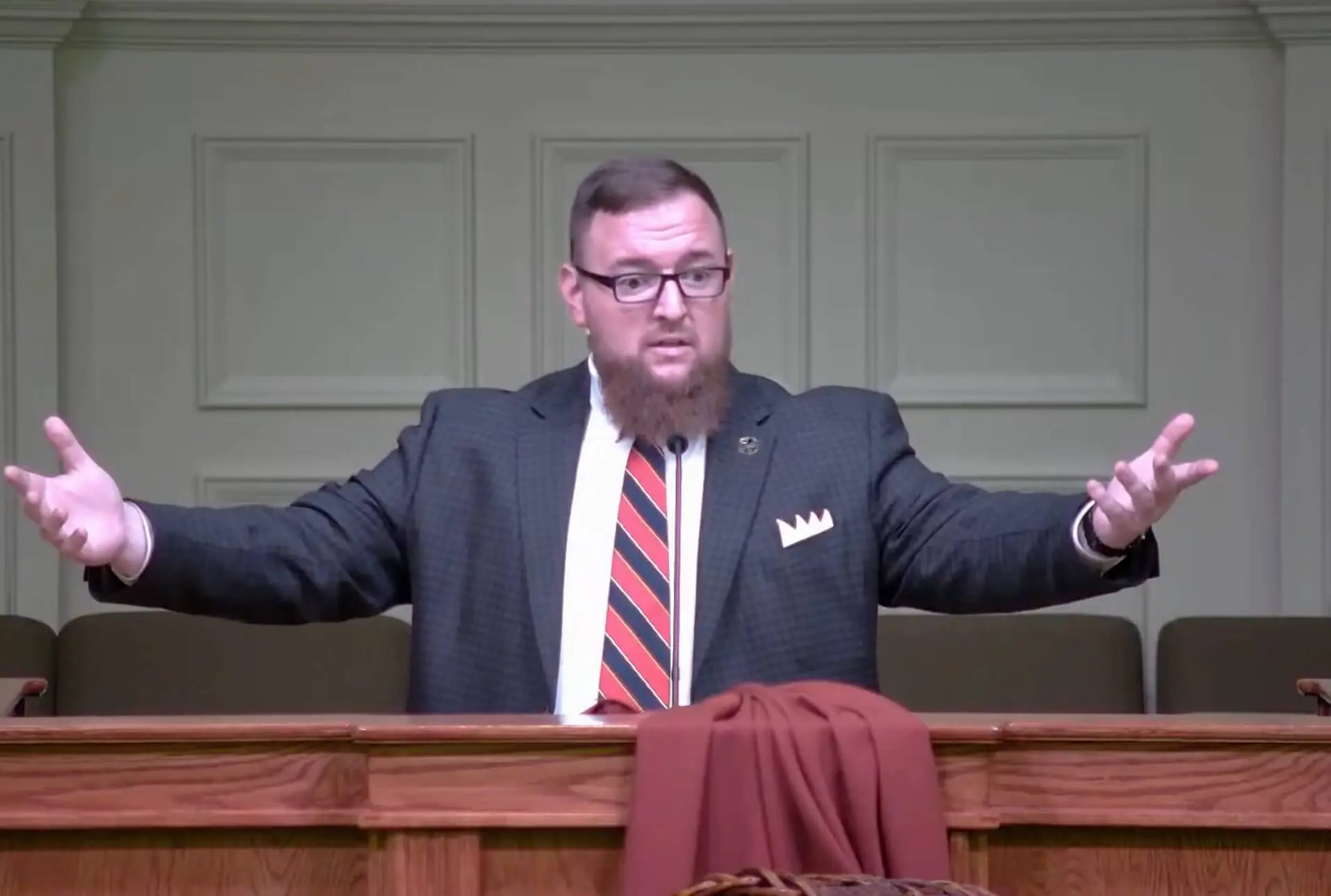
Video
“The Power of the Son”
John 11:17-27
Pastor Ryan J. McKeen
10/26/2025
Audio
Transcript
Well, turn with me in your Bibles to John 11, John chapter 11. We began John 11 last week as we are coming through our Son of God series, a series looking at the uses of the name, the Son of God in John’s gospel. And as I mentioned last week, we have two uses of it in chapter 11, and as we saw last week, Chapter 11 of John’s Gospel is all about the sickness, death, and then resurrection of Lazarus.
And it’s a chapter that confronts us with the reality that every person will face death. And death is a topic that not many people enjoy talking about. And that’s because you and I do not have control over death. As Solomon says in Ecclesiastes 8, verse 8, there is no man who has power to restrain the wind with the wind and there is none who has power over the day of death. And death brings with it uncertainty and fear for many people. They fear when they’re going to die, how they’re going to die. What will be the aftermath of their death for their family and loved ones? Where they will go when they die? It brings a lot of fear.
In fact, listen to how Job speaks of death and the terror death is to mankind in Job 18 verse 14. He says, speaking of death, man is torn from the security of his tent and they march him in step before the king of terrors. That was death in Job’s eyes. The reality is that our life could end at any moment and you and I have no control over that. You could be like Lazarus. And you could get sick tomorrow with an illness that leads to your death. You could even die today for any number of reasons. And this reality has led many people to a place of despair, thinking that if this life is all there is, and if I could be gone in an instant, Then what’s the point of all this?
Again, Solomon in Ecclesiastes comes to this conclusion, at least in his human reflections on life. Ecclesiastes is a book that presents man’s perspective without God and then corrects that with God’s perspective. But from man’s perspective, from man’s point of view, with no other input, just from what humankind sees, this is what Solomon concludes about life and death in chapter two of Ecclesiastes. Verses 18 and 19, he says, thus I hated all the fruit of my labor, for which I labored under the sun, for I must leave it to the man who comes after me. And who knows whether he will be a wise man or a man of simple-minded folly. Yet he will have power over the fruit of my labor, for which I have labored and for which I have acted wisely under the sun. This too is vanity.”
Solomon’s conclusion from a finite, mortal, human perspective is, why am I working so hard? If I’m gonna die and it’s all gonna be gone and I’m gonna leave it to somebody else, what do I care what he gets? What am I getting out of this? What’s the point of it all? And truthfully, from man’s finite temporal perspective, that’s a logical conclusion about death. If death is the end and you just stop existing, What is the point of it all? If death waits on our doorstep and we can’t control that, what is all of this for?
But the wonderful truth of our passage this morning is that yes, while we don’t have control over death, we know who does. We serve the God who rules over life and death in the person of his Son, whom he has given all authority to give life. He is the resurrection and the life, as we’ll see. He’s the reason why Paul comforted believers in 1 Thessalonians, a passage we often read to ourselves at funerals. First Thessalonians chapter four, verses 13 and 14, he says, but we don’t want you to be uninformed, brothers, about those who are asleep, so that you will not grieve as do the rest who have no hope. Why? Why don’t we grieve like people who think that death is the end? For if we believe that Jesus died and rose again, even so, God will bring with Him all those who have fallen asleep in Jesus. Because of Him, we have hope even in death. Because of Him, we know death is not the end.
And today, in John chapter 11, we see that the Son of God has power even over death. Again, we’re continuing our series on the Son of God. Last week, as I said, we started chapter 11 where we saw the glory of the Son. Then we saw that Jesus gets word that his friend Lazarus is sick. I read the whole chapter earlier, but Jesus hears from the sisters that Lazarus is sick, and instead of rushing to his side like we would, like you and I would do if our close friend was sick and needed help and we could do something about it, Jesus waited. He waited two days because he loved them, and he waited until Lazarus died before he goes to see them.
We saw in verse four, Jesus tells them, right from the beginning of this whole thing, Jesus sets the trajectory of where they’re going here, and he says, listen, this sickness is not to end in death, but is for the glory of God, so that the Son of God may be glorified by it. Now, if they were understanding what he meant, that would put all of their worries at ease. Okay, Jesus has this under control. This is not gonna end in death. We’re just gonna follow Jesus and see what happens. But that’s not really how it plays out. But here, we do see in Jesus’ words that he’s using this tragedy, this sickness and eventual death as an instrument to reveal the glory of God. He shows us that there’s a greater purpose in this suffering. and that He can use any and all circumstances, even the worst circumstances, and He can use them for the glory of God. He can use them to show us how great and glorious God is, and how great and glorious He is as the Son of God.
So that was last week, and the next occurrence of this name, the Son of God, appears here in the same chapter. We’ll be covering verses 17 to 27 this morning. And here is the story of Jesus arriving at Bethany. We won’t even get to the resurrection yet, but we’re going to cover where Jesus comes into Bethany and has this conversation with Martha. And again, while the urgency of last week’s passage was that they needed to get Jesus there while he was still alive so he could do something about his illness, Jesus had a greater purpose. And that greater purpose is seen today as he will demonstrate the power that the Son of God has over death. That is the title of this sermon today, The Power of the Son.
And this story in chapter 11 of Lazarus, It really reflects what Jesus has already told them and what we’ve already covered in this series from John chapter five. This is simply illustrating what Jesus told them in John five. If you remember in John chapter five, the father has given the son authority to have life in himself and to raise the dead. He told them that. And here in Bethany, Jesus demonstrates. that his authority is not just in words, but in his action of raising a dead man to life. Jesus reveals he’s not just some miracle worker who can bring the dead back to life, but he says he is the resurrection and the life. Because as he’s confronted with the reality of death, he declares his supreme power over both physical death and our eternal destiny.
In this text this morning, we see the power of the son displayed in three ways. We see his power over the circumstances. And then secondly, we see his power over death. And lastly, we see his power over belief.
So allow me to read once again for us John chapter 11, but verses 17 through 27 is where we will focus in this morning. John 11, 17 through 27. This is the word of the Lord. So, when Jesus came, he found that he had already been in the tomb for four days. Now, Bethany was near Jerusalem, about 15 stadia away. And many of the Jews had come to Martha and Mary to console them about their brother. Martha, therefore, when she heard that Jesus was coming, went to meet him. But Mary was sitting in the house. Martha then said to Jesus, Lord, if you had been here, my brother would not have died. But even now I know that whatever you ask from God, God will give you. And Jesus said to her, your brother will rise again. Martha said to him, I know that he will rise again in the resurrection on the last day. Jesus said to her, I am the resurrection and the life. He who believes in me will live even if he dies. And everyone who lives and believes in me will never die, ever. Do you believe this? She said to him, yes, Lord, I believe that you are the Christ, the Son of God, the one who comes into the world.
You see, first of all here, the Son’s power is displayed in his power over circumstances. John introduces to us this episode in the story where Jesus arrives in Bethany and he gives us two specific details. First, he says Lazarus has been dead for four days. And second, that Bethany is about 15 stadia or roughly two miles away from Jerusalem.
He says in verses 17 and 18, so when Jesus came, he found that he had already been in the tomb for four days. Now, Bethany was near Jerusalem, about 15 stadia away. And this is significant because Jesus’ miracle here will take place near the center of Israel’s spiritual life in Jerusalem.
And as we know from reading ahead in this chapter as I did earlier, this leads to more opposition. The fact that this happened so close to the chief priests and Pharisees, the Jews that had been seeking to seize him, This only gives them more ammunition. And it doesn’t take long for them to hear about it. It’s right down the road.
And death is a real event here. It’s not just some concept or an idea. Death actually happened. Jesus had waited two days from when he got the news, and then when Lazarus had died, they began heading for Bethany, and apparently it had been four days since then, when he died. But this four day window shows us that Lazarus is really dead. He’s dead, dead. He’s not asleep, he’s not in a coma, he’s dead. And this rules out any sort of recovery from natural causes.
As we see later on in verse 39, when Jesus goes to raise Lazarus from the dead, Martha stops him and says, no Lord, it’s been four days. He smells. I don’t know if you know what happens when somebody dies, but after four days, it’s going to be pretty bad. So Lazarus didn’t just wake up. The mention of four days here emphasizes that Jesus is facing actual death here. This demonstrates his authority over the problem that every human being faces. We all face death because of sin. This was brought on by the curse in the Garden of Eden. Because of Adam’s very first sin, now we all have to die. The last Adam approaches the tomb and he lifts the curse temporarily. He shows that he’s the one that has the power over the curse that causes death.
Verse 19, we see that many Jews had come to Martha and Mary to console them about their So Jesus enters a difficult scene. They had the professional mourners out. They were there causing a scene as they were supposed to. This is what they were there for. This was post-funeral. They had long morning services, sometimes lasting over a week, where they would hire in professional mourners to sit there and cry with you for a week. I don’t know how they could stand to do that, but that was the custom. They mourned, the funerals were like a week long. So that’s what Jesus shows up to.
Let me read in verse 20 and 21.
Martha, therefore, when she heard that Jesus was coming, went out to meet him. But Mary stayed in the house. Martha said to Jesus, Lord, if you had been here, my brother would not have died. This isn’t necessarily a complaint. Really, it’s a confession of what she knows Jesus is capable of, at least to her limited extent. She knows he’s got the power over sickness. Mary, her sister, says the same exact thing in verse 32. But these sisters had seen him heal the sick. They knew he had that power. And if he had been there, they know he could have healed Lazarus. They had faith in that, they knew that, they believed it.
But then Martha adds in verse 22, but even now I know that whatever you ask from God, God will give you. She believes in him. She doesn’t know everything yet. She doesn’t know all that he can do yet. But what she does know, she believes in. And she continues to believe in him through this story. And she’s right. Jesus could have healed her brother. He could have come in time and healed her brother. But he waited on purpose. Jesus had other plans, plans that she would soon find out about. But even in these introductory details, we see that the Son is in complete control here. The Son has power over these circumstances, just like we saw last week. And this is important to remember, that Jesus has power over circumstances.
Many of us have been where Martha is in this story. She knows that Jesus could have done something. How often have you prayed and asked God for something you know that he can do? But he didn’t. And she doesn’t know why. And we’ve all been there. But what we clearly see here in these sisters’ lives and in our own lives, that the Son has power over the circumstances that we pray to Him about. And it is good and right to pray and ask Him for things, but we also need to trust Him when He doesn’t answer in the way that we thought He should. We don’t get the things that we know He could do but doesn’t do. Even when you can’t see what he’s doing, you can trust in the one doing it. This is what discipleship really is. This is what following Jesus is about. This is what it looks like. Our Christian life is simply growing to trust him more and more. And this is what you see in Martha here. She is the perfect picture of a disciple. She has a very infant faith. in the beginning. She knows that Jesus can heal, and she believes that he can do it. And she believes that whatever he asked God for, he can do that too. We’ll come to see that she doesn’t quite get all of it yet, but she believes as much as she can. She believes as much as she knows. And the more that we trust him, the more that we will see our life begin to conform into his image. Because the more we trust him, the more that we depend on him, and the more that we are like him.
But the opposite is true. When we fail to obey the things that we know that we should do, the things we know that we ought to do, or ought not to do, The problem is not that we didn’t know that was wrong, or we didn’t know the right thing to do. Usually, the problem is simply that we did it, and we didn’t trust that He is good in that choice. We don’t trust that what He said is true and that my best is found in living for Him. Every time we stumble, And we fall, and we sin. Every time we choose something else over the glory of God, it’s because we’re not trusting Him enough. And growing more like Christ is simply growing in our trust in Him. Growing in our belief in what we know that He is and who He is. And Martha’s statement is one of trust. Because she says, I know. that whatever you ask from God, God will give you. I know that. She says to Jesus, I don’t know what you’re doing, but I know you can do it. And that’s right where we need to be in moments like this. God, I don’t know what you’re doing, but I trust the one that’s doing it.
So there we see that the Son has power over our circumstances. And next we see the Son’s power over death. Because Jesus says in verse 23, your brother will rise again. And Jesus’ words to her are simple, straightforward, and comforting to her. Your brother will rise again.
But Martha doesn’t get it right away. She thinks Jesus is talking about the final resurrection, the end times, when God installs his kingdom and raises the dead to life. Martha says in verse 24, I know that he will rise again in the resurrection on the last day. I know what you’re talking about, Jesus. You’re right. That is my comfort in the death of my brother. I’ll see him again one day.
And Martha’s eschatology is correct. She’s right. She will see him again in the resurrection. And Jesus doesn’t correct her on that, but he does recenter her focus on him. You see, our comfort is not in some event. It’s not in the fact of the resurrection. Our comfort is in a person, in Jesus Christ.
Martha’s theology is correct, but it’s insufficient for the moment that she’s in. We can be like that sometimes. I can have right theology, but miss what Jesus is showing me in that moment. In verse 25, Jesus said to her, I am the resurrection and the life. And he who believes in me will live even if he dies.
This is another one of Jesus’ I am statements in John. There are seven of them. And we can go through all of them, but he continually uses different metaphors to show them who he is. And all of them point to that he is the I am. He’s God. He provides for them all that they need through all of these different metaphors He uses in the seven I Am statements.
And here, Jesus claims not merely just to give resurrection and life, but to be resurrection and life. Resurrection and life are in Him. What good would resurrection and life be without Him? Without Him, I don’t want to be raised again. Because what is life without Him? Our hope is not just that we will live again. Our hope is in Him.
The sign that He’s about to perform in the raising of Lazarus and showing that He is the life giver, it’s not about Lazarus. It’s not about her brother. And that’s what she’s thinking. Yes, I’ll know, I’ll see him. Jesus says, no, I am the resurrection and the life. And what he’s about to do is about him, not about Lazarus. And he says, he who believes in me will live, even if he dies. He who believes in him, not he who believes in the resurrection, He who believes in Him.
Our salvation benefits are found in our union with Christ. As we’ve seen over and over again in John, if we are saved, we have life now. Because we’re in Him. We live in Him. And yes, we will share the resurrection with Him later, But we have all the blessings of salvation now. And all of them are about Him.
In verse 26, Jesus explains the benefits of life in Him, saying that everyone who lives and believes in Me will never die ever. This obviously doesn’t mean that Christians won’t physically die. People have been dying ever since he said this. But they won’t eternally die.
In fact, to live is Christ and to die is gain. As John has repeatedly emphasized for us, we have eternal life. In John chapter five, verse 24, when Jesus said, truly, truly, I say to you, he who hears my word and believes him who sent me has eternal life. We have him now. And again, as I just mentioned, Paul in Philippians chapter one, starting in verse 21, for me to live is Christ and to die is gain.
But if I am to live on in the flesh, this will mean fruitful labor for me, and I do not know what I will choose, but I’m hard pressed between the two, having the desire to depart and be with Christ, for that is very much better. To live is great because I get to live for Christ. I get to serve Christ. My life is about Christ. And that’s great. If I keep living, wonderful. I can keep serving Christ. But if I die, it’s better because more Christ. I see him face to face. I’ll be with him forever.
There is no loss in death. For the Christian, it can’t get worse. It only gets better. It’s all about our life in Christ and our death even is about promoting to that next stage of life in Christ. And he shows that he has the power over life and death. He is the resurrection and the life.
And then Jesus asks this question. He reveals this amazing truth to Martha. If you believe in me, you’ll never die, ever. I am the resurrection and the life. Your brother’s death and his resurrection, that’s gonna happen in a few moments here, it’s not about him, it’s about me, and I’m showing you who I am. And then Jesus asks, do you believe this? Do you believe this? She’s about to see it with her own eyes. She’s about to know the facts for sure. But that will do her no good unless she believes this.
Believe what? Believe that Jesus can raise Lazarus from the dead? Believe that she will see her brother again? No, that’s not what he said. Do you believe that he is the resurrection and the life and by believing in him you will live forever? Do you believe that? That is the gospel. Do you trust him? Is what he’s asking. Is your trust in him? Do you believe that he is the resurrection and the life?
You know, a lot of people believe in Jesus, seemingly more and more all the time, claim the name of Christ. They’ll even say Christ is king. A lot of people believe he was a real person. A lot of historians will tell you the reality of the person of Jesus of Nazareth. A lot of people believe that he lived a good life and he died an unfortunate, gruesome death. Some people will even say there’s evidence he rose from the dead, but none of that alone will save you. Knowing those facts will not save you.
Do you believe this? Do you believe this? That He is the resurrection and the life. That life is found in Him. Do you believe that He will raise you to new life? That He is your Savior for your sin? That is what you must believe and trust in.
You see, more than just simply asking if she believed in his ability to perform signs to raise the dead, Jesus asks Martha if she believes in him, in who he is, what he’s there for. Jesus remains focused on Martha’s soul, despite the massive grief of these sisters and the mourners that are all there, despite Jesus’ own grief that He’s about to show, He remains focused on Martha’s soul, because the Son has the power over death.
Lastly, we see that the Son has power over belief. In our last verse here, verse 27, She said to him, yes, Lord, I have believed that you are the Christ, the Son of God, the one who comes into the world. Verse 27 is the climax of chapter 11. It is the mountain peak in this whole chapter. It’s even greater than the miracle of raising Lazarus from the dead.
Martha makes the greatest confession any person could ever make. Yes, I believe that Jesus is the Christ, the Messiah. He is the Son of God. He is the one who comes into the world. This is what it means that he’s the Son of God. And Jesus’ words to her are not just a comfort, but a call. to a deeper faith in Him. Her response is a confession and a declaration of her trust. It is here in verse 27 where we find the name, the Son of God, in this passage.
Martha proclaims her belief that Jesus is the Christ, the Messiah, the one promised, the one God said would come and save His people, that He’s the Son of God. and that he’s the one who came into the world. And this confession echoes the theme of John’s gospel. This is what we’ve seen from the very first few verses all the way through the very end. In John’s purpose statement for the gospel, in John chapter 20, verse 31, these things have been written so that you may believe that Jesus is the Christ, and that He’s the Son of God, and that by believing in Him, you have life in His name.
We won’t go any further than this verse today, but this declaration by Jesus that He is the resurrection and the life, it demonstrates His power, not only over this one event over these specific circumstances, but over all life and death. And take some comfort in Martha as well. Martha isn’t perfect. She’s no expert theologian. She shows her lack of understanding of what’s actually going on here. When again, she makes this confession, but in a few verses, she tries to stop Jesus from getting to the tomb.
But even though she confesses and still lacks understanding, and Jesus does correct her in verse 40 and says, did I not say that if you believe, you will see the Son of God, or the glory of God, I should say. So take comfort in Martha. Because even though she didn’t have all of her theology right just yet, she did believe. She believed in him. And the glory of God was revealed. As Jesus prays to the Father and calls Lazarus to come out of the tomb, and he does. And he demonstrates his power over death. And this is important for his disciples to see.
Because as we read earlier at the end of John chapter 11, verse 54, Jesus no longer continued to walk openly among the Jews. This is the end of his public ministry. Because he’s on his way to the cross. From chapter 12 and onward, he’s going to the cross. And this happens just before that. So that his disciples have a fresh memory when he dies, that he’s got power over death. You see, John 11 is not just a isolated miracle, but it’s part of John’s story of who Jesus is.
By raising Lazarus from the dead, Jesus effectively signs his own death warrant. Because as we see later on, I just read verse 54, but in verse 53, So from that day on, they plan together to kill him because of this. He’s doing too many things. Too many people are gonna believe in him. This is the last straw. We gotta do something. And he will break Satan’s power over sin and death. So we as believers don’t need to fear death because we serve the one whom death serves. Jesus uses death for his purposes. Death serves him. And he conquered death and we now have victory over death because of him. And again, merely claiming that Jesus is some miracle worker or just hoping that you will have life after death, it’s not enough. The key question is, do you believe this? Do you confess him as the Christ, the son of God? As the resurrection and the life? Do you believe this?
When we come here together and we worship and we sing songs and we read and we hear from the word of God, are they just words that go in your ears? Or do you believe this? Do you hear the words that you’re singing? Do you believe them? Our worship cannot be just going through the motions. Do you know why we are commanded to gather weekly? It’s so that we can be reminded through our worship of who He is and who we are because of Him. That is what we worship for, so each day that we gather on the Lord’s Day, we are reminded that Christ’s tomb is empty, and ours will be too one day. Our worship is a confession like Martha’s, that Jesus is the Christ, the Son of God.
As we share the gospel with people, we share the good news that Christ has conquered death. Every person you know faces the reality of death, not only in their own life, but every single person you know knows somebody close to them that’s died. There’s your avenue to the gospel right there. What’s your hope in death? Where are you going to go when you die? And then tell them about the one who has conquered death, the one who gives you no fear of death. Talk to them about it. You have the only hope in life and in death.
And finally, this passage teaches us what it is to follow Jesus. We’re like Martha. Especially when we start off in our Christian faith, We believe what we can know. And we might not have it all right, and even as you grow in your walk with Christ, you still won’t have it all right. But do you believe? Do you trust him? Do you trust in who he is? And as our trust in him grows more and more, our comfort in him grows more and more, and we grow more and more like him, that’s what the Christian life is. So do you know him? Do you know him? Do you believe this?
We all face death and we will all be resurrected, but what will you be resurrected to? Will you be resurrected to life with him or will you be resurrected to judgment and eternal suffering for your sin? You need to trust Him as your Lord and Savior today. And if you do believe this, let’s confess it, let’s worship Him as we close this morning with all hail the power of Jesus’ name.
Let’s stand and close in a word of prayer. Our God, we thank you for who you are. We thank you for what you’ve shown us in your word, of who Jesus is, that he has the power. He’s got the power over our circumstances and everyday life. The things that we don’t know what’s going on, the things that we ask you for and we know that you can do them, but you have other purposes and we don’t know what they are. But we know that we can trust the one who is in control of our circumstances. And we trust the one who has power over death, because we all face death. But we know that death is not the end for us, that we will live again, because we have a savior who is the resurrection and the life.
Lord, I pray that if there are any here this morning that do not yet believe this, that do not yet know you, Lord, bring them to yourself. Soften their hearts. Allow them to come to you even today and trust you as the savior for their sin, as their life and their resurrection. God, we thank you. We praise you and we worship you now as the one who has all power over life and death. We pray this in Jesus’ name. Amen.