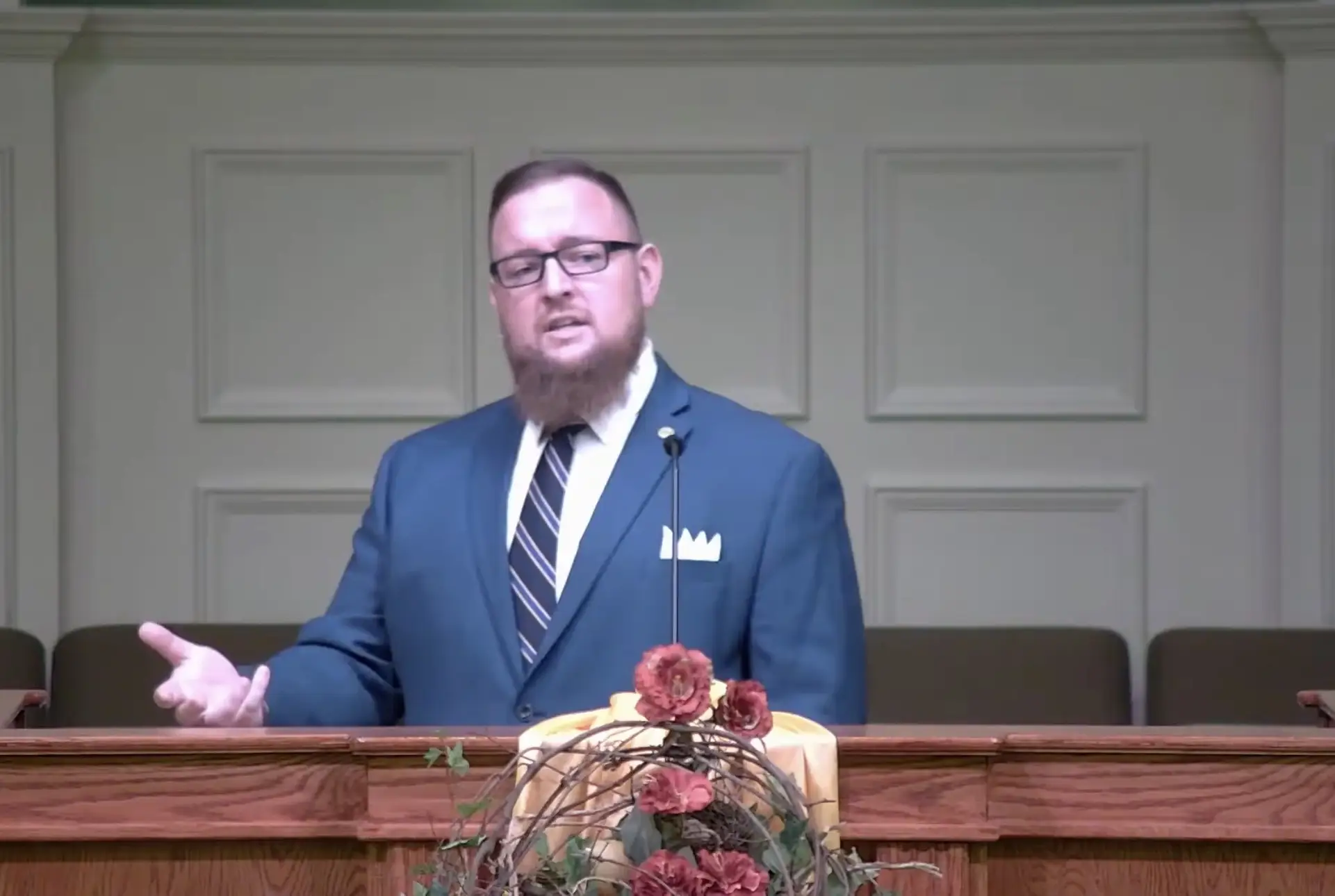
Video
“It is I”
John 6:15-21
Pastor Ryan J. McKeen
1/11/2026
Audio
Transcript
Thank you, Dan and Carrie, for filling in this morning with our music ministry. I picked that last song this morning because as we’re talking of Jesus walking on the water, that song, it sounds like a sea shanty, so it kind of fits the mood, but it’s also a great song that speaks of the love of our Savior, and that’s what we see in this text as well.
So please turn with me, if you will, to John chapter six in your Bibles. John chapter six. We are back in John six this week. We began John six last time, where we saw the miracle of the feeding of the 5,000. Jesus and his disciples had come to the Sea of Galilee, as we read, and the crowds of people find him there and they come to him.
And so Jesus asked the disciples, specifically Philip, where they would find bread and food for all this many people. And as we saw, Jesus was asking this to test him. But he knew all along what he was going to do. The same is true with all that Jesus does. Jesus knows what he’s doing and what he is intending to show the disciples through each and every thing that we see him do.
Jesus was in complete control of this situation. He was orchestrating all of this to reveal to them who he was and to strengthen the faith of the disciples. He multiplies the five loaves and two fish that they had found and he feeds 5,000 men plus women and children. And they had 12 baskets left over as we read.
And then due to this miracle, due to what Jesus had done there in front of all this many people, We read in verse 14 of chapter six that the people conclude this is truly the prophet who is to come into the world. This is the one that Moses spoke about. This is the prophet that we’ve known ever since Moses that was to come.
And as you remember, as we talked about last time, John has framed this whole chapter with Jesus’ rebuke to the Jewish leaders in chapter 5 for not believing in Moses. John chapter 5 ends in verse 46 and 47 by Jesus speaking to them, saying, If you believed Moses, you would believe me, for he wrote about me. But if you do not believe his writings, how will you believe my words?
Moses wrote about him, and they didn’t believe him. The 5,000 that he fed, they saw it, and they believed it. They concluded that this must be the one Moses was speaking of, but these Jews refused to believe it. And as I introduced last week and will continue to see, chapter 6 is all about demonstrating What Jesus said in chapter five, that if they didn’t believe Moses, they would never believe him because he’s greater than Moses.
Moses prayed for bread from heaven and God provided the manna for the children of Israel in the wilderness. Jesus provided bread himself. He is greater than Moses and more worthy of belief than even Moses. We see another account of how Jesus is greater than Moses. That is what this account of Jesus walking on the water is about in John chapter 6.
This miracle is also seen as we saw in Matthew 14, but also in Mark chapter 6, and in both The other gospels give a bit fuller of an account, a little more detail, more things that happened during this walking on the water. Matthew, which I read earlier in the service, speaks of Peter’s attempt to walk on water and then his failure due to his lacking faith, and Jesus saves him from the water. That’s a detail not found in either Mark or John. I read Matthew’s account earlier. Now, let me read Mark’s account, just so we have the whole picture of all of the things that took place in this miracle. It’s in Mark chapter six, verses 45 to 52, if you want to turn there. Mark chapter six, starting in verse 45 says, and immediately, Jesus made his disciples get into the boat and go ahead of him to the other side, to Bethsaida. Well, he himself was sending the crowd away. And after bidding them farewell, he left for the mountain to pray. And when it was evening, the boat was in the middle of the sea, and he was alone on the land. And seeing them straining at the oars, for the wind was against them, at about the fourth watch of the night, he came to them, walking on the sea. And he was intending to pass by them, but when they saw him walking on the sea, they thought it was a ghost and cried out. For they all saw him and were terrified. But immediately he spoke with them and said to them, take courage, desire, do not be afraid. And then he got into the boat with them and the wind stopped and they were utterly amazed. But they had not gained any insight about the loaves, but their heart was hardened.” Again, that is Mark’s account of this same miracle that takes place. And as you compare that with Matthew’s account, and then what we’ll read in John, we see the same event told with different details, told from different perspectives. They don’t disagree with each other, but each author is telling us something specific about what happened here. We’ll see in John’s account, it’s even shorter, but it includes very specific details about what Jesus says to them. And that is because each of these writers, again, have a specific purpose. And John’s purpose, as revealed in chapter 5, is to show that Jesus has even greater reason to be believed in than Moses. That’s what we will see. And you can think of these two back-to-back miracles, the feeding of the 5,000 and the walking on the water, as sort of a show-and-tell type miracles to prove his point. He showed them his superiority to Moses in the miracle of providing food out of the small lunch that was found. And then following this showing, he’s going to tell them who he is. And here in this passage today, Jesus gives a direct confession about himself in the words that he uses. And he goes on, as we’ll continue next week, to explain that he’s the bread of life. But today we see John declare who Jesus is and the very words that he uses to comfort his disciples. And we’ll see as we work through this text, John chapter six, verses 15 to 21, this miracle is told in four scenes. We see the setting as John usually gives us the details of where they are and when this has taken place. Then you see a storm come up. And then we see the Savior come and save his disciples. And lastly, because of who he is and who he declares himself to be, we see the submission of the disciples. So as we’ll see from this short account of this miracle, not only is Jesus the Savior who delivers his people from the storm and the water, he is the I Am who calms their fears. like he did with Moses. So now allow me to read John’s account. We’ve read the other two. Let me read John’s account in John chapter six, if you’re back there once again. John chapter six, as I said, verses 15 through 21. This is the word of the Lord. So Jesus, knowing that they were going to come and take him by force to make him king, withdrew again to the mountain by himself alone. Now when evening came, his disciples went down to the sea. And after getting into the boat, they began to cross the sea to Capernaum. It had already become dark, and Jesus had not yet come to them. And the sea was stirred up because of a strong wind that was blowing. Then when they had rowed about 25 or 30 stadia, they saw Jesus walking on the sea. and drawing near to the boat, and they were frightened. But he said to them, it is I, do not be afraid. So they were willing to receive him into the boat. And immediately the boat was at the land to which they were going. So as John usually does, he provides us with the setting of this story. As he transitions from the feeding of the 5,000, he gives us the geological details of where they are and where they’re going. He likes to give us details of a story to validate that this really happened, and they know exactly where this happened. And first, we see that after Jesus feeds the crowd, and they declare him to be the prophet of Moses. Verse 15 says, so Jesus, knowing that they were going to come and take him by force to make him king, he withdrew again to the mountain by himself alone. If you remember, originally he was intending to have alone time with his disciples. as chapter six starts, and then the crowds find him, and this is what leads to the miracle that he needs to feed them. But now that the crowds have come and been fed, he sends them all away, even the disciples. And although the crowd was correct in what they said about Jesus being this prophet Moses spoke of, what they included in that was the problem. See, for this crowd, Jesus wasn’t just the prophet. He was a warrior king, a political conqueror that they could use for their benefit. So they intended to make Jesus king so that he would lead Israel out of the power of the Romans and back into their own kingdom. And in a sense, Jesus is exactly that. But not yet. He was not here in his first coming to conquer and rule earthly kingdoms. And Jesus’ response is a rebuke or a challenge to their wrong understanding of his intention for his first advent, his first coming. So their minds are focused on what God could do for them. that God’s purposes align with what they want. You see, for the Israelites in that region, and really for the whole world, God’s purposes were about fulfilling their own human desires and their own plans. But Jesus was not here to follow the will of any man. He was here to accomplish the will of the Father. And the rest of chapter six will make this clear. as eventually they leave him. Because they’re not getting what they want from him. He’s not doing what they want him to do. It says they wanted to take him by force. This is the word in Greek, harpazo, which is where we get the English word rapture from. That’s what that word means. To take by force. to snatch or to remove done by someone else. But Jesus, knowing that they wanted to snatch him away and use him for their own purposes, he withdrew to an isolated place because he knew. He knew them. He knew what they intended. He knows the hearts of men, and we saw this back in chapter two. As Jesus cleanses the temple, and he starts to get some positive attention. But in verses 24 and 25, it says, Jesus on his part was not entrusting himself to them, for he knew all men. And because he had no need for anyone to bear witness concerning man, for he himself knew what was in man.” And here again we see he knows what’s in them. He knows their intentions. And so, knowing what’s in their hearts, Jesus heads off alone. Matthew tells us that he sent the crowds and disciples away as he goes off alone. Here in John 6, verses 16 and 17, John tells us that now when evening came, his disciples went down to the sea, and after getting into a boat, they began to cross the sea to Capernaum. It had already become dark, and Jesus had not yet come. And now in the details of the different accounts, there’s different cities mentioned that they head to. According to Mark chapter six, their initial destination was Bethsaida. Now that was not too far from where the thousands had been fed, so maybe that was their initial place they were headed and they probably waited there, waiting for Jesus. And then since Jesus had not yet come to them, the disciples go back to their boat and now they head across the sea to Capernaum. So you can just imagine the mindset of these disciples. Just imagine what’s going through their head as they have just had another long day with Jesus. And they’ve just seen another miracle performed as he feeds all of these people from these little amount of five loaves and two fish. And Jesus sends them ahead, and I’m sure they’re eager to spend more time with their Lord and to ask him about how this happened. But they don’t know where he is. He had sent them away. So after waiting a while, they probably figure, well, maybe he went to Capernaum. Let’s get in the boat and go there.
But in any case, this is the setting that John gives us for this miracle. And next we see the storm. The storm that comes up as these disciples are crossing the sea that they had crossed many times. But in verse 18, we see, and the sea was stirred up because a strong wind was blowing.
Again, many of the disciples, most of the disciples were fishermen by trade, and they knew the Sea of Galilee well. They knew how storms came up on the Sea of Galilee, and it’s because of the geographical location of this sea. Listen to how John MacArthur describes this Sea of Galilee. He says, the Sea of Galilee lies 700 feet below sea level in the Jordan Rift, while the surrounding hills abruptly rise to about 2,000 feet above sea level. So the sharp drop of nearly 3,000 feet from the top of the hills to the surface of the lake creates the conditions for sudden and violent storms for which the Sea of Galilee is notorious. And the cooler air rushes down the slopes and strikes the surface of the lake with great force, churning up the water into whitecaps and creating dangerous conditions for small boats.
And this is exactly what has happened as these disciples are crossing the sea. All of a sudden, the weather changes. The storm is tossing the waves on this sea and they are trying to make it across in their small boat. So it’s probably not too much of a surprise to these men. that we have another Sea of Galilee storm.
So, they knew about the storms, and John tells us in verse 19, when they had rowed about 25 or 30 stadia, they saw Jesus walking on the sea and drawing near to the boat, and they were frightened. They’re frightened. They’re frightened at seeing him. It says they rode 25 or 30 stadia, which is roughly three to three and a half miles. So they were out there. They had been out on the water for a little while. The storm kicks up. And being that far out to sea, they start seeing someone walking toward them.
I mean, they’re three miles out. Nobody should be walking out here. They’re probably becoming disoriented and asking, where are we? Is that the shore? Are we that close to shore? How is someone walking on the water? Am I seeing things? Mark tells us in Mark 6 verse 49, when they saw him walking on the sea, they thought it was a ghost. And they cried out.
Yes, because that’s the logical conclusion, guys. It’s a ghost. That’s how afraid they are. They’re being irrational. You ever been there? But in any case, they are frightened. And it doesn’t say they’re frightened by the storm. They’re fishermen. They’ve been in a storm a time or two. They’re frightened because there’s a guy walking towards them in the storm.
That is our second scene in this account, that the disciples find themselves in the storm. Which brings us to, in verse 20, the Savior. This is really the central verse in this passage. Verse 20 says, but he said to them, as they see him and they cry out, He speaks to them and he says, it is I. Do not be afraid.
Jesus speaks to them to calm their fears. And now they know who it is. Here is Jesus, the Son of God, walking on the water before their very eyes. He had just miraculously created enough food to feed the crowd, and now he is defying their own presuppositions of the world, doing what no man can do, walking on the water.
Moses, just by way of comparison, Moses, by the power of God, parted the water so the people could walk across. He’s walking on top of the water. Who does that? Well, I’ll tell you who. In Job chapter 9, verses 5 through 8,
God is the one who removes the mountains. They know not how. When he overturns them in anger, the one who shakes the earth out of its place, and its pillars tremble, the one who says for the sun not to shine and sets his seal upon the stars, who alone stretches out the heavens and tramples down the waves of the sea.” God is the one who tramples down the waves of the sea. Just who is this standing before them on top of the water? It’s Jesus, God in the flesh. And not only that, Jesus says to them, it is I, do not be afraid. Jesus says, it is I. That’s an interesting construction in the original language. In the Greek, it is the words ego eimi, which in every other time that Jesus uses it in the gospel of John is translated I am.
But in English, it’s not proper to begin a statement like this with I am unless you have some sort of grammatical lead into it. But this is an I am statement of Jesus. This is exactly what he’s saying here. In John specifically, this construction of saying I am is essential to who Jesus is. It is the personal expression of God. He makes this clear in John 8, as we’ll get there, where he says, before Abraham was, I am.
This is what he’s saying here, the very same words to these disciples’ ears. As one commenter said, with this clear intention of the gospel, of John’s gospel, to prove who Jesus is, with this clear intention, Jesus’ words must not be taken as anything common. He’s not just saying, it’s me. He’s not just saying, hey, recognize me. He’s saying, I am. Therefore, do not be afraid. And how does this relate to Moses and how Jesus is superior to Moses? Well, remember Exodus chapter three, when Moses sees the burning bush. Flip over to Exodus chapter three, if you will, for a few moments. In Exodus 3, Moses is pasturing his father’s flock, or father-in-law’s flock, I should say, and he sees the bush that’s on fire. You’re out in the wilderness, tending the sheep out there by yourself, probably have been for quite a few days, and you see this bush on fire. How did that happen? So he goes over to this burning bush to see what’s going on, and the bush speaks to him. And in verses 5 and 6, it says, the bush speaking, it says, then he said, do not come near here. Remove your sandals from your feet for the place on which you are standing is holy ground. He said also, I am the God of your father, the God of Abraham, the God of Isaac, the God of Jacob. And then Moses hid his face, for he was afraid to look at God.
God reveals himself in a supernatural miracle, something that can’t happen. But God does it, and Moses’ reaction is fear. Moses is afraid. Sound familiar? Well, the conversation between Moses and God goes on, and God tells Moses to go to Pharaoh and to bring the sons of Israel out of captivity, and Moses is still afraid. And he’s coming up with reasons why he can’t. In verse 11 of Exodus 3, Moses said to God, who am I that I should go to Pharaoh and that I should bring the sons of Israel out of Egypt? A few verses later in verse 13, Moses says, behold, I’m I’m about to come to the sons of Israel and I will say to them, the God of your fathers has sent me to you. And they will say, well, what is his name? What shall I say to them? You can hear the fear in Moses. Moses is terrified of this idea.
But how does God comfort his fears? God said to Moses, I am who I am. He said, thus you shall say to the sons of Israel, I am, has sent me to you. Don’t be afraid, Moses. I am. I am the one who is. I’m the God who exists. I am. In the Septuagint, which is the Greek translation of the Old Testament, to the very same language that the disciples spoke and that the gospel of John was written in, this is the very same phrase used in John 6 verse 20, I am. Jesus calms their fears by speaking the very same name that God spoke to Moses, I am.
Matthew and Mark include that Jesus says, take courage, because I am. Why should they take courage? Why should they not fear? Because I am is there with them. Despite the violent storm and despite the fear of seeing what they can’t believe before them, a man standing on top of the water, despite all of that, Do not fear because he is the I am. Do not fear because he is who he is. The one who was the unconsumed burning bush, who alone can walk on the waves of the sea, he is. So there’s nothing to fear. And Jesus follows that with, do not fear. A gracious response to His disciples, encouraging them, giving them hope. This is the only reasonable response to knowing Him, to knowing who He is. And that is our comfort as well.
When we face fearful circumstances, which we do, When we face circumstances that we don’t know what’s going on, that we can’t understand what’s before our own eyes. We don’t know how things are going to turn out. I don’t know if you’ve ever been in a rowboat in the middle of a violent storm and you see what looks like a ghost walking to you. I mean, maybe you have, but I doubt it. But even in that circumstance, don’t fear. Because of who Jesus is. Do not fear. He is God with us and He’s the only one who can calm all of our fears simply because He is.
Jesus is superior to Moses because Moses needed his fears calmed by the I Am. Jesus is the I Am. who calms our fears. He is the one who was speaking to Moses from that bush. He is the very God that Moses worshipped and obeyed. That’s why, if you believed Moses, you would believe in me, for he wrote about me. But if you don’t believe his writings, how will you believe my words? If you believe Moses, if you believe in what the Bible says, you will believe in Him. He is the Savior.
What we see next is that the disciples do exactly what the Jewish leaders from chapter 5 refused to do. They believe in Him. They receive Him. Up until now, their faith was lacking. Mark tells us in verse 52 of Mark chapter 6, For they had not gained any insight about the loaves, but their hearts were hardened. Up until now, even this miracle of the loaves didn’t do it. They still didn’t quite get it. They still lacked the faith that they needed.
So next here in John 6, we see the submission of the disciples. Verse 21. What we consistently see in the disciples is a growth in their faith. A growth in their understanding, which leads to a growth in their belief in Him. I mean, they obviously believed in Him somewhat. John said that much already. But at the same time, their understanding and their faith is not yet what it should be. Not what it must be. Not what it will be. So Jesus, through these signs and through his teaching, continued to grow their faith.
Verse 21, it says, so they were willing to receive him into the boat. And immediately, the boat was at the land to which they were going. Because of what he said, they were willing. They showed submission to who He revealed Himself to be. And they were willing to bring Him into the boat. John wants to show that the disciples’ response to Jesus was one of reception. They took Him in. They submitted to who He is. Matthew helps explain this by saying that after Peter went out on the water with him, verses 32 and 33 of Matthew 14, when they got into the boat, the wind stopped. And those who were in the boat worshipped him, saying, you are truly God’s son.
This is their response when Jesus gets into the boat after revealing who he is. They were starting to get it more and more. They were starting to understand who he was. They still will have their shortcomings and their failures, we know that. But here, after Jesus performs this miracle, and he declares who he is, that he is the I Am, they once again see him for who he is, and they worship him. And then John adds, And immediately the boat was at the land to which they were going.
Now this is an interesting statement or end of this verse, and it’s debated what it actually means. It could mean that they instantaneously and miraculously appeared at where they were going. That Jesus does a second miracle here, and it could be that. But Matthew and Mark say, when they had crossed over. They don’t include this as a miracle. And also the word John uses here for immediately can also mean soon. So it could just be saying very soon the boat was at land. But either way, Jesus calms their fears and brings them to where they need to be.
There is a fulfillment here in this whole episode. Because Psalm 107 speaks of what God can do. Psalm 107 verses 28 to 31, it says, then they cried to Yahweh in their trouble and he brought them out of their distress. He caused the storm to stand still so that the waves were hushed. Then they were glad because they were quiet. So he led them to their desired haven. And then it continues, let them give thanks to Yahweh for his loving kindness, for his wondrous deeds to the sons of men.
This psalm, what it speaks of is exactly what happens here. Jesus, who is the Yahweh this psalm talks about, he calms the storm so that its waves were hushed and they were glad to receive him. And then he guides them to their desired haven. And the disciples worship Him for who He is. And in the middle of this important section in John’s Gospel, John chapter 6, and Jesus is beginning to gain more and more attention, both from His friends and His enemies, we see a moment of amazement at the miraculous nature of who He is, and also a moment of worship.
This account declares to us, in God’s own words, who this Son of God is. The disciples see the I Am standing on the waves before them. The voice who is in the burning bush is the voice of Jesus Christ who treads on the waves of the sea. We’ve already seen in John’s gospel that Jesus reveals the Father. He is the one who reveals God for who he is. And in this passage, he speaks directly for him. Do not fear because of who he is. God has spoken and told us who he is. He told Moses, I am. Now he speaks in the person of Jesus Christ.
There is no other person through whom you must be saved. You can understand the disciples’ fear here. You can understand Moses’ fear because in comparison to ourselves, the things they see of God, God is terrifying. But when we submit and trust in Him, there’s no safer place to be. Psalm 46 speaks of God as our safe haven. And in that Psalm, it speaks of the presence of God as safety. And at the sound of God’s voice, the earth melts. And when we know God and trust in Him as our hope, we can rest in His words.
Psalm 46, verses 10 and 11. To cease striving, or be still, Be still and know that I am God. Do not fear, just know that I am God. I will be exalted among the nations. I will be exalted in the earth. Yahweh of hosts is with us. Jesus commands His disciples not to fear because of His presence. That’s why they shouldn’t fear, because He’s there with them. And we too, when we face our fears, we shouldn’t fear because Yahweh of hosts is with us if you are in Christ. If you do not yet know Christ, you need to come to Him today. You need to trust in Him as your Savior from your own sin. The one who took God’s wrath for you so that you could come to know Him. so that you could rest in Him, so that you could have safety in Him as the I Am.
If you are a believer, be still and do not fear, because Yahweh of hosts is with us. He is the God of the ages. He is the Lord of our now. Let’s stand and close in a word of prayer this morning. Our God in heaven, we thank you this morning for the way that you have revealed yourself in the words of scripture. The way that you’ve revealed yourself in Jesus Christ. We see that as these disciples faced a fearful situation, that the only comfort for their fears was knowing who Jesus is. I pray that this morning, if there’s anyone here who does not know who Jesus is, that you would bring them to yourself, that you would speak to their heart and help them to understand who you are, to trust in you as their savior.
Lord, if there is anyone here who needs to know you, I pray that you’d have them remain behind and talk to one of us. But for those of us here who do know you, I pray that we would be reminded of who you are, and that our fears would be calmed because of who you are. Lord, we thank you. We thank you for your word, and we pray that we would bring your good news to those around us, that they too would know who you are. We pray all of this in Jesus’ precious name. Amen.