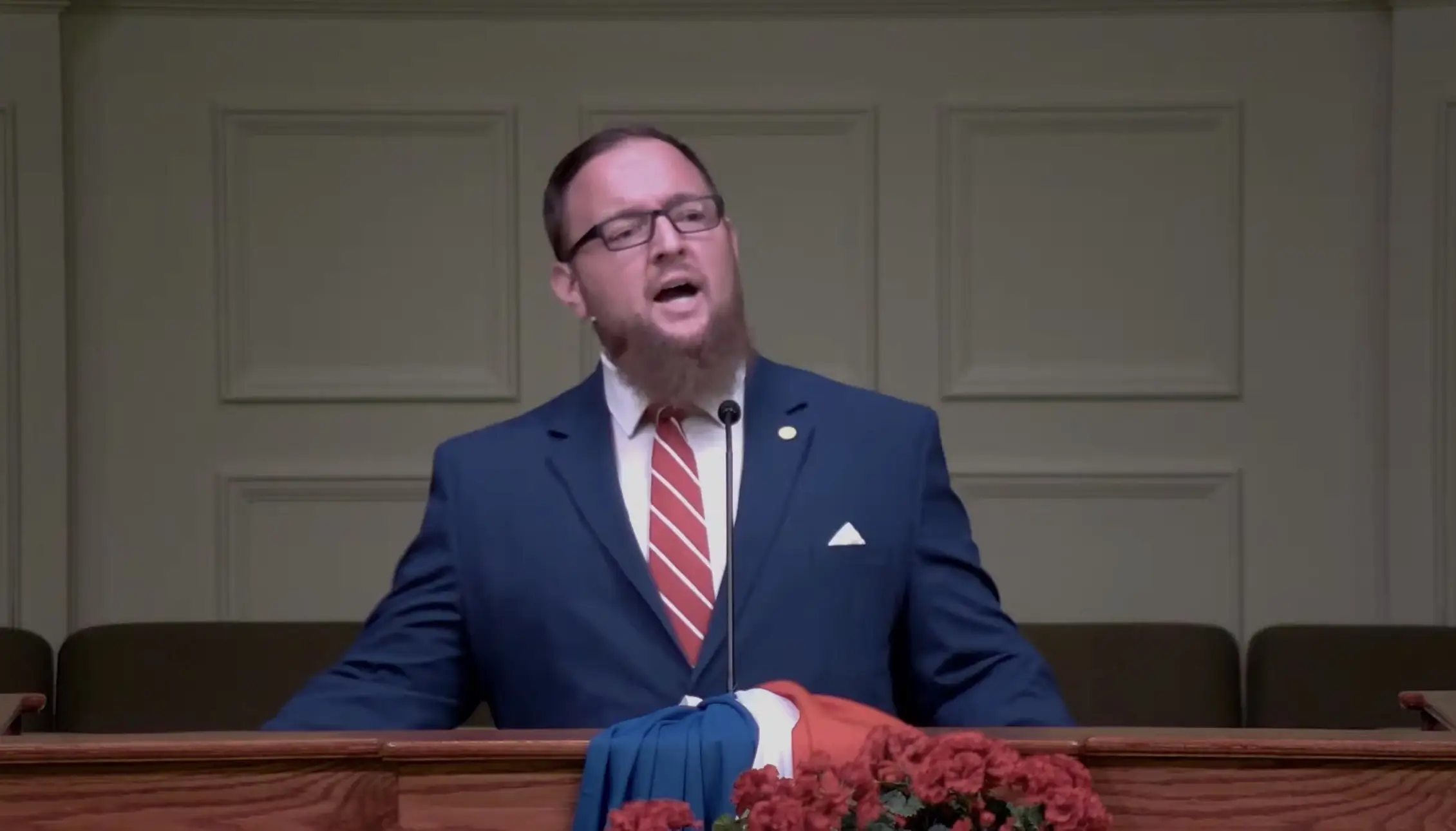

Video
“Free Indeed”
John 8:31-36
Pastor Ryan J. McKeen
06/28/2026
Audio
Transcript
Well turn with me in your Bibles to John chapter 8. Pick up here in John chapter 8 this morning. And as we come to this passage in John 8, we see this phrase in verse 32, you will know the truth and the truth will make you free. As we consider those words, Jesus talks a lot about truth, and even eventually later on in John’s gospel, we see the question posed to Jesus at His trial by Pilate, what is truth? And as we consider Jesus speaking of freedom In relation to the truth, we’re reminded of that question, what is truth?
And that question is no less relevant today as it was 2,000 years ago. This is especially true as you consider the movements that have shaped the modern worldview that we see today. Way back around the time of what we remember as the Reformation, There was what was called the Enlightenment.
And that era was called that because it saw itself as a deliverance from the Dark Ages. And the Dark Ages were really man’s recognition that knowledge and truth was grounded in the divine. Some sort of divine, at least. May not have been the God of the Bible, but generally most of the world recognized that there was some sort of divine that governed and determined the results of human actions, the events of the world.
But in the Enlightenment, man sought to free themselves from that idea. They sought to do the opposite of what Jesus is speaking of, to find freedom in the truth. They sought to find freedom within human reason, that humanity could search inside themselves and find the truth. Truth could be found within man’s rational abilities.
See, man didn’t need salvation. Man just needed reform. And society would finally realize the full potential of themselves. And then, ironically, that is exactly what happened. Human society found its full potential, though not in the way that it was hoped.
Because relying on the Enlightenment’s worldview only served to reveal the depths of human depravity. that truth could be found, meaning could be found within human reason, and then when two world wars happen, and millions upon millions are slaughtered at the hands of dictators, and all of a sudden this reality of nuclear war is presented to humanity. It’s effectively shattered. the hopes of what the Enlightenment sought to bring, a perfect utopian human existence. And people began to be skeptical, not only of that idea, but of truth itself.
This is where we find what is going to be known as the postmodern era or postmodernism. So instead of this optimistic view of the Enlightenment that we’ll finally realize our potential, When we find ourselves and find the truth within ourselves, postmodernism said that any truth that people believed, they were dependent upon the society you lived in, created by the culture. So whatever works for you is what’s true. Your truth is your truth and my truth is my truth. That’s what postmodern is, that truth is relative. And now today, we live in what is called the post-postmodern era, where everything that was thought to be truth is rejected. Everything that was once held by previous generations is thrown out altogether.
All history and all knowledge about the world needs to be deconstructed and then reconstructed, which in reality amounts to ignoring any sort of historical evidence and making up whatever history suits you and your preferred people. So you get new theories about society and how the world actually works and how the world we live in came to be. It’s not dependent upon the accomplishments of people in history. Instead now, all of history was coerced by dominant people groups, by straight white men. And it was all appropriated on stolen land. These sorts of ideas that you hear regularly, this is where this comes from. discarding actual historical evidence, and coming up with new truth, without any shred of historical fact, because that’s not necessary. It’s not relevant.
Truth is whatever you make it. That’s the new worldview that this world has come to. And so once again, we come full circle to the question that was asked 2,000 years ago. What is truth? And the world still has no answer for that question. But we, as God’s people, we do have the answer. We have the answer for that question. Because God’s word is truth. The truth that is absolute for all people, from all times, in all cultures, The truth about God. The truth about man. The truth about good and evil. The truth about life and death.
All of these things we know are true because of what God’s word says. And most importantly, the way of salvation. And so while modern societies and The way of the world looks to their own human wisdom. We see a lot of things in Scripture, too, about what human wisdom is. For example, in James 3, verse 15, we read that this wisdom, human wisdom, the world’s wisdom, is not coming down from above, but it is earthly and natural and demonic.
But we know. that our God is a God of truth. We see that several times said in scripture. In fact, in the passage I opened up with this morning in Psalm 31, verse five, it says that our God is the God of truth. And we saw to open John’s gospel in chapter one that this God, the God of truth, came in the flesh. And He dwelt among us in John 1, 14. And we beheld His glory, glory as of the only begotten from the Father, full of grace and truth. The way, the truth, and the life came in human flesh, came into the world that didn’t know what truth was and still doesn’t know what truth is. That’s why Jesus prayed for his followers, that God would sanctify them in the truth.
And he says, your word is truth. So yes, we do know what truth is. We have the answer to that question of what is truth. We are the people of the truth. The truth, as Jesus will explain today, and as we see throughout the rest of the New Testament, is what makes us who we are.
2 Thessalonians 2 verse 13 tells us our salvation comes by faith in the truth. 1 Timothy 4 verse 3 says, believers are those who believe and know the truth. The truth is what makes us who we are. And unbelievers, the Bible says, are deprived of the truth.
They’ve gone astray from the truth. According to 2 Timothy 3, verses 7 and 8, unbelievers are always learning and never able to come to a full knowledge of the truth if that does not describe the world we live in. Always learning. Always pursuing education and credentials and letters after your name. and never coming to an understanding of the truth. That verse goes on to say these men opposed the truth. Men of depraved mind, disqualified in regard to the faith.
It goes on later on in 1 Timothy chapter 3 to say that the church is the pillar and the ground of the truth. Raised up against the wisdom of man is the church as the pillar and ground of the truth. And it is the truth that as we see in our text today will set you free. Jesus speaks of the truth and the result of believing the truth. And this freedom that comes from a knowledge and belief and submission to the truth is the focus of our text today. We will be in John chapter eight, starting in verse 31. And we’ll go through verse 36 this morning.
And we see here three aspects of this freedom that Jesus is talking about. The freedom that he associates with the knowledge of the truth. And first we’ll see the invitation. to freedom, the invitation to this freedom that he’s speaking of in verses 31 and 32. And then we see the illusion of freedom, the illusion that these Jews had about their freedom. And thirdly, Jesus explains to them the implication of true freedom. So we’ll see the invitation to freedom, the illusion of freedom, and the implication of freedom this morning. I’m going to read for us our text, John chapter 8, verses 31 through 36.
This is the word of the Lord. So Jesus was saying to those Jews who had believed him, if you abide in my word, then you are truly my disciples and you will know the truth and the truth will make you free. They answered him. We are Abraham’s seed and have never been enslaved to anyone. How is it that you say you will become free?” Jesus answered them, “‘Truly, truly, I say to you, everyone who commits sin is the slave of sin, and the slave does not remain in the house forever. The son does remain forever. So if the son makes you free, you will be free indeed.’” So first we see this invitation to freedom.
And Jesus begins by addressing the very people we saw in verse 30, where it said of them, John 8 verse 30, as he was speaking these things, many believed in him. Many believed in him. Or did they? John just leaves us with the description that they believed. I think that’s intentional. That’s why last week I didn’t mention what was to come in this chapter further describing these same people because oftentimes there are many, even today, who can present the appearance of faith. They appear to really believe at first. But what kind of faith is this? was this saving faith.
And this seems to be exactly what Jesus is after as he continues to address these same people. Because it’s to these believers that Jesus says, if you abide in my word, then you are truly my disciples. Jesus here is making a distinction. If you believe, if you continue to abide in my word, then you are truly my disciples.” You see, belief is the starting point with anybody who is truly a believer. But the Bible warns us that not all faith is saving faith. In fact, we’re going to see in the upcoming verses that Jesus says of these people, of whom verse 30 says, believed in him.
Jesus says of these same ones, in verse 34, that they’re slaves to sin. In verse 42, he says they don’t love him. In verses 38, 41, and 44, he repeats that they’re children of the devil. Verses 45 and 46, they then refuse to believe in him, and then they say he has a demon. in verses 48 and 52, and finally, the end of the chapter, these same people seek to kill him.
These of whom it said they believed in verse 30. Now you know why Jesus in chapter 2 at the temple John says of him in verses 24 and 25 of chapter 2, Jesus on his part was not entrusting himself to them for he knew all men and because he had no need that anyone bear witness concerning man for he knew himself what was in man. This is why he doesn’t entrust himself to them.
These people who verse 30 calls believers. These are the same people that Jesus describes in the parable of the sower, in the seed. In Luke chapter eight, verse 13, he talks of a certain type of people that present belief. Luke 8, 13 says, those who, when they hear, receive the word with joy.
And they have no root. They believe for a while, and in time of temptation, they fall away. You see, not all belief is saving belief. Older theologians used to speak of saving faith as having three aspects, all of which are necessary for it to be saving faith.
Those aspects are knowledge, agreement, and trust. You need knowledge of the truth. You need to know the correct things. But not only that, you need to agree to them, or as they would say, you need to assent to the truth. Come into agreement with that truth. And you might think that’s all you need, to know and agree with the truth.
But they explained that there’s another step that makes faith saving faith, and that is trust. To trust that the truth is the truth. And that trust is seen in the evidence of a changed life. See, when you truly believe something is true, that will affect how you live. When you truly believe something, you will live like it.
This is why the Apostle Paul told the Corinthians, in 2 Corinthians 13, to test yourself To see if you’re in the faith. Examine yourselves. Test yourself. Examine your life. Look for the evidence that shows you actually believe this. Look for the evidence of a changed life because you do believe and trust in the gospel.
The author of Hebrews describes this very thing helpfully. There’s these warnings in Hebrews about those who fall away from the faith. And in Hebrews chapter 10, shortly after warning about those who neglect the gathering of ourselves together, chapter 10 verses 38 and 39, it says, but my righteous one shall live by faith. And then it goes on to say, and if he shrinks back, And if he shrinks back, my soul has no pleasure in him.
But we are not of those who shrink back to destruction, but of those who have faith to the preserving of the soul. Saving faith does not shrink back and go the other way when things get hard. Saving faith does not shrink back when the weeds come. to choke out the seed. Saving faith continues trusting.
This is what Jesus says here to these Jews who appear to believe in him. Verse 31, if you abide, if you continue in my word, then you are truly my disciples. That’s the mark. of a true believer, continuing on, remaining in his word. If you abide in my word and don’t shrink back because my word offends you, which is exactly what they’re about to do.
When he continues to give them his word, they shrink back. They turn the other way. because those whose faith is the real saving faith, those who are, as Jesus says, truly his disciples, will continue, will abide in his word. And two, it’s important to notice that Jesus is not telling them the requirements of becoming a disciple. He did not say, if you continue in my word, then you will become my disciple.
He says that true disciples will continue in His Word. This continuing, this abiding is merely the evidence that your faith is real. True discipleship will result in a continued obedience to Him and to His Word. And Scripture repeatedly affirms this truth, that only those who obey Christ are truly His disciples.
Wait till we get to John 14 and 15. That’s what it’s all about. Remaining in Him. John 14 verse 15, if you love me, you will keep my commandments. I don’t know if he could say it any clearer. If you actually love Him, you will obey Him. It goes on later in chapter 14 to explain what he means. Verses 21 through 24, he says, he who has my commandments and keeps them is the one who loves me.
And he who loves me will be loved by my father. And I will love him and will disclose myself to him. Then Judas, not Iscariot, the other Judas, says to him, Lord, what then has happened that you are going to disclose yourself to us and not to the world? Jesus answers and says to him again, if anyone loves me, he will keep my word. And my father will love him. And we will come to him and make our dwelling with him. As if to say to Judas, listen to me. Listen to what I said the first time. Let me repeat myself. If anyone loves me, he will keep my word.
Later he says, he who does not love me does not keep my words and the word which you hear is not mine but my father’s who sent me. And then you come to chapter 15, the vine and the branches. John 15 verse 10, if you keep my commandments you will abide in my love just as I have kept my father’s commandments and abide in his love.
And then verse 14, you are my friends if You keep my commandments. Not, you are my friends if you claim my name. You are my friends if you say you’re my friends. No, you are my friends if you do what I command you. Continuing on, this remaining in his word and obeying it is the evidence that you are a believer.
Unbelievers don’t continue on. They shrink back, they fall away. John continues this theme through his first letter. 1 John chapter two verses four through six. The one who says I have come to know him and does not keep his commandments is a liar. Plain as that. If you say you know him, And yet you live like you don’t know Him. You’re lying. Your life does not agree with your confession. 1 John goes on to explain this.
There’s many places you could go. Chapter five, this is the love of God that we keep his commandments. And so on and so forth. It keeps going, explaining this. And this is exactly what Jesus is telling these Jews here. If you abide in my word, then you are truly my disciples. There needs to be an abiding, a continuing.
See, there’s no distinction between accepting Jesus as your savior and obeying him as your Lord. There is no such person that exists who has accepted him as Savior, but refuses to obey him as Lord. John MacArthur’s helpful book, The Gospel According to Jesus, which I would recommend to any believer. If you haven’t read that book yet, you ought to. He says there, surrender to Jesus’ lordship is not an addendum to the biblical terms of salvation.
The summons to submission is at the heart of the gospel invitation throughout scripture. That’s what it is to come to Christ, to repent and to turn from your sin, to believe in him and to live like it. That’s what Jesus says here, and this is what will be proven in the remainder of John 8, that these people are not true believers.
He says in verse 32, he continues, And you will know the truth, and the truth will make you free. Verse 31 tells us the evidence of belief, continuing in his word. And verse 32 is the result of belief. Not only will you know and understand that there is such thing as truth, you’ll know what it is. Because you’ll know the one who is truth. As it says in Ephesians chapter 4 verse 21, if indeed you heard him and were taught in him just as truth is in Jesus. Grace and truth came through Jesus Christ. Truth is found in the one who is truth. So what is truth? He is truth. The very one who stood before Pilate when he said these words is the truth that he sought. And if you are truly his disciple, you will know the truth and the truth will make you free.
That’s Jesus’ invitation to those who appeared to be believers, who seemed to believe the facts about him, but who clearly did not believe in him. That’s the invitation to freedom. And next we see their illusion of freedom. Because verse 33, they answered him, we are Abraham’s seed and have never yet been enslaved to anyone. How is it that you say you will become free? Who do you think you’re talking to, Jesus? We are Abraham’s seed, don’t you know?”
So instead of hearing and eagerly accepting His invitation to this freedom, they get offended. They get offended at this idea that they’re not free. What do you mean we need freedom? What do you mean we need a Savior? Savior from what? We’re Abraham’s people. What do you mean we’re not free?
Which of course is ridiculous. What do you mean the Jews were never enslaved? The Jews were always enslaved. They were enslaved in Egypt for 400 years. And then read the book of Judges. They get captured and enslaved seven different times. And then there’s the Babylonian and Assyrian captivity, where they’re enslaved again. And even as they’re talking to Jesus, they’re under the ruling control of Rome.
We’ve always been free. There was hardly ever a world power to which the Jews were not enslaved, which is why a lot of people agree that they’re At least hopefully talking spiritual freedom. They think they’re spiritually free, and obviously they find their hope in their own bloodline. They find their hope in who their ancestors are.
They believe that their salvation is found in the fact that they’re Abraham’s seed. and lovingly points them to the truth that they need, what they were missing all along, what every single one of us needs to understand before we can come to Him for salvation.
Because in verse 34, Jesus answers them, truly, truly, I say to you, everyone who commits sin is a slave of sin. This is the fundamental problem for every single person in the world. Everyone who commits sin, yeah, that’s you, and that’s me, and that’s everyone. It’s everyone who’s ever lived except for Jesus Christ, the sinless one. Everyone who commits sin is the slave of sin. We’re not just those who choose to sin here and there. We aren’t simply making mistakes and slipping into sin. Without Christ, we are slaves to sin. We are owned by sin. Sin is our master.
To be a slave is to be totally under the control of someone else. and you are not able to free yourself. That’s what it means to be a slave. Slaves can’t just change their mind and leave. Slaves are owned, and they do what their master tells them to do. That’s what it is to be a slave. And anyone outside of Christ is a slave of sin.
Even those unbelievers that seem to do pretty good things. The believers that seem to be pretty good people and they do a lot of great things and give a lot of money to charity and they have a really good heart. If they’re not done in and for and through Christ, it’s sin.
Paul describes all of us in Titus chapter 3, for we ourselves also once were foolish Disobedient, deceived, enslaved to various lusts and pleasures, spending our life in malice and envy, despicable, hating one another. We ourselves, he says, all of us, this is who everyone is in their natural, original human condition, without Christ. And listen to that list. This is the result of enlightenment thinking. Thinking you could find the truth and your meaning inside yourself. Foolishness, disobedience, deceit, being enslaved to various lusts and pleasures, spending our life in malice and envy, despicable, hating one another.
But the only way to escape that for sinners to be released from their slavery is to be united to Christ by faith. Jesus Christ in His death and resurrection delivers us from our slavery. He gives us this freedom He’s talking about. Because as Titus goes on to say, I read verse 3 and verses 4 and 5 say, All of us were this, but when the kindness and affection of God our Savior appeared, He saved us. Not by works which we did in righteousness, but according to His mercy through the washing of regeneration and renewing by the Holy Spirit. He saved us. He saved us from this slavery to sin. But here, in John 8, these Jews have no idea what he’s talking about. They’re deceived by thinking that they don’t need a savior. Set free from what? Don’t you know who we are? We’re Abraham’s seed. We don’t need saving. Enslaved to what? This is their illusion of freedom. So Jesus uses their own illusion as a metaphor.
And he continues with the implications of freedom, starting in verse 35. After telling them that everyone who commits sin is the slave of sin, Jesus then says, and the slave does not remain in the house forever. The son does remain forever. This is a warning to them. They might be in the household of God in the sense of being within the chosen ethnic nation of God, but they’re still slaves to sin. The son remains in the house forever. The slave does not. Even though these Jews were Abraham’s descendants, They weren’t sons of God. Not yet. Not like he’s talking.
They’re still slaves in their sin and they were in danger of giving up the privileges they had. Because it’s only those who believe in the promises of God and here revealed in Jesus Christ, the Son of God, who are truly his children. Paul talks about these Jews in Romans 2, and their forfeiting of the privileges and promises that they were given in unbelief. He summarizes at the end of chapter 2 by saying, for he is not a Jew who is one outwardly, like these Jews are talking about, nor is circumcision that which is outward in the flesh, but he is a Jew who is one inwardly, and circumcision is that which is of the heart, by the Spirit. not by the letter, and his praise is not from men, but from God.” What Paul’s talking about here is those within the nation of Israel who are truly sons of God and those who are not. Often people wrongly think that this is talking about the church and those outside of the nation of Israel, but that’s not what Paul’s talking about. He doesn’t mention Gentiles or the church. He’s not talking about the church being the new Israel. Nowhere does it say that. In fact, Romans 11 makes the opposite point.
The context here in Romans 2 is Jews within the nation of Israel. Within the ethnic Jews, there are those who are God’s people. They are those who believe, who come to Him in faith. Those Jews that are redemptively God’s people are only those who are God’s people inwardly. Those who repent and trust in Christ. Nobody was ever saved because of their heritage or their bloodline. Everyone has always only been saved by faith alone in God’s promises. Those who come to the Son for the freedom that He offers.
So just as Jesus says here to these Jews, if the Son makes you free, then you’ll be free indeed. Yes, you do need to be freed and only the Son can free you. If the Son makes you free, you will be free indeed. The Son remains in God’s house forever. He rules God’s house. Just like we see in Hebrews 3, speaking of Christ, it says, Christ was a faithful son over his house, whose house we are, if we hold fast our confidence and the boast of our hope. You’re only in the house if you hold fast to him, if you believe and remain in him.
As John told us in chapter 1, as many as received Him, to them He gave the right to become the children of God. Even those who believe in His name. Not the seed of Abraham. Not those who are merely ethnically Jewish. Those who received Him. They are the ones who become the children of God.
They are set free. from the law of sin and death as we read in Romans 8 earlier. They are set free from this law that condemns them by predestining us to adoption as sons. Galatians tells us, He redeems those who are under the law that we may receive adoption as sons. He takes us from slavery into sonship. He frees us from our slavery to sin. He makes us sons in His house. Verse 15 of Romans 8 I read earlier. You have not received a spirit of slavery leading to fear again. But you’ve received the spirit of adoption as sons. You’re no longer slaves to sin. You’re sons with Him. That is the freedom found in Christ. Freedom that comes from knowing the truth Himself. You will know the truth and the truth will set you free from your slavery to sin and set you free to become sons in His household by adoption.
Do you know the truth? Do you know Him? Are you one who has heard the truth of Jesus Christ? but still needs to come to Him as your Savior and your Lord, you can come to Him now. You simply need to believe, believe in Him, believe that you are a sinner enslaved to sin and that one day you will pay for that sin if you don’t have your sins paid for. And you believe that there is a Savior. His name is Jesus Christ and He came to save His people from their sins. He came to save you. If you believe that and you remain in that truth, you are free indeed. If you are a believer, if this is what we’ve talked about this morning is true of you, As the Apostle Peter tells us in 1 Peter 2, act as free people.
Don’t live enslaved to sin anymore. You’re not a slave to sin. Act as free people and do not use your freedom as a covering for evil, but use it as slaves to God. You see, the biggest misunderstanding the Jews had is that they weren’t slaves. First of all, they were slaves to sin, but even God, when he redeemed them from Egypt and set them free from that slavery, he set them free so that they would be his slaves. You’re a slave of something. Everyone is a slave of something.
Are you still a slave to sin? Or have you been set free to be a slave of Christ? you are free to serve your God. If you’re a Christian, if you remain in His Word, true disciples remain in Him and obey Him. I’ll close with Galatians 5.1. It was for freedom that Christ set us free. Therefore, stand firm and do not be subject again to the yoke of slavery, slavery to sin. You’ve been set free to be a slave of Christ. Let’s serve Him in our freedom. Stand with me and let us close in a word of prayer. Our God, we are so thankful.
As we look at your word, and we see this terrifying warning to these people that appeared at first glance to be believers, but did not remain in him, and did not see their need for him. I pray, Lord, that each and every one of us will recognize that we were slaves to sin and that only you can set us free to serve you. Lord, if there’s anyone here this morning, bring them to yourself. Help them to see their need for you and draw them to the only savior for their sins. God, we thank you and we praise you and glorify you in the name of our precious Savior, Jesus Christ. In his name we pray, amen.