
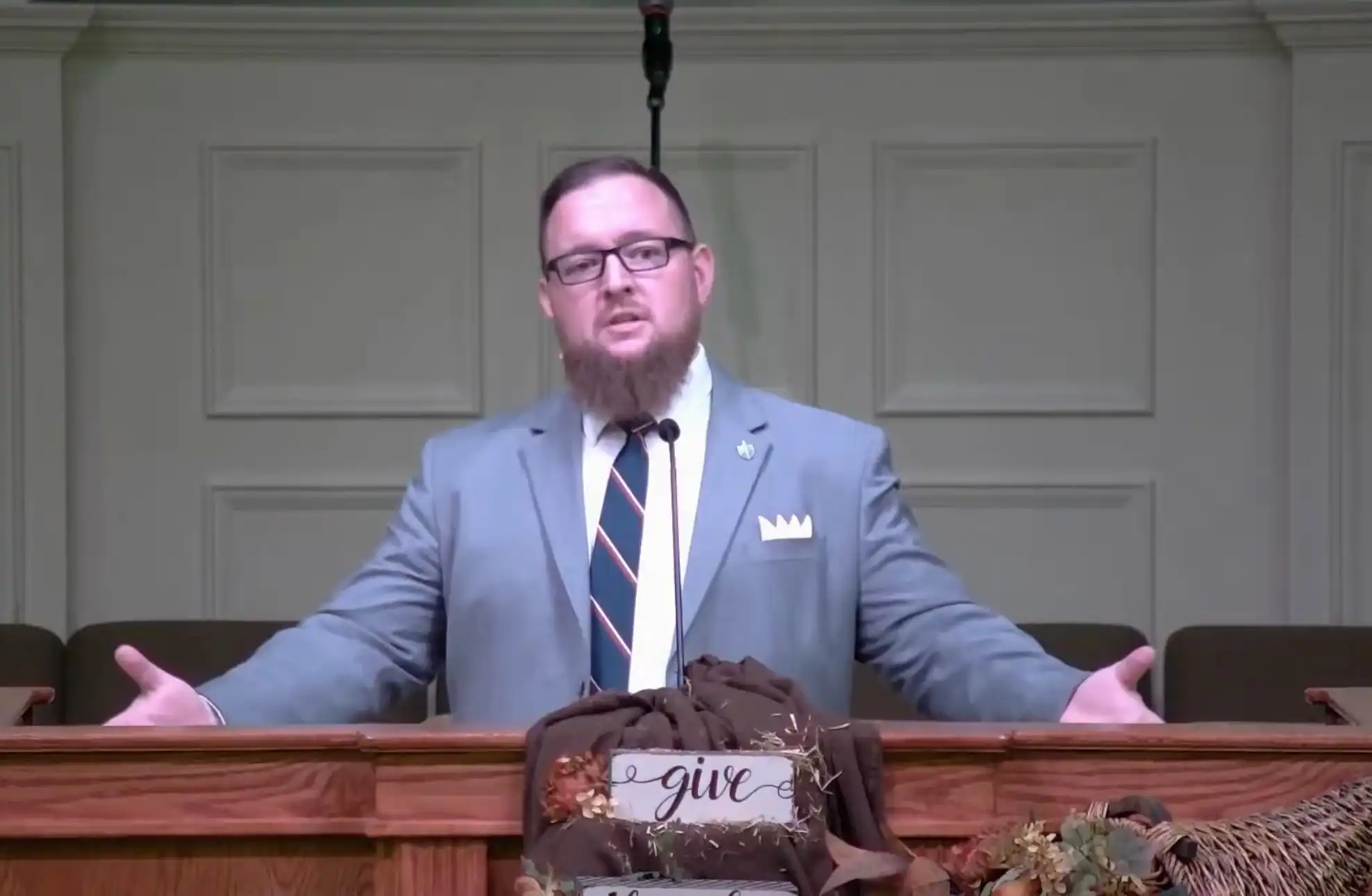
Video
“Do Not Marvel At This”
John 5:28-29
Pastor Ryan J. McKeen
11/16/2025
Audio
Transcript
song for this week. And even following yesterday, my heart is filled with thankfulness. It was a great day to remind us what we’re thankful for. I’m thankful for each and every one who was part of putting all that together. I’m thankful for the Shelburns for inviting us out, all the ones who helped move tables and chairs and get the ranch ready, all those things. Thank you all for just a great time in the All the teamwork that went together to put an event like that on. It was really a great thing for our church.
And also, before we get into the message this morning, I do want to make mention of that there is still going to be an open youth room tonight. Even though Pastor Steven may not be here, we’re still going to do the open youth room for the teenagers. So just take note of that.
But if you would, please turn with me in your Bibles to John chapter five. John chapter five. As we’ve come through John’s gospel, and we’re getting near the end of John chapter five, and even in the series on the Son of God that we did, we’ve seen throughout John’s gospel, the whole point is belief. John is really concerned about us knowing who Jesus is and believing in him. And the result of believing in him, as he says in his purpose statement, it’s that you may believe that Jesus is the Christ, the Son of God, and that believing, you may have life in his name. And as Jesus himself tells us in John 17, eternal life is that they may know you. that we may know God. Eternal life is knowing God. And we’ve seen these things several times, but as we study John’s gospel, the purpose of it keeps coming to the forefront. So eternal life is knowing God, is having a relationship with him, where we grow to know him more and more for eternity.
But a question that we are faced with, if this is the purpose of this gospel, knowing Christ and knowing God, which results in eternal life, by what means can we know God? How can we know God? What is the avenue through which God has revealed himself to us? And how do we know that this can be trusted?
You see, so far in John, and a lot in John, we are thinking about what we need to believe, what it is we must believe to be saved. And the passage we’re going to look at this morning deals with the why. Why should we believe this? Why is it that we are to believe that Jesus is the Christ, the Son of God?
as we’ve seen already here in John 5. Jesus has made a lot of claims. He’s made a lot of claims that were controversial. Jesus claimed to be equal with God. He claimed to be given authority by the Father. And he claimed to be able to reveal the Father. And to be fair, It makes sense that they didn’t get it at first. If you met some guy, a stranger that you’ve never met before, and he’s telling you, hey, I’m God, I’m equal with God, and you can only know God through me, you might have a few questions.
And that’s what we see in John 5, is Jesus is making all of these claims, as John said in the prologue when he’s introducing everything in his gospel in verse 18 of chapter one, John says, no one has seen God at any time. The only begotten God, Jesus, who’s in the bosom of the Father, he has explained him. So John even set this up, that Jesus is the one by which God has revealed himself. No one has seen God at any time except in Jesus Christ.
And later, And as we’ll get to in the coming year in John chapter six, verse 46, not that anyone has seen the Father except the one who is from God. He has seen the Father. And Jesus is speaking of himself there. So Jesus, the only begotten Son, the one who is from the Father as only he is from the Father, he is claiming to be the one who can reveal God to us. which means he is the only one by which we must be saved. Do you get the logic here? There is a logic to the exclusivity of Christianity. If no one has seen God at any time except the one who came from God, Jesus Christ, and eternal life is knowing God, then how is it that we get eternal life? Through the only one who can reveal God to us, Jesus Christ.
So given all of that, Jesus has laid out a lot here in John 5. A lot of controversial things and a lot of consequential things. If this is true, there’s some consequence here. Given all of that, how can Jesus’ claims Be verified. If a stranger comes up to you and says these things, how would you know if he’s telling the truth? Well, that’s the very question facing these Jews, who at this point, we’ve already seen, already want Jesus dead for what he has claimed. How could Jesus claim what he is claiming, and how could they know it is true? What evidence is there to support what Jesus is saying? Why should they consider him reliable?
In our passage this morning, Jesus gives them verifiable evidence to support his claims. Specifically, he gives us three witnesses that testify to the truth that he is telling them. And the three witnesses build in their authority and significance as they are revealed. We see, number one, the witness of John, the witness of John the Baptist. Number two, we see the witness of his own works. And thirdly, we’ll see, most importantly, the witness of the word of God.
So allow me to read the verses we’ll focus in on this morning, John chapter five, verses through 38. This is the word of the Lord. I can do nothing for myself. As I hear, I judge, and my judgment is righteous, because I do not seek my own will, but the will of him who sent me. If I alone bear witness about myself, my witness is not true. There is another who bears witness about me, and I know that the witness which he gives about me is true. You have sent to John, and he has borne witness to the truth. But the witness I receive is not from man, but I say these things so that you may be saved. He was the lamp that was burning and shining, and you were willing to rejoice for a while in his light, but the witness I have is greater than the witness of John. For the works which the Father has given me to finish, the very works that I do, bear witness about me, that the Father has sent me.
First of all, we see that Jesus claims that God himself is the one who supports his claims he’s been making. That’s what we see in the first couple of verses there. He says, I can do nothing from myself. We saw Jesus make similar statements already. It doesn’t mean that he’s not able to do anything on his own. He’s saying, everything I do is not from myself, it’s from God. It is from the Father. I do everything in accordance with the will of God. I’m not out on my own here. I’m not out on a limb, out some rogue agent doing whatever pleases my will. He does everything in accordance with what God the Father had sent him to do. And he says, as I hear, I judge, and my judgment is righteous. Because as you remember, the context here is that Jesus had just said God has given him all authority to judge. And then he says, if I alone bear witness about myself, my witness is not true. There is another who bears witness about me, and I know that the witness which he bears about me is true. God is the one who ultimately gives validity to what he says and who he is. But he also knows that these Jews are not going to take his word for it. They’re not going to just believe whatever he says, so he has to give them some proof. Even by the Mosaic Law’s standards, you needed two or three witnesses to support your case.
Again, it would be like someone coming to your house and knocking on your door and saying, hey, you just got a big promotion and a raise at work. Well, that’s great, but how do I know you’re telling the truth? I’ve never met you before. How do I know you’re telling the truth?” You would call the office and check for yourself. You would call and talk to somebody that you know to see if this is really true. You would find another form of a witness to believe. It doesn’t mean the stranger is wrong necessarily, but you can’t just take the word of a stranger.
Even though what I tell you is the truth, I know that you need more witnesses. Because when he says, if I alone bear witness about myself, my witness is not true, he’s not saying that he’s not telling the truth. He’s saying, I know that you need more evidence before you’ll believe it’s true, before it will hold up in court, if you will.
So the first witness that Jesus gives them starting in verse 33, is the witness of John. That is John the Baptist. He says, you have sent to John. This goes back to chapter one. They sent their representatives out to John in the wilderness. And Jesus says, and he has borne witness to the truth. But the witness I receive is not from man. But I say these things that you may be saved. He was the lamp that was burning and shining, and you were willing to rejoice for a while in his light.
The purpose of John the Baptist’s ministry, as Jesus is really wrapping up his ministry here, putting a bookend to the testimony that John started his gospel with, the purpose of John the Baptist’s ministry was to prepare Israel for Jesus. prepare the way for the Messiah that was coming. And John’s testimony did support the Messiah. Again, in the prologue, in verse 15 of chapter 1, it says, John bore witness about him and cried out, saying, this is he of whom I said, he who comes after me has been ahead of me, for he existed before me. This was the whole purpose of John the Baptist. This is why he was alive. was to bear witness to the Messiah.
And as we see, even the Jews considered him to be a prophet. They gave him that much, which is why they were afraid to do anything publicly with him. As Jesus challenges them later on about the testimony of John, they’re afraid to say otherwise because they know all the people believe he’s a prophet. And as a prophet of God, as we’ve seen John himself testify to, his testimony ought to have been believed. A prophet of God is a mouthpiece for God. It is one who speaks on behalf of God. So the words of the prophet are then the words of God. So whatever John says as he’s speaking for God has the weight of God’s words.
But just like their fathers before them, these Jews rejected this prophet’s word. They rejected John’s witness. And you might be thinking, well, Jesus is God, and yes, John was important, but can’t he get a better witness than just a human? John was just human. He has certainly better witness than this, and that’s true. even though John the Baptist, as Jesus says in Luke 7, is the greatest of men, born among women. But as great as John was, even though Jesus didn’t need to rely on his word, he does give him as evidence, as supporting testimony on his behalf, and he does this for their sake.
He does this for their sake. He says here, Even though I don’t need John’s witness, I know that you know John. This is someone you’ll recognize. So when I bring John up to you, you know what I’m talking about. And he says he does this so that they may be saved. He is accommodating to his hearers here. People are saved by believing in Jesus, And that’s who John the Baptist talked about. That’s who John the Baptist bore witness to.
And so he says, as his first evidence on his behalf, his first witness, listen to John. If you don’t want to take my word for it, listen to John. Listen to what John was saying. And Jesus says in verse 35, he was a lamp. And he was burning and shining and you were willing to rejoice for a while in his light. Here Jesus verifies the truthfulness of John. And he rebukes these Jewish leaders for rejecting him.
John was a lamp. He was a lamp. He wasn’t the light bulb. He was the lamp projecting the light. And the past tense verb here may signify that John had already been killed by this point, because he was the lamp. He was the one who reflected the light, the true light that had come into the world. He was the lamp that was burning and shining. His testimony to who Jesus is made him a lamp shining in a dark world. Jesus was the light of the world and John was his lamp. And John lit the way to Jesus.
And he says, you were willing to rejoice for a little while in his light. They liked John when they thought he was popular. They sent people out to him. Let’s figure out what this guy’s doing. This is great, he’s getting crowds. We could use a little bit of that. But once they heard what he was saying, he was off with his head, literally, as is the case with any witness to Christ.
The world will like Christ, and they’ll like Christians when they think it’s popular or advantageous to do so. We call this Christendom. When culture thinks it’s great to be generally Christian, until they hear what it means to be Christian, what you have to believe to be Christian, what it requires of you to be Christian, which is why we’re not in Christendom anymore. Christendom has passed. They hate Christians because they hate Christ. And John was no different. They rejoiced for a little while when they thought they could get something from him. But eventually, when they realized what he was saying, they hated him.
And the first witness that Jesus gives them to verify his claims was a human, one of their peers. The first witness was the witness of John, but that’s not all that he has. That’s not the only thing that he can claim as proof of who he is. Yes, he says these things and John supports him, so there’s another witness, but then he gives a second witness to himself in verse 36.
But the witness I have is greater than the witness of John. For the works which the Father has given me to finish, the very works that I do bear witness about me, that the Father has sent me.” As great of a witness as John was, Jesus had even more convincing proof. And again, you’ll notice as we go, these witnesses gain in weightiness and importance. Even more convincing than the greatest prophet’s testimony were the very works that Jesus Christ did. Again, to go back to our analogy of if you met a stranger who came up and said these things to you, that I am God and I’m equal with God and God has given me authority to judge. And he had a friend who would tell you the same thing. Okay, fine. But then he could do miracles. Then he could heal people? And he raised the guy from the dead? Like real miracles? Not the TV miracles? The real miracles? Okay, now you’re starting to convince me a little.
And the apostles, they used his works and miracles as attesting evidence to who he was. In Acts chapter 2, verse 22. Peter preaching says, men of Israel, listen to these words. Jesus the Nazarene, remember him? A man attested to you by God with miracles and wonders and signs which God did through him in your midst, just as you yourselves know. This was the point of the miracles, the signs. They proved who he was. He could do them of himself and they knew it.
Even Nicodemus, the leader of the Jews, the teacher of Israel. You remember what he said when he came to Jesus? In John chapter three, verse two, Rabbi, we know that you come from God. Why? For no one can do these things that you do unless God is with him. The things he was doing, the works he was doing, the miracles he was performing, even Nicodemus knew it. And even these Jews would know about all of these works that he’d been going around and doing. And these works prove to them that his claims are true, that he must be from God.
And we read throughout all four of the Gospels all of the different things that the gospel writers record for us, these different works that he does. They’re full of testimonies to the miracles of Christ. John’s gospel has seven major signs that Jesus did that point to who he was. And then John says, there’s many more things I could tell you, but I don’t have enough books to write them all down. His works and his signs were no secret. They testified to who he is.
In fact, as Jesus says later in John chapter 10, to these same Jewish leaders who are still failing to believe the witnesses to who he is, in John 10 verses 37 and 38, Jesus lays it out for them. If I do not do the works of my Father, don’t believe me. But if I do them, even if you don’t believe me, believe the works I do, so that you may know and continue knowing that the Father is in me.” This is what he’s doing in chapter 5. Even if you don’t believe my words, even if you don’t believe what I’m telling you, look around. Look around, the lame man that was sitting there is not there anymore. The leper, he’s not leprous anymore. The blind guy, he’s not blind anymore. What do you think is happening? Believe the works.
But this is only the second witness that Jesus presents. He’s given them the witness of John. Then he gave them the witness of his works, and lastly we see, most importantly, the witness of the Word. The witness of the Word of God. Verse 37, And the Father who sent me, he has borne witness about me. But you have neither heard his voice at any time, or seen his form. And you do not have his word abiding in you, for you do not believe him whom he sent.
So in addition to John the Baptist and Jesus’ works, there’s another one who bears witness to who Jesus is. And as Jesus said back in verse 32, The testimony that he gives about Jesus is undoubtedly true. Even the Jews would say that this witness must be true. Because all of these testimonies so far, they’re really testimonies from the Father. Because John the Baptist was commissioned by God. to do what he did. Jesus, by doing his works, the works that the father had given him to do, it was given by God. And now, he says, you even have the word of God. We have the father’s word recorded in scripture, the scriptures that they had and they knew.
But even more than the written word, which we’ll get to in a minute, they had the written word, but more than that, They had the spoken word, the spoken word of the Father legitimizing the Son. The Gospels record two specific instances where God speaks from heaven in their lifetime, verifying who Jesus is. At his baptism and on the Mount of Transfiguration, God the Father speaks. from heaven and says, this is my beloved son in whom I am well pleased. And there were a lot of people around when it happened. There were crowds around John when he was baptizing. There were other apostles on the mountain as he was transfigured. They all heard it. God spoke from heaven and legitimized who Jesus is.
And Jesus says, You have never heard his voice at any time or seen his form. You, the Jewish leaders, the keepers of God’s word, you’ve never heard it. You’ve never even heard his word because while they do have the audible word in those examples I gave, they have his written word. And they were the ones that were to know it and to teach it. And even though God spoke to them in His written word, they didn’t know it. They didn’t hear it. They didn’t hear His voice. And they had never seen Him in His word.
We know that no one can see God in his full glory of his infinitely holy being. In Exodus 33, he says to Moses, you cannot see my face, for no man can see me and live. And of course, in 1 Timothy 6, verse 16, God, who alone has immortality and dwells in unapproachable light, whom no man has seen or can see. No one has fully seen all of God in his unapproachable light, his infinite holiness. But there were times in Israel’s history when God revealed himself, whether it was, again, audibly speaking to them or visibly showing them something of himself. And all of this is in the Old Testament scriptures that they had. These Jewish leaders had this.
He spoke to Moses. In fact, in Exodus 33, 11, listen to how it describes the relationship between God and Moses. Thus, Yahweh used to speak to Moses face to face just as a man speaks to his friend. I mean, imagine that. Imagine that. I know you’ve all at times thought, man, if only God could tell me what decision to make here. If only he could just speak and just say yes or no. Should I do this or should I not do this? Moses had that. He spoke to God face to face like he’s talking to a friend. And they had Moses.
God spoke to the Israelites in the Exodus, Deuteronomy chapter four, verse 12. Then Yahweh spoke to you from the midst of the fire. You heard the sound of the words, but you saw no form, only a voice. And he spoke to the prophets. In Hebrews chapter one, describing the prophets, God, having spoken long ago to the fathers in the prophets. There were many, many other ways that God had spoken to his people. and given them His word throughout the Old Testament. But they had never heard Him. They had never heard His voice. These unbelieving Jews of Jesus’ day, who had these scriptures, and they had the full revelation of God in Jesus Christ standing before them, they never heard God’s word. They refused to listen to Jesus. He says, they did not have God’s word abiding in them for they did not believe him whom he sent. So they reveal their total ignorance of God and of God’s word.
Because as Jesus had just told them here in John chapter five, he who does not honor the son doesn’t honor the father who sent him. If they truly believed in God, if they truly believed what God had said, if they understood and heard God’s word, they would believe in Him. Those who reject Jesus cannot know the Father.
But those who love the Son, who have the witness of God in their hearts to who Jesus is, As Paul tells us in Romans 8, verse 16, the Spirit himself testifies with our spirit that we are the children of God. And then in John’s first letter that he writes, after he writes this gospel, after he gives this account of the things that happened and testifying to who Jesus is, in his letter he’s teaching people what this means. And I’m sure he has this exact encounter, this exact conversation in mind in 1 John 5, when he writes this.
1 John 5, verses 9 through 10. And think of this conversation between Jesus and these Jews. 1 John, he says, if we receive the witness of men, the witness of God is greater. For the witness of God is this, that he has borne witness about his son. The one who believes in the Son of God has this witness in himself. The one who does not believe God has made him a liar because he has not believed in the witness which God has borne witness about the Son.
This is what’s happening here. These Jews are refusing to believe God through Jesus himself. through John the Baptist, through the works of Jesus, and through the word of God, they’re refusing to believe all of that, and they’re making God a liar. They’re making Him a liar. This is what it means to not believe all of God’s word. You make Him a liar.
There are Christians who pick and choose what parts of God’s word they want to believe. A six-day creation? Oh, that doesn’t make sense. That’s not scientific. It has to mean something else. A global flood? Are you kidding? That can’t happen. A giant fish swallowing a man and he survives for three days? That’s just silly. Are you making God a liar? What did God say? Do you believe it or not?
God himself has borne witness to us in his word. And we have his word written down for us. But just having his word is not enough. Do you believe it? Do you believe what it says? These Jews had God’s word. And as we’ll see next time, as we finish the chapter, in verse 39, Jesus very pointedly rebukes them for rejecting the word of God.
In verse 39 he says, you search the scriptures because you think that in them is eternal life. But it’s these that bear witness about me. So you obviously don’t get it. In verses 46 and 47, to end the chapter, if you believed Moses, they could quote Moses. But if you believed Moses, you would believe me, for he wrote about me. But if you do not believe his writings, how will you believe my words?
Having His Word is not enough. Do you believe it? We read in Romans 9, the privileges that the Jews had as God’s chosen people through whom He gave His Word. As Paul is speaking from heartbreak about his fellow Jews in Romans 9, starting in verse 3. He says, for I could wish that I myself were a curse, separated from Christ for the sake of my brothers, my kinsmen according to the flesh who were Israelites. These Jews Jesus is talking to. To whom belongs adoption as sons, being chosen as God’s nation. and the glory, and the covenants, and the giving of the law, and the temple service, and the promises, whose are the fathers. That’s God’s word, the Old Testament. And from whom is Christ? Christ was a Jew, according to the flesh, whose God over all, blessed forever, amen.
But it is not as though the word of God has failed. For they’re not all Israel who were descended from Israel. These Jews were descendant of Abraham physically. They had Israelite blood. But not spiritually. Because they didn’t believe. They didn’t believe in him. Abraham believed God’s word and was justified. He was saved because he believed. They don’t believe. They’re not like their physical father, Abraham. They refused to believe God’s word, and they condemned themselves by doing it.
Because Jesus has laid it out for them. He’s laid out three airtight witnesses for them. The witness of John, whom they knew, the witness of his works, which they had seen, and the witness of his word, which they had. But like them, we have these witnesses. We have other people like John who’ve told us about Jesus. We’ve seen the work in our lives and other people’s lives. And we have his word. We have all we need. They had all the evidence they needed. And yet, they accuse him and find him guilty of blasphemy. And they cry out, crucify him. Crucify him. Despite all of the evidence. Even Pilate couldn’t make a case against him. He repeated, I have found no guilt in this man. Crucify him anyways. And they hand him over to the Romans to be murdered on a cross.
Where you should have hung. Where they should have hung. To face the punishment for all of those who believe in him. to all of those who believe the witnesses to him. And everyone is presented with this same evidence. There’s one way to have eternal life, to know God forever. It is through the only one whom he sent. So if you refuse to believe in him, his death was not for you. If you refuse to believe in His testimony to who He is and what He has done, you still face eternal death and punishment for your sins. The evidence is before us. The verdict is clear. He is the Christ, the Son of God, and by believing in Him, You can have life in His name.
So what do you say? Do you believe in Him? Can you look at the testimonies to the Son of God and simply ignore it and move on with your life? Get back to doing you and what you want to do? Or will you listen, and hear Him, and believe, and submit to Him? And if that’s true, does your life show it? Does your life show that you believe these words? Do you testify with every word you say, every thought you think, every deed that you do, Can your life be added to these testimonies of who Jesus is and the difference that he’s made in your life?
If you do not know him, you need to come to him today. You need to live every moment as though he is your Lord and Savior. That is what it means to believe and keep on believing. That is the Son of God, and by believing in Him, we have life in His name.
Let’s stand and close in a word of prayer. Our God and Father in heaven, We thank you for all of the witnesses that you’ve given us, all the evidence that we have so that we can believe. Lord, I pray if there’s anyone here who has not yet come to you, has not yet submitted their life to Christ, that you would bring them to yourself, that you would drag them out of their sin and rebellion Bring them to you in belief in Christ and repentance and a life lived for you. God, we thank you. We thank you for who you are. We thank you for your word that tells us who you are. We thank you for sending Christ to die for us. We thank you for making us your people. We pray all of this in Jesus’ precious name. Amen.