Video
“Adultery and Authenticity”
John 7:53-8:11
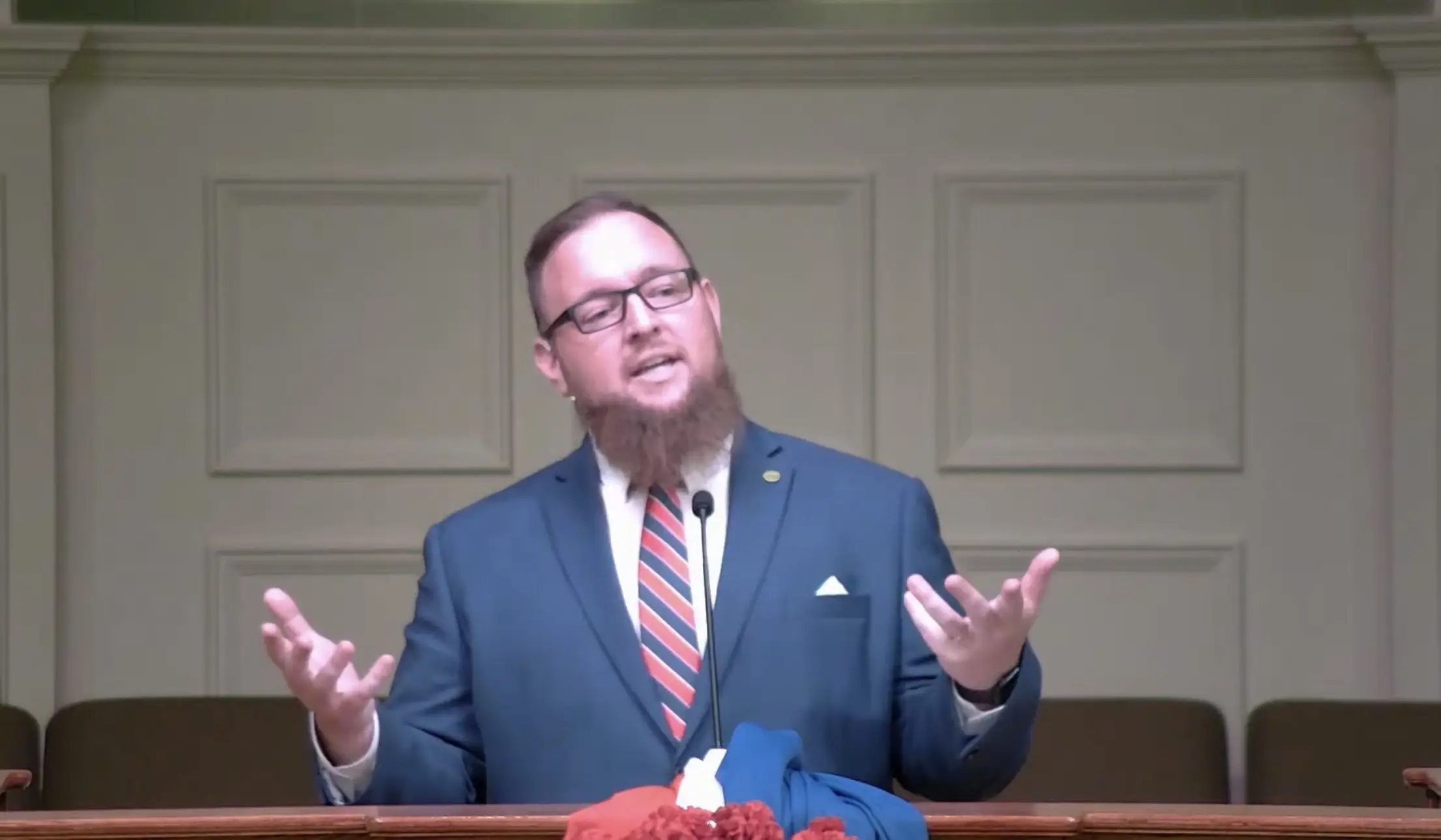
Pastor Ryan J. McKeen
05/24/2026
Audio
Transcript
Amen. Well, turn with me in your Bibles to John chapter 8 this morning. John chapter 8. This sermon has been one of the more difficult ones for me to prepare for, and not because of what the text says or because there are hard things in the text to understand or anything like that. but because of what the text before us this morning is. In most of your Bible versions, you’ll notice that starting in verse 53 of chapter seven through verse 11 of chapter eight, there are usually in most Bible versions either brackets or a footnote or an asterisk there somewhere or something like that. Now the reason for this is that the overwhelming evidence shows that this passage was not part of the Gospel of John when it was written. Instead, it’s pretty clear that it was added centuries later to what we have today as the Gospel of John in our Bibles.
So what am I supposed to do with that? How am I supposed to preach this passage alongside of what we’ve already been studying in John’s gospel? And I know several of you are looking forward to see how we handle this this morning. I could just skip it. Some preachers have done that in the past. In fact, when John MacArthur was doing his verse-by-verse exposition of John, that’s what he did. He explained why he was skipping it, but he did not address this text. Others have preached right through it, as though nothing is different about this passage as the surrounding narrative. But that’s something that I’m definitely not comfortable with doing with this passage.
If we believe what I spoke about a few weeks ago, that we preach God’s word authoritatively because it’s God’s inspired word, and that that inspiration of Scripture applies to what was originally written as Scripture by the authors that God superintended to write His Word, which is the historic position of the church, that inspiration applies to what was originally written, and that is our position, that’s what we believe, then if it’s clear that this passage was not originally there, and we can’t know who wrote it or when, then I have to treat it differently because of what we think of God’s word. I have to treat it differently than what we’ve been covering in John, so I don’t just want to skip it, but I can’t just ignore what’s here. So what I would like to do this morning is a little different than what we normally do. I know I see a lot of visitors out here this morning, and this is not typically what a sermon on a Sunday morning will look like. We typically go verse by verse right through the Bible.
And we will this morning address this text eventually, and we will look at what God’s word has to say about it. But what we’re first going to do this morning is I want to show you how we know what God’s word is, and how we know that a section like this really isn’t supposed to be here. So we’re gonna look at that this morning, and I wanna do this so that you will have even more confidence in your Bibles. So that you’ll have even more confidence that we can trust that what we have on the pages of Scripture is God’s inspired word written by the authors that he intended to do so. And then once we do that, I do wanna look at what this story has to say and see how it lines up with what the Bible teaches.
So we’ll start with what we call textual criticism. I actually had ideas of pursuing a career in textual criticism and translation before I finished seminary years ago now. So I really do enjoy this area of study, this type of study. And I know that that wording probably sounds strange, textual criticism, like we’re gonna criticize the Bible or something. But textual criticism is simply what we call the study of the manuscripts and copies of scripture that we have from history, and how we determine what is authentic and what is not. Speaking of this idea of criticism of the Bible, R.C. Sproul has a helpful distinction for us here. He says this, in biblical scholarship, we distinguish between two types of criticism directed toward the Bible. The first is called higher criticism, which focuses on the content of the Bible itself. This is a task with which I am not greatly enamored. Amen. Me neither.
In addition, though, there is textual criticism, which is the very exact science by which efforts are made to reconstruct the original text of Scripture as accurately as possible. So to kind of explain that distinction, he makes higher criticism. is critical of things like whether or not the Bible is true or not, or whether or not it’s really God’s word, or whether or not the authors were really the authors who wrote it, or if it was pieced together, and all that higher criticism stuff is, I’m not interested in.
We believe that God gave his word to be written by the original authors. All scripture is God-breathed. We believe that. The Bible is God’s word. We don’t question or criticize that at all. But what we wanna do is figure out what text was actually written when the Bible was written. What text was written as God’s word and what is not. And we’ll only do a little bit of that to begin with today.
But again, I’m hopeful that this will help you see why we can certainly trust that we do have God’s word as written in our Bibles. and thinking about the process of the writing of God’s word and then the transmission of God’s word after it was written. We know that when the New Testament books were written, they were not published and preserved like we do with books today.
Instead, they were handwritten letters or scrolls that were passed around from church to church. And along the way, there were copies that were made so that more churches could spread it and read the word given by the apostles. And as more of these copies were made and passed around, as we look at these copies, we find slight and minor differences between those copies, which you would expect with a process like that, with human beings making handwritten copies. They didn’t have laser printers to make exact replicas of the text that they were given. They had to handwrite and copy everything. And that is exactly how God decided to preserve and spread his word.
But when we do find differences, how do we know which differences are original and which are not? How do you make that distinction? While you do that, the process is done in textual criticism by comparing those copies and seeing which are the most alike. And when the most of the copies or the oldest copies do not have those differences, then we can narrow down what was originally there. And that means the difference is most likely not original to the text. And so that’s the process of textual criticism. So all that’s technical stuff.
How does that apply to what we’re looking at this morning as we open our Bibles to John chapter eight? I think the easiest way to do this is to show you the evidence that we have about this text and then come to our conclusion about it. Although I’ve already told you what my conclusion is, but in any case, the text before us is John chapter 7 verse 53 through chapter 8 verse 11. So let’s look at the evidence given this text. And as you read through John’s gospel, you can see that this text sticks out a little bit. And we’ll talk about that here momentarily. But we’ll have five lines of evidence to look at this text with this morning. And we’ll start with the first line of evidence, which is the early copies.
I talked about the process that the Bible, the New Testament especially, came to be, and how it was spread around from church to church, and it was given so that it can be read in different churches. And when we look at all the manuscripts and copies we have of the Gospel of John, We see that this text, verse 53 of chapter seven through chapter eight, verse 11, is not there in all of the earliest and best Greek manuscripts up until the fifth century. So all the earliest copies of John’s gospel before there were chapters and verses in them When they were read, they went right from verse 52 of chapter seven to chapter eight, verse 12. The section we’re talking about just wasn’t there.
And after the fifth century, the copies that do include it have an asterisk there, questioning the authenticity of it. So that is what we see with the earliest copies of the Gospel of John, which is one of the more significant pieces of evidence. And secondly, An interesting piece of evidence is the placement of this story, especially in the early copies. When this story does start to appear in those copies, it actually shows up in four other places, not including this one. It shows up in four or five different places total. Some manuscripts of John have it after verse 36 in chapter 7. Others have it after verse 44. Others have it in chapter 21 after verse 25. And then there’s one copy of Luke that has this story in it after chapter 21 verse 38.
And what you do with all of that evidence of this story being put in different places, a Greek scholar and apologist, James White, describes it this way. He says, such moving about by a body of text is plain evidence of its later origin and the attempt on the part of the scribes to find a place where it fits. So when we see that happen, it’s obvious that this story is, they’re trying to find a place for it. It wasn’t originally where we find it in our copies or in our Bibles. So the different placement is another piece of evidence as we look at the authenticity of this.
A third one is early preaching. We have sermons from a lot of the early church leaders and pastors, and as they preach through the Bible, and when they preach through the Gospel of John. In their preaching, they go right from chapter 7 verse 52 to chapter 8 verse 12, again, before there was chapters and verses.
And they don’t even mention this story, which tells us that it wasn’t in their Bibles. And the first church leaders and pastors to preach on this passage wasn’t until the 10th century. So that’s 1,000 years after John’s gospel was written almost. And even when they do begin to mention it, again, they question the originality of this story.
So that’s the external evidence that we have of this passage. Early copies, early placement, and early preaching, but what about the internal evidence? What’s in this text? Is there anything in the text that would lead us one way or another? And the answer is yes, because next we look at the fourth piece of evidence, which is the flow of the text.
In the flow of the text that we’ve been covering in John chapter seven, the surrounding narrative of Jesus at the Feast of Booths, it fits better, it flows better without this story in there. I’ll get to this more next week as we pick up at chapter eight, verse 12. But we saw in the last passage we covered that Jesus was at the Feast of Booths and he cried out on the last day of the festival. about the water ritual that was happening typically on that last day of the Feast of Booths, and he cried out saying that he was the source of living water. Well, there was another ritual that happened on the last day of the Feast of Booths, and it had to do with the lighting of lights, the lighting of candles to represent what God had given them. And again, we’ll get to this more next time, but look at what verse 12 says in chapter eight. Chapter eight, verse 12 says, then Jesus again spoke to them, saying, I am the light of the world.
He who follows me will never walk in the darkness, but will have the light of life. So it would naturally flow that on that same day as the water ritual and the light ritual, on the last day of the Feast of Booths, that Jesus would stand up and say that he is both the water and light given by God.
And this story of the woman caught in adultery that comes in between those adds a couple days into our flow of the text here. Plus the fact that in this story of this woman, all of the people leave when Jesus confronts them on their sin, right? We’ll get to this in a moment when we do get into this story. But all the people leave. They drop their stones and they walk away. But then verse 12 picks up with Jesus speaking up to them again. Well, who’s he speaking to? They all left, right?
So this story, even what’s in the text, the flow of the text suggests that it just doesn’t fit here. And then lastly, the last piece of evidence that we have regarding this text in our Bibles this morning is the style and vocabulary. The style and vocabulary of this passage don’t sound much like John.
For example, verse two sounds a lot more like something Luke wrote. And several similar worded verses are found throughout Luke and Acts. So verse two says, early in the morning, he came again into the temple and all the people were coming to him and he sat down and began to teach them. A very similar verse is found in Luke 21, verse 38, where it says, and all the people would get up early in the morning and come to him in the temple and listen to him. Very similar, almost exact wording.
Many of the same words and forms of words that were more common in Luke than in John, which is probably why that’s exactly where they tried to fit this story in, in that one manuscript of Luke that includes it. There are many other examples of words and style that don’t fit John, but one important one I’ll mention is in the next verse, in verse three. Look at verse three of chapter eight. Verse three of chapter eight says, the scribes and the Pharisees brought a woman caught in adultery and having set her in the center of the court. Importantly, John never names these Jewish authorities as the scribes and Pharisees. He never does it. He never puts those two names together. anywhere else in any of his writing.
The other gospels use that a lot. They talk about the scribes and Pharisees. That’s how they name that group. But John does not. He will mention the Pharisees occasionally, like he did in chapter 7 and earlier. But in a context like this, he always refers to them simply as the Jews. So that is his designation for the Jewish leaders who opposed Jesus. And I did a deeper study on this in the second chapter of my preaching project that I did for my doctorate there. But John almost always uses the Jews as the title for the leaders who oppose Jesus.
And the use of scribes and Pharisees here clues us into the fact that this almost certainly was not written by John. So, given all of that evidence that we’ve looked at, it’s a long introduction this morning to our text, but I think it’s helpful for us to understand. Given all this evidence, the early copies, the early placement, the early preaching, the flow of the text, the style and vocabulary, what is our conclusion about this text? Does it seem like this story belongs here? Do we think that John originally wrote this here as part of this narrative?
I do not believe that this passage is original to John’s gospel. And just in case you think I’m crazy or out on a limb here, let me share some quotes from some of the best New Testament and Greek scholars in the world on this passage. Don Carson, D.A. Carson, one of the best New Testament scholars and commentators. says this, despite the best efforts of some to prove that this narrative was originally part of John’s gospel, the evidence is against them. And modern English versions are right to rule it off from the rest of the text or to regulate it to a footnote, as many of your copies of God’s Word do. Another scholar, Bruce Metzger, was a fantastic Greek scholar.
He says the evidence for this not being written by John is overwhelming. Leon Morris, he writes a whole appendix on this in his commentary, but he too says the textual evidence makes it impossible to hold this section as an authentic part of John’s gospel. And there’s many more scholars who come to the same conclusion. So anyways, with all that said, the evidence tells us it’s not original to John’s gospel.
But what I want to make sure I emphasize here. is that this type of study, all of this evidence, these tests that you put a passage like this through, ought to give us more confidence in our Bibles. We have thousands and thousands of these copies and fragments of Scripture, of the New Testament, tens of thousands of them. They’re all handwritten copies. of the New Testament or parts of it, and now they are preserved in libraries and museums and things, but no other ancient book comes anywhere close to the magnitude of preserved copies that we have. And with all of those copies, we only find a couple instances like this. A couple places in scripture where something obviously doesn’t fit. There’s this section, there’s one in Mark, and then there’s a couple small words here and there or verses.
But all of the rest of Scripture measures up and matches up and proves to be authentic. And all the rest of Scripture passes the test that we’ve put this passage through this morning. So while they do show that these few passages don’t measure up, everything else in the Bible does.
This should not weaken your confidence in the Bible, it should strengthen it. All of scripture holds up to the test of whether or not this is authentic. It is incredible that through all of the years and the processes of copying and preserving the Bible that we have so much of the Bible that holds up to this sort of investigation. It’s like some scholars have said regarding how we can trust what’s in our Bibles.
I say it this way, it’s like having a 10,000 piece puzzle. And we have 10,100 pieces. We just need to determine the pieces that obviously don’t fit. And that’s what we do with a passage like this. And because of what we come to see and determine about this passage, because of that, you can’t just ignore it and preach it just like it’s anything else in scripture. I mean, the Bible makes it pretty clear that we are not to add to Scripture. It puts a pretty heavy weight behind that. We are not to add to the words of Scripture.
It’s a pretty big deal. But another question comes up. Is this a true story? Did this really happen? Probably. Probably. I would like to think so. It’s a great story, but that’s all that it is. It’s a story from history that may or may not have happened, just like we would read in any other history book. And while we cannot say that this is part of the inspired text originally written in the word of God, most scholars agree that there’s little reason for doubting that this could have taken place. So with our remaining time this morning, now that we’ve looked at the authenticity of this passage, I do want to look at this story. I want to look at what is in this story, and remember that that’s what it is, is a story told to us about Jesus, and we’ll see how it lines up with what Scripture says, what this story tells us, and how that measures up to what the rest of inspired Scripture tells us. So, now that we’re through that long introduction this morning, let’s turn to this passage, starting in verse 53, the very last verse of chapter seven, through chapter eight, verse 11. Allow me to read the text for us this morning.
Everyone went to his home. But Jesus went to the Mount of Olives early in the morning, and he came again into the temple, and all the people were coming to him. And he sat down and began to teach them. The scribes and the Pharisees brought a woman caught in adultery, and having set her in the center of the court, they said to him, Teacher, this woman has been caught in adultery in the very act. Now in the law of Moses, Now, in the law, Moses commanded us to stone such women. What then do you say? They were saying this, testing him, so that they might have evidence to accuse him.
But Jesus stooped down and with his finger wrote on the ground. But when they persisted in asking him, he straightened up and said to them, let him who is without sin among you be the first to throw a stone at her. And he stooped down and wrote on the ground. When they heard it, they began to go out one by one, beginning with the older ones, and he was left alone. And the woman, where she was, in the center of the court. Straightening up, Jesus said to her, Woman, where are they? Did no one condemn you? She said, No one, Lord. And Jesus said, I do not condemn you either. Go, and from now on, sin no more.”
So that is the text in question this morning, the text before us. Really it ends the chapter seven there and flows through where we pick up, where we will pick up next week in verse 12 of chapter eight. And what I’d like to do this morning is just point out a few of the highlights of this story, what we read here in the text of this story about Jesus and the Pharisees and this woman caught in adultery. One of the first things we see here is the setting.
Is Jesus teaching in the temple again? Whenever this story took place, Jesus had stayed the night on the Mount of Olives and in the morning he came into the temple and was teaching the people as they came to him. And again, this is a regular occurrence for Jesus. We’ve already seen Jesus do this often. He typically went to the temple to teach. And that is when these scribes and Pharisees spring a trap on him.
They supposedly had caught this woman in the act of adultery. However that happened, we don’t know. We’re not told how they caught her in the act. And conveniently, they don’t bring the man who is the other half of this equation. They only bring the woman.
But as usual, the scribes and Pharisees are simply out to trap Jesus, to gain evidence against him. Verse six says, they were saying this, testing him, so they might have evidence to accuse him. They were setting a trap. So what was the trap? What were they trying to get evidence for? Well, they tell him. Now, in the law, Moses commanded us to stone such women. What do you say? What do you say, Jesus?
And if he objected, if he objected to stoning her for her sin, her crime, if he objected to the law of Moses, he would undermine his claim to be the Messiah. He would be claiming that the law was wrong. And it is true that the law said stoning was the penalty for adultery, though the punishment could vary depending on the circumstances.
In Leviticus chapter 20, verse 10, We read that the scribes and Pharisees were right, where it says in Leviticus 20.10, if there is a man who commits adultery with another man’s wife, one who commits adultery with his friend’s wife, the adulterer and the adulteress shall surely be put to death. This was the penalty for being caught in adultery. Though again, the man is curiously absent from this episode. where it says the adulterer and the adulteress shall be put to death in the law, they only saw fit to capture the woman they caught in adultery, so they could have evidence against him that he’s not truly the Messiah if he didn’t agree with the law. On the other hand, if he agrees with them, if he agrees with his or her accusers that she should be stoned, his reputation for being compassionate and forgiving to sinners would be undermined.
Not to mention that as we know, they don’t have the authority to put anyone to death. They don’t have the authority under Roman rule to execute capital punishment. We see that in Jesus’ trial, where Pilate tells them, you take him and stone him. We don’t have the authority, Pilate.
You need to do this. So if he comes out in favor of stoning her, they can accuse him of trying to usurp the Roman authority. So these scribes and pharisees, they really think they have Jesus cornered now. Now we got him. There’s no way out of this one. We’ve really got him now.
And then while Jesus, strangely, keeps bending down and writing on the ground. And absolutely nobody knows what that means because there’s a million theories on what he’s writing and why he was writing and what that meant. But nobody knows for sure what he was doing or what he was writing.
But Jesus then stands up and responds to them. In verse seven, let him who is without sin among you be the first to throw a stone at him. And here Jesus turns the law back around on them. Because in Deuteronomy 13 verse nine and in chapter 17 again, verse seven, it says that when someone in Israel was stoned to death, the witnesses to the crime had to be the first ones to throw the stones.
There was some implication here to the death penalty. There wasn’t something taken lightly. If you bore witness, if you were the witness that convicted someone of a crime worthy of death, you had to be the first one to throw the stone. But there’s a stipulation. Unless you were part of the crime, that’s what Deuteronomy tells us, you could not be in any way involved in the crime if you were a witness to this crime. Otherwise, your witness was invalid.
Oops. He got them. Jesus had upheld the law, and he didn’t deny that her sin was worthy of death. He didn’t lessen her guilt. He rightfully used the law to expose the sins of the accusers. In doing so, he spared this woman from being stoned for her sin.
Jesus forced them to expose their own misuse of the law, which is what the Pharisees typically did. They would use the law for their own means, all the while escaping any guilt and punishment on their own behalf. They would use the law to guilt people into doing whatever they wanted, and yet they themselves always came out looking shiny clean, and they were doing it again. And Jesus turns the law around and puts it back in their face.
And they all walked away. They all dropped their stones and walked away because they knew he was right about the law and they were not innocent in the matter. They were not innocent as to be the ones to throw the first stone. None of them, if they were witnesses to this crime, We’re innocent of being part of it.
And the point is not that judges and executioners must be completely sinless in order to carry out justice. The point is that justice should be founded on God’s righteousness and his grace, not on their prejudices and favoritism. And when it’s not, when justice is not carried out according to God’s righteousness, what you get is the heartlessness and hypocrisy of the Pharisees.
And that’s a major point throughout the Gospels. Jesus continually called them out on this, not just in this one story that we find here, but throughout the inspired record of Jesus’ life. He continually called out the Pharisees for this very thing. One example is in Matthew 9, verse 13, where Jesus says to the Pharisees, go and learn what this means.
I desire compassion and not sacrifice, for I did not come to call the righteous but sinners. Jesus confronting the experts in the law, confronting the ones who knew the law by heart, by quoting to them the law. that says, I desire compassion, I desire mercy, and not sacrifice. Paul also says in Galatians, we know it well, quoting the law, he says, for the whole law is fulfilled in one word, in this, you shall love your neighbor as yourself. This is what the law was about, loving your neighbor, and the Pharisees were the farthest thing from loving neighbors. And when all of them are gone, when all of them have dropped their stones and walked away, Jesus ends the story by saying to the woman, I don’t condemn you either. Go and from now on sin no more.
The one who had every right to condemn her does not condemn her either. And more importantly, he did not say, I don’t condemn you, so it doesn’t matter if you commit adultery. He didn’t say, I don’t condemn you, so go live life, do what you want, you do you. Forgiveness doesn’t imply a license to sin. Just because you’re forgiven doesn’t mean you got away with it. Just because you’re forgiven doesn’t mean everything’s okay. Jesus didn’t condemn her, instead he commanded her to abandon her lifestyle of sin. He told her to repent. I don’t condemn you either, now repent. Go and sin no more.
As he continually preached throughout his ministry, Right back to the beginning in Matthew chapter 3 verse 2, Jesus preaching says, repent for the kingdom of heaven is at hand. Jesus was a repentance preacher and the apostles followed suit. They followed his example. After the first sermon by Peter in Acts chapter 2.
The men standing there being convicted of their sin by his preaching cried out and said, what do we do? What are we supposed to do now? In Acts 2.38, Peter said to them, repent.
Repent and each of you be baptized in the name of Jesus Christ for the forgiveness of your sins and you will receive the gift of the Holy Spirit. Repent and get saved. Repent and become a Christian. What should we do after being convicted by the preaching of the gospel? Repent. In the very next chapter, Acts chapter 3 verse 19, it says again, Jesus told this woman to repent. Repent.
Repent because you’ve met God in the flesh. Repent because you’ve been rescued by his grace. He didn’t have to save her. She broke the law. But he rescued her. Because he’s gracious. And her response ought to be repent. Because you have been saved by grace.
Go, and from now on, sin no more. Now, which one of us cannot resonate with this part of this story? We all should be condemned to death because of our sin. We have no excuse. We have no alibi. We are sinners, and the wages of sin is death. We are at the mercy of the spotless Lamb. and the righteous judge of the universe.
If it wasn’t for the grace of God, none of us could be saved. Ephesians 2, verses 8 and 9, for by grace, the very grace shown to this woman in this story, for by grace you have been saved through faith. And this is not of yourselves. It is the gift of God, not of works so that no one may boast. And not only that, but just like this woman, we have every motivation to go and from now on sin no more. Jesus doesn’t excuse sin. He didn’t excuse her sin. He doesn’t excuse your sin. He forgives it. and he can forgive it because he paid for it. He purchased it. We’re not saved by grace so that we can keep on sinning.
As Paul said in Romans chapter six, starting in verse one, what shall we say then? This could be the words of this woman. What shall we say then? Are we to continue in sin that grace may abound? Oh, he showed me grace. I guess I can keep on living my life, doing what I’d like to do. Living for myself. What shall we say then? Are we to continue in sin so that grace may abound or may increase? May it never be. How shall we who died to sin still live in it? We’ve not been saved so that we can continue to live in sin.
Again, in Ephesians 2, the very next verse, verse 10. After describing to us how we are saved by nothing of ourselves, it’s the grace of God through faith. Verse 10 says, for. That’s how we were saved. Why were we saved? Verse 10 is why we were saved. For we are his workmanship. created in Christ Jesus for good works, which God prepared beforehand so that we would walk in them. We are his workmanship. He saved us by his hands. He saved us for himself. We are his workmanship. He saved us for himself so that we would live for him.
This story may not belong in John’s gospel. In fact, this story may have never happened. But the point of this story is undeniably true. This story illustrates the mercy and love of our Savior. And it demonstrates our need for Him and our motivation to live for Him. This is the message of the Bible.
We are called to be holy like God is holy and God hates sin. There’s a problem because we are all fallen in sin. But if we try to pursue this salvation by our own efforts and try to justify ourselves by the law like the Pharisees did, it only produces hypocrisy. self-righteousness, and more condemnation. Jesus came into the world to save sinners. He came into the world to provide our salvation through the cross, and to establish holiness and righteousness and justice on our behalf, the way we should have, all on the foundation of His grace. And if you come to him for that grace, if you come to him for that rescue that you don’t deserve, he will save you from your sin. And we have every reason to go and sin no more.
So where are you in this process? Where are you in this process? Have you come to Him for grace yet? Have you come to Him for the gift that He’s offering you that you do not deserve? Have you come to the only one who can forgive your sins? The only one who is without sin? Or are you trying to justify yourself by looking at the sin of other people? You need to come to Him today. And if you have come to Him and experienced His grace, have you left your sin behind? Have you gone on to sin no more? None of us are perfect. We’re all growing in sanctification, growing in this process of sinning no more.
But as Martin Luther said, All of a Christian’s life is one of repentance. From the moment you’re saved, you start repenting of your sin. And every day, you continue to turn from your sin and to attempt and strive to go and sin no more. As redeemed people, given the undeserved grace and rescue of Jesus Christ. We need to wake up every single day and be reminded to go and sin no more. How shall we who died to sin still live in it? Go and from now on sin no more. And be eternally grateful for the grace and mercy of Christ, your Savior.
Stand with me as we close in a word of prayer. Our God and Father in heaven, we thank you for your word. We thank you for the assurance that we have that your word is true and that you have preserved your word for us. And even with a story like this, that we can still see the truth. that your word communicates to us in the rest of scripture. We thank you for your grace that we don’t deserve. We thank you for your mercy. We thank you for making us new people so that we can strive to live for you, that we can strive to go and sin no more. God, we thank you for who you are, for what you’ve done in and through us. We pray all of this in Jesus’ precious name, amen.